"Friendship" is a term used to denote co-operative and supportive behavior between two or more people. In this sense, the term connotes a relationship which involves mutual knowledge, esteem, affection and respect along with a degree of rendering service to friends in times of need or crisis. Friends will welcome each other's company and exhibit loyalty towards each other, often to the point of altruism. Their tastes will usually be similar and may converge, and they will share enjoyable activities. They will also engage in mutually helping behavior, such as exchange of advice and the sharing of hardships. A friend is someone who may often demonstrate reciprocating and reflective behaviours. Yet for many, friendship is nothing more than the trust - that someone or something will not harm them.
Hence, "friendship" as understood here, is a distinctively personal relationship that is grounded in a concern on the part of each friend for the welfare of the other, for the other's sake, and that involves some degree of intimacy. As such, friendship is undoubtedly central to our lives, in part because the special concern we have for our friends must have a place within a broader set of concerns, including moral concerns, and in part because our friends can help shape who we are as persons.
"Friendship" is considered one of the central human experiences, and has been sanctified by all major religions. "The Epic of Gilgamesh," a Babylonian poem that is among the earliest known literary works in history, chronicles in great depth the friendship between 'Gilgamesh' and 'Enkidu.' The Greco-Romans had, as paramount example, the friendship of 'Orestes' and 'Pylades,' and, in Virgil's "Aeneid," the friendship between 'Euryalus' and 'Nisus.' The "Abrahamic faiths" have the story of 'David and Jonathan.' Friendship played an important role in German Romanticism. A good example for this is Schiller's "Die Bürgschaft."
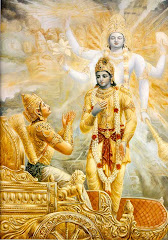
Closer home, our great epics speak of many instances of "friendship" - e.g., in the "Mahābhārata" narrated by the great sage 'Veda Vyasa,' we are told of the legendary friendship between 'Duryodhana' (the eldest son of the blind King Dhritarashtra by Queen Gandhari, the eldest of the one hundred "Kaurava" brothers, and the chief antagonist of the "Pandavas" - the sons of Pandu and Kunti) and 'Karna' (he was born of Kunti, before her marriage to Pandu. A close friend of Duryodhana, Karna fought on his behalf against the "Pandavas" - his own brothers - at the "Kurukshetra" war. He was the son of 'Surya' - the Sun-god.) There is the one between 'Lord Krishna' and 'Sudama' - which has "inspired" several films: "Katha Parayumbol" (in Malayalam - starring Malayalam movie superstar Mammootty and Sreenivasan), "Kuchelan" (in Tamil - starring Tamil Megastar Rajnikanth and Pasupathy), "Billu" (earlier "Billu Barber" - starring the "King" of Bollywood Shah Rukh Khan and Irrfan Khan). Or even the one between 'Lord Krishna' and 'Arjuna.'
The Story of "Duryodhana and Karna": Karna's birth occurred, allegedly, as a result of the immaculate conception granted to his mother Kunti, by his father, Surya deva. Karna was born, before his mother's marriage to prince Pandu. A young Kunti had attended to the great sage 'Durbasa' for a full year, while he was a guest at her father's palace. The sage, who was pleased with her service, granted her a boon whereby she could call upon any God of her choice, and beget a child in his image. Out of curiosity Kunti, still unmarried, decided to test the boon and summoned Surya. Bound by the power of the 'mantra,' Surya granted her wish and a son, who was as radiant and robust as his father (Surya - the Sun God) was born. The baby was born with an armour ('Kavacha') and a pair of earrings ('Kundala') attached to him. Unwilling to face the world as an unwed mother, Kunti abandoned Karna, setting him afloat - in a basket - on the holy river Ganga.
The child - Karna - got carried down the river and was picked up by King Dhritarashtra's charioteer, 'Adhiratha' (who was childless.) Karna was raised by him and his wife 'Radha' as their own son and they named him - 'Vasusena.' Karna also came to be known as 'Radheya' - son of Radha (after his foster mother.) The bond between Karna and his foster family was one of pure love, respect and affection. Karna lovingly performed his duties as a son and brother within his foster family, despite his rise as the 'King of Anga' and the eventual revelation of his true birth.
As he grew into adulthood, Karna, who had the heart of a warrior, sought to become one. He approached 'Dronacharya,' who at that time had established his 'Gurukul' (ashram-school) and was training the Princes ("Pandava" and "Kaurava" Princes - the sons of King Dhritarashtra and King Pandu, respectively.) However, Dronacharya did not accept Karna as his pupil because of his caste (Karna was ridiculed as 'Sutputra' - since his parents were thought to be the charioteer, Adhiratha and his wife, Radha.) Moreover, Drona wanted to make Arjuna (the third among the five "Pandava" brothers) - the best archer.
Karna eventually approached 'Parashurama,' who was known to teach anyone but 'Kshatriyas' (in the early "Vedic civilization," the warrior caste was called "rājanya" or "kšatrīya." It is one of the four 'varnas' or 'social orders' in Hinduism. It constitutes the military and ruling order of the traditional Vedic-Hindu social system as outlined by the 'Vedas' and the 'Laws of Manu.' Lord Rama, Lord Krishna, Lord Buddha and Lord Mahavira all belonged to this social order.) Karna appeared to Parashurama as a 'Brahmin' and requested that he be accepted as Parashurama's student. Karna was a diligent student and Parashurama trained him to the point where he declared Karna to be his equal.
Dronacharya held a tournament at "Hastinapura" (the capital of the kingdom of the "Kauravas," belonging to the 'Kuru' dynasty of kings) to display the skills of the Kuru Princes. Arjuna emerged in this tournament as a particularly gifted archer. Karna arrived at the tournament and after surpassing Arjuna's feats, challenged him to a duel. Kripacharya refused Karna his duel, asking first for his clan and kingdom - according to the rules of dueling, only a 'Prince' could challenge Arjuna who was himself a 'Prince' of the "Kuru dynasty." Duryodhana, the oldest of the "Kauravas," offered Karna the throne of 'Anga,' making him eligible for the duel with Arjuna. When Karna asks him what he can do to repay him, Duryodhana tells him that all he wants is his friendship. Karna pledges his allegiance and friendship to Duryodhana, as Duryodhana had rescued him from continuous humiliation and hardships (for being a 'Sutputra'.) Neither of them knew that Karna is infact Kunti's eldest son - born of Surya.
This event establishes key relationships in the "Mahābhārata," namely, the strong bond between Duryodhana and Karna, the intense rivalry between Karna and Arjuna, and the enmity in general between the "Pandavas" as a whole and Karna.
A very intense bond of friendship develops between the two, and Duryodhana becomes very close to Karna. It is held that if there was one good quality in Duryodhana, it was his deep affection for his friend Karna. In the "battle of Kurukshetra," Karna is Duryodhana's greatest hope for victory. He earnestly believes that Karna is superior to Arjuna, and will inevitably destroy him and his four brothers. While devoted to Duryodhana, Karna knows that even though his skills are as good as, if not better than Arjuna's, he is incapable of killing Arjuna as he is protected by Lord Krishna. When Karna is killed, Duryodhana mourns his death intensely.
The "Lord Krishna-Sudama story": Sudama (also called "Kuchela") was a childhood friend of Krishna from Mathura, the story of whose visit to "Dwaraka" (the capital of the Yadavas who ruled the Anarta Kingdom; Lord Krishna was a member of this ruling clan) to meet Krishna, is mentioned in the "Bhagavata Purana." In reality - Sudama was 'Rishi' Narada - born as a poor Brahmin - in order to enjoy the transcendental pastimes of Lord Krishna. Sudama belonged to a poor Brahmin family, while Krishna was a royal. But this difference in social status did not come in the way of their friendship. They lost contact over the years and while Krishna became a military leader and King of great repute at "Dwaraka," Sudama remained as a humble, and somewhat impoverished Brahmin living in a village. Later, when Sudama went through difficult times - and did not even having enough money to feed his children, his wife reminded him of his friendship with Krishna.
Though initially reluctant to go to his friend for help, Sudama finally relents and leaves with nothing but some 'beaten rice' tied in a cloth as a present. He remembered that 'beaten rice' ('powa'/'poha' in hindi) was Krishna's favorite food and decided to give it as a gift to the Lord. Krishna was very pleased to see his old friend and treated him with a lot of affection. Overwhelmed by all this, Sudama forgets to ask for help - the main purpose of his visit. But Krishna understands his need and the lord's consort 'Rukmini' - an incarnation of "Goddess Lakshmi" (the Goddess of wealth) - gifts Sudama with what he desired. On his way back, Sudama ponderes over his circumstances and is thankful for the great friend he has in Lord Krishna. On reaching home, he finds a palatial mansion instead of the hut he had left behind, his family dressed in splendid clothes - waiting for him. He lives an austere life thereafter, always thankful to the Lord.
This story is told to illustrate that God does not differentiate between people based on their finances and that he will always reward devotion. Another moral taught by this story is to never expect anything free in life; God will provide for our good deeds. Yet another moral is - not to trade "bhakti" (devotion) for anything in return. Sudama did not ask Krishna for anything. Despite being poor, Sudama had given Krishna everything he had ('poha'); hence in return, the Lord (Krishna) gave Sudama everything he needed.
Additionally, the story of 'Sudama and Krishna' contrasts the difference between how Krishna treated Sudama and how King Drupada treated Drona (another story from the great epic - "Mahābhārata.") Drona (later 'Dronacharya') spent his youth in poverty, but studied religion and military arts together with the then 'Prince of Panchala,' Drupada. Drupada and Drona had become close friends as students and Drupada, in his childish playfulness, promised to give Drona half his kingdom on ascending the throne of 'Panchala.' On completion of their studies, the two friends parted ways. Drona later married and had a son, but he was poor. In order to improve the lives of his wife and son, he desired freedom from poverty. Recollecting the promise made by Drupada, he decided to approach him for help. However, drunk with power, King Drupada refused to even recognise Drona and humiliated him by calling him an "inferior person." By contrast, Krishna never forgot his friend and treated Sudama with utmost respect. By this example, Lord Krishna taught us a lesson on how to treat one another.
The story of "Katha Parayumbol"/ "Kuchelan"/ "Billu": All the three films have tried to re-kindle the story of the legendary "friendship" between Lord Krishna and his poor friend Sudama (Kuchela). All the films are essentially the story of two classmates - Pasupathy/ Sreenivasan/ Irrfan Khan (as the 'barber') and Mammootty/ Rajnikanth/ Shah Rukh Khan (in a guest appearance - as the movie superstar) who lose touch and come face to face after many years. Both were poor once, but now one was a very "successful" movie superstar while the other had remained poor - a barber. What the villagers in the barber's village do not know is that the barber had once helped his now famous classmate realise his dream of becoming a filmstar. As the superstar comes to the village to shoot a film, news of their "friendship" spreads like wildfire.
"Friendship" on the silver screen - "Bollywood" style: Even "Bollywood" has immortalised "friendship" on the silver screen. The "Jai-Veeru" jodi from the iconic 1975 film "Sholay" is an example as well as a tribute to "friendship." It is the biggest hit in the history of Bollywood, India's Hindi film industry. The movie, shot in the rocky terrain of "Ramanagara" (a village in Karnataka), is the story of two hired hands, trying to capture a ruthless dacoit by the name of "Gabbar Singh." Two petty criminals, Veeru (played by Dharmendra) and Jai (played by Amitabh Bachchan), are close pals who work together and share everything. Former police chief "Thakur" Baldev Singh (played by Sanjeev Kumar) summons an old colleague and requests him to track down a pair of small-time thieves he had once apprehended in the line of duty. The Thakur explains that Veeru and Jai would be the ideal men to help him end the tyranny of Gabbar Singh - an infamous dacoit (bandit) wanted by the authorities for a sum of Rs 50,000 - as reward. But money is not what the "Thakur" is after. After some difficulty in trusting each other, the "Thakur" demands Veeru and Jai's word and eventually Jai promises that they will do the job and he and Veeru decide to stay in Ramgarh to repel the attacks from Gabbar's large gang. Living in Ramgarh, the cynical young Jai and lively Veeru find themselves growing fond of the villagers, taking pity on their sufferings under the tyranny of bandits. Veeru and Jai fight back and send a message to Gabbar: "for every villager killed by Gabbar, Veeru and Jai will avenge them by killing four of his men in return." Gabbar, angered by this, swears death on Jai, Veeru, the "Thakur," and all of Ramgarh. The battle approaches its climax when 'Basanti' (a feisty, talkative young woman who makes her living driving a horse-cart and to whom Veeru is attracted to) and Veeru are captured and Jai tries to rescue them. Soon Jai is able to get into a position to shoot Gabbar and demands the release of his friends. Veeru and Basanti escape while Jai holds back the bandits from a distance with a rifle. Once Veeru and Basanti are safe, Jai slowly draws back and heads towards his friends, only to be grievously wounded by a bullet on his back.
Jai is reunited with Veeru and Basanti where they realise they are running out of ammunition. As Veeru is unaware of Jai's wound, Jai orders him to go back to the village where he can leave Basanti and then return with more ammunition. Veeru does not want Jai to face the bandits alone, so he suggests that Jai should go. The two dispute over this and finally resort to what has been their only method of resolution over the years - the toss of a coin. As always, Veeru loses the toss and goes back to the village - to get more ammunition. Jai, slowly dying and with only a few bullets with him, manages to fend off the bandits, who were hiding under a bridge and had thrown a stick of dynamite that has failed to explode. Jai manages to get close enough to the dynamite and uses his last bullet to detonate it, taking out the bridge and most of Gabbar's men. Veeru returns to find Jai dying and sadly talks with him before he dies in his arms. Some of the villagers rush to the scene, including Radha - the Thakur's reclusive widowed daughter-in-law, to whom Jai is drawn to and who very subtly returns his affections - who once again must endure the anguish of losing a dear one. As Veeru wipes his tears, he notices the coin in Jai's hand and then it dawns on him that he had been tricked by Jai all along - the coin was actually double-headed, i.e., both the sides of coin were the same and showed the 'heads' part only - Jai always called 'heads' whenever they had a toss to settle some dispute. Thus, Jai had managed to manipulate every situation that they disagreed on, in his favour. Angry at his friend for sacrificing his life to save him, Veeru becomes hell-bent on revenge and goes after Gabbar.
Veeru nabs Gabbar, beats him up badly and is about to finish him off; but before he can kill him, the "Thakur" appears and reminds him of the promise - to bring Gabbar to him ("Thakur") - alive. Veeru is ready to break his word to avenge Jai, and is again reminded that it was Jai who made the promise. Unwilling to break Jai's promise, Veeru hands Gabbar over to the "Thakur" who then reveals his spike-soled shoes - made to make Gabbar beg for a quick death.
Jai's funeral takes place as Veeru stands all alone in front of the pyre. In the distance, Radha watches on through a window. With nothing more for him in Ramgarh, Veeru leaves on a train. But as he looks up, he finds that he is not alone. Basanti too had boarded the train and both she and Veeru leave Ramgarh together.
There is a song in the movie - picturised on the "Jai-Veeru" jodi. This song can be described as an "Ode to friendship" -
"Yeh dosti hum nahin todenge.
Todenge dam magar tera saath na chhodenge....."
Here is the link - to this song which contains the video as well, courtesy Youtube:
Following are a few quotes on "Friendship" - spoken by some learned and famous people - through the ages:
1) "Have no friends not equal to yourself." - Confucious (551 - 497 BC) Chinese philosopher.
2) "Fate chooses your relations, you choose your friends." - Jacques Delille (1738 - 1813) French poet.
3) "Friendship is born at that moment when one person says to another, ‘What! You too? I thought I was the only one." - C.S. Lewis.
4) "A true friend is someone who thinks that you are a good egg even though he knows that you are slightly cracked." - Bernard Meltzer.
5) "It is more shameful to distrust one's friends than to be deceived by them." - Duc de la Rochefoucauld (1613 - 1680) French writer.
6) "I have lost friends, some by death, others through sheer inability to cross the street." - Virginia Woolf.
7) "If a man does not make new acquaintance as he advances through life, he will soon find himself left alone. A man, Sir, should keep his friendship in constant repair." - Samuel Johnson (1709 - 1784) British lexiographer.
8) "Associate yourself with men of good quality if you esteem your own reputation; for 'tis better to be alone than in bad company." - George Washington (1732 - 1799) US Statesman.
9) "Friends may come and go, but enemies accumulate." - Thomas Jones.
10) "It takes a long time to grow an old friend." - John Leonard.
11) "It is not so much our friends' help that helps us as the confident knowledge that they will help us." - Epicurus (341 - 270 BC) Greek philosopher.
12) "Good friends, good books and a sleepy conscience: this is the ideal life." - Mark Twain.
13) "A good friend can tell you what is the matter with you in a minute. He may not seem such a good friend after telling." - Arthur Brisbane.
14) "One loyal friend is worth ten thousand relatives." - Euripides, Greek playwrite.
15) "My friends are my estate." - Emily Dickinson.
16) "Be slow to fall into friendship; but when thou art in, continue firm and constant." - Socrates, Greek Philosopher.
17) "Friendship is the only cement that will ever hold the world together" - Woodrow Wilson.
18) "Anybody can sympathise with the sufferings of a friend, but it requires a very fine nature to sympathise with a friend's success." - Oscar Wilde.
19) "Misfortune shows those who are not really friends." - Aristotle.
20) "The bird a nest,the spider a web, man friendship." - William Blake.
21) "Friendship is love without his wings" - Lord Byron.
22) "Never injure a friend, even in jest." - Cicero.
23) "When true friends meet in adverse hour; 'Tis like a sunbeam through a shower. A watery way an instant seen, The darkly closing clouds between." - Sir Walter Scott.
24) "... no man is useless while he has a friend." - Robert Louis Stevenson.
25) "Think where man's glory most begins and ends, And say my glory was I had such friends." - William Yeats.
26) "Grief can take care of itself, but to get the full value of joy you must have somebody to divide it with." - Mark Twain.
27) "The best mirror is an old friend." - George Herbert.
28) "My best friend is the one who brings out the best in me." - Henry Ford.
29) "Do not save your loving speeches, For your friends till they are dead; Do not write them on their tombstones, Speak them rather now instead." - Anna Cummins.
30) "True friendship's laws are by this rule express'd, Welcome the coming, speed the parting guest." - Alexander Pope.
31) "The most beautiful thing we can experience is the mysterious, it is the true source of art, science, and friendship." - Albert Einstien.
32) "A friend to all is a friend to none." - Aristotle.
33) "Be slow in choosing your friends; slower in changing." - Benjamin Franklin.
34) "In the end, we will remember not the words of our enemies, but the silence of our friends." - Martin Luther King Jr.
35) "Education is the best friend. An educated person is respected everywhere. Education beats the beauty and the youth." - Chanakya, the first great political realist and the world's first "Management Guru."
36) "Treat your kids like a darling for the first five years. For the next five years, scold them. By the time they turn sixteen, treat them like a friend. Your grown up children are your best friends." - Chanakya, the first great political realist and the world's first "Management Guru."
There is no substitute for a friend!
Photograph: A swan in a Chinese zoo feeds its fish friends every day - to the amazement of the visitors.



 Posts
Posts