Showing posts with label Freedom struggle/Indian Independence Movement. Show all posts

Thursday, August 16, 2012

Notes on 'Chinky' and this thing called 'racism' (Part-I)


Author's Note: Mary Kom has done us proud. Please do read, Our 'Magnificent Mary': HERE.

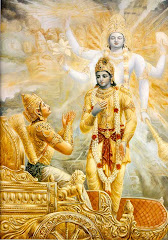
The picture accompanying this post is an illustration of Ulupi and Arjun - from the Mahabharat.

Arjun - as we all know was one of the five Pandavs, while Ulūpī (or Uloopi) was a 'Nag-kanya' - rather a Naga-Princess from the ancient kingdom of Manipura. She was a warrior-princess hailing from a martial clan. The word, Ulūpī or Ulupi (pronounced oo LUH pih) is of Sanskrit origin and means "with a charming face". [Kanya refers to a girl or a female. So, Nag-kanya means: a female hailing from the Naga clan.]

Ulupi had already lost her husband and was (what is now known as) - a widow, when she met Arjun. Later, Arjun and Ulūpī married and had a son Irāvāṇ (Iravan). Iravan is also known by various other names, such as: Iravat (Irāvat) and Iravant. He is Irawan in Indonesia and Aravāṇ (Aravan) in the South of the Vindhyas. [Aravan means serpent.]

Iravan too had fought valiantly in the great war mentioned in the Mahabharat; in the war of principles and moral ethics - that was fought in the Dharmshetr Kurukshetra. Dharmshetr 'coz this war was not fought over territories or treasure; rather it was over dharm - i.e., over the principles that ought to flourish in society.

Ulūpī is wrongly depicted and described as a 'serpent-princess' (i.e., half human and half serpent), with renowned phoren and desi experts explaining (or equating) 'Naga-Princess' as 'Serpent-Princess'. Though 'Naga' or 'Nag' means 'serpent', it also refers to people that worship the serpents. [Just as 'Suryavanshi' refers to sun-worshiping clans and not 'descending from the Sun' - as is popularly believed, thanks to scholarly translators. And just as 'Chandravanshi' refers to moon-worshiping clans and not 'descending from the Moon'. Similarly, clans and people that worshiped the serpents or the Nagas are known as 'Nagavanshi' or 'Nagvanshi'.]

The Nagas (referred to in the Mahabharat) are a martial clan (Kshatriya) and Arya (now called Aryan) by temperament and disposition. [Arya is NOT a race, and transcended colour of skin, hair, pupil, height, other physical characteristics, food habits, language, etc., and encompassed vast lands - in the ancient world and even during the early medieval era. There was no 'race', but values - which declined over a period of time. Sadly.]

We have a state called Nagaland (meaning: the land of the Nagas) in modern India; and here 'Nagas' refer to a tribe. Now though the word 'Naga' has existed here for millenniums, 'land' is an English word and is of much recent flavour. Many years ago, certain colonizers carved out a piece of land and named it 'Nagaland' - in order to accommodate certain tribes, no doubt. [Kindly refer to the earlier paragraph, the one that precedes this one, in order to grasp the full significance of what I'm trying to convey.]

However, whether in ancient times, the territory belonging to the Nagavanshis or the people that worshiped the serpents (the Nags or Nagas) - were much larger or not, is something we may need to ponder over. And whether the land of the Nagavanshis (i.e., the land inhabited by the serpent-worshiping clans) stretched far beyond the shores of modern India or not - is something that we need to apply our minds to as well. Perhaps there were far lesser number of groups - than we have today. That is to say: maybe they were less splintered and more homogeneous in ancient times - as Nagvanshis, than what has become now. Perhaps groups and clans were far less in number before the arrival of various marauders and colonizers. And perhaps the word ethnic - it's meaning and connotations that is, too was not known ... before the arrival of these marauders and colonizers? Is it not a possibility?

However, what I have been unable to figure out so far is - how the comprehensive itihaas (itihasa: history) of the 3rd era - the Dwapar Yug, contained within the Mahabharat has come to be labeled variously as 'Hindu epic', as 'part of Hindu literature' and even 'Hindu Mythology'. [The current era is the 4th era - also known as the Kali Yug. The Dwapar Yug - whose history is etched in the Mahabharat, albeit in camouflaged language, preceded the current or 4th era.]

This labeling bit baffles me no end. Simply because, the word 'Hindu' did not exist then - in the Dwapar Yug, that is !! You see, the 'way of life' that OUR ancients followed in the 'Dwapar Yug' (the previous era) - was rooted in the Vedic wisdom, and was also known as 'Sanaatan Dharm'. The word 'religion' and its connotations were unknown to our ancients and no other 'ism' existed then. So?

[Note: Sanaatan = timeless, Dharm = the right principles or the right path. Vedic = from the Veda. 'Veda' comes from the Sanskrit root 'Vid' which means: 'to know' and this in turn has given rise to 'Vidya' or knowledge. So, 'Sanaatan Vedic Dharma' IS the treasure-trove of timeless knowledge - which OUR ancients gathered or learnt from nature (Prakriti), universe (Brhmaand) and space (Vyoma) - and then accumulated within the Vedas and its other tributaries like the Upnishads, the Purans and so on. Hence, this timeless knowledge IS essentially a 'way of life'. 

'Religion' is a foreign word, and as I have said before, it's meaning and connotations were unknown to our ancients. But perhaps not to our not-so-ancient vested interests - homegrown as well as from beyond our shores. These vested interests used our ancient texts and scriptures to not only accumulate power, influence and other materialistic aspects for themselves, but also to stratify society along gender lines, as well as along ethnic lines. Result: one group was pitched against the other; some stereotyped as martial race, others pampered as agrarian or trading classes, while some others were conveniently but shrewdly sidelined as savage tribals. Do note the Naga reference above - their journey from a martial (kshatriya) clan and Arya people to that of ignorant, backward tribals - is not difficult to figure out, no?]

OUR itihasa (history) became 'epic' and 'mythology' [and that too of a certain 'ism' - which itself was unheard of, during the times these 'epics' took place] - only after the arrival of various hordes - that colonized us. They not only colonized OUR lands, but also colonized OUR minds, and still do. WE are to blame. 'Coz it is WE that have let this happen.

However (going by the logic of 'ism' based epics and mythology) - I do not see 'The Iliad' or 'The Odyssey' being referred to as epics with respect to a particular 'ism' or even with respect to geography or nation (?!!) ... and this has left me wondering as to why this anomaly.

But then I am reminded of what Lord Curzon (Viceroy to India from 1899-1905) wrote in his letter to Queen Victoria: that in order to keep up their superiority of race, culture, heritage and history - they needed to have colonized countries and colonized people, or words to that effect. And I interpret that as: colonized mindset. [Please do read, 'Our Culture, Heritage and History - Some Thoughts': HERE.]

Lord Curzon has also said, "Bengal united is a power; Bengal divided will pull in several different ways." And then proceeded to divide Bengal ostensibly for administrative reasons, i.e., in order to provide better administration.

How much better that administration had been, I have not a clue, but a large number of people were efficiently extinguished in the garb of famine, floods, crime and criminals (read: freedom-fighters), and so on and so forth. [And since a studied reluctance to revisit those times still persist, I take it that we are indeed very, very far away from Robi Thakur's vision of an independent and glorious India "... where the mind is without fear and the head is held high..." :)]

Lord Curzon may have gone, but what about that mindset? What about the neo-Curzons? Is that too an extinct species like the dinosaurs? Or is this mindset thriving well on Ignosaurus-types and therefore doing it's utmost to generate as many and as much fodder as possible; so as to have a steady supply - generation after generation? Especially via books (and commentary) on: our history, culture, heritage, politics, personalities and events, among others? And via other methods too, but essentially methods that primarily include brain-washing?

And isn't this racism? The worst kind of racism?? [Lets put on our thinking caps for a while, what say? :)]

So, now from certified 'epics' and sundry 'mythologies' let me move on to that racism.

There has been (and still persists) some discussions about people (Indians) in general being unaware of the seven states that make up the North-Eastern part of this country, and sports-persons hailing from there being neglected. Or worse, subjected to 'racism' and called 'Chinky'. [Apparently, there exists - among the people of the rest of the country, that is - some sort of hostility towards people with 'mongoloid features'.]

Hmm. But in my humble opinion, this is not an entirely correct perception. 

We - or at least many of us - are not unaware of the contributions made by Dingko Singh (Asian Games Gold medalist in boxing) and N. Kunjarani Devi (the most decorated Indian weight-lifter) and the laurels they have won for the country. We have read and watched them - for many years (on television and in our newspapers) and cheered for them too. We now root for L. Bombayla Devi - our ace archer, as well as L. Devendro Singh and Shiva Thapa - two of our young and promising pugilists. We also pray and egg Somdev Devvarman on. He belongs to Tripura's erstwhile royal family and is our tennis 'prince', though he has announced his kingly ambitions already. 

There is also weightlifter and Olympian, Sanamacha Chanu and hockey player, Bharat Chettri - the captain of the Indian hockey team. The hugely talented Bharat Chetri is one of the most enduring goalkeepers of our times. One of the five sons of an army personnel, Chetri learnt the nuances of hockey at the Danapur Army School before joining Sports Authority of India's Centre of Excellence, Bangalore, in 1998. He is the first goalie to lead India at the Olympics, and this piece of history certainly gives him added responsibility.

Football fans that have followed the on-field exploits of Baichung Bhutia - for years, now watch or discuss those displayed by the young Sunil Chhetri. [Even though all three - Baiching, Bharat and Sunil - hail from Sikkim and are not technically from the North-East, I have mentioned them here, keeping in mind all those enlightened folks that never tire of talking about the racist attitude against 'people with Mongoloid features'.] 

Frankly, I am not sure who or rather what - has given rise to this term, 'mongoloid features'. But what I am very sure of, is this: that whosoever that has coined such an expression or term, undoubtedly IS racist, a first-class-with-highest-distinction racist. And such a person nay mindset belongs to a culture that encourages as well as propagates 'racism'; essentially through branding other people and cultures with molten epithets like: Negro, Coolie, Kala-aadmi, Black, Brown, and what have you. Such a mindset also belongs to and emerges from whomever and whatever that manufactures humungous quantities of fairness cream, maybe?

Racism - is a mindset that has been born out of, is part of, and has come from a culture that has indulged in colonization and slave-taking. Now, does India or Indians have such a heritage or history? I think not. 

Indians do not have such a heritage or history. Therefore, the real connotations of this word or rather the psychology behind it - IS unknown to us. And no matter how much we endeavour, we will never really know. 

But since 'thinking in English' and using certain ... umm, neo-Curzon-like intellectual-sounding words is a never-ending fad, certain words and phrases have been used and are still being used, with nary a thought as to what they actually mean or imply. And most importantly, whether they are applicable vis-à-vis OUR culture. [Let me give you some examples. Words like 'fuck', 'fucking', 'sex workers', etc have become a part and parcel of our vocabulary today and roll off our tongues with ease. Though such repulsive words have never been a part of our land! Frankly speaking, the so-called Eastern languages never contained either these or similar sounding words. 'Sex Workers' were referred to as 'Ganikas' or 'Nagar-Vadhus' - and were not disparaged or demeaned - even during the reign of the rulers of the Vijayanagara Empire. And that does say something about the culture of the East, at least until a few generations ago, does it not?]

Yet ... many folks talk about racism. Enlightened, intelligent, media-savvy, progressive people, with IQs that rivals the Mount Everest, no doubt!

The reason apparently being: Indians refer to people from the North-East as 'Chinky'.

Now first things first, Indians do not refer to people from the North-East as 'Chinky.' Yes, some do, but does that give the carte blanche to paint everyone with the same brush??

Think not. What say you?

And by the way, what exactly is this 'racism' bit? Why does it rear its ugly head every time there is a discussion about 'Chinky' or more specifically about Indians that hail from the North-Eastern part of this country? How did this alien word (racism) and its connotations creep in? We need to think about this, and think really really hard, what??

Here's my two pence: Some Indians have a unique way of addressing people or groups, if you may, based on region or state or language or even cuisine.

So, the ones from Kerala are 'Mallu', the ones from Punjab are 'Punju', Bengalis are universally called, 'Bong'; those hailing from Gujarat are 'Gujju', from Tamil Nadu are 'Tam', from Orissa (now Odisha) are 'Ude'; those from Bihar and Uttar Pradesh are 'Khotta' ... and so on and so forth.

But nobody brings in 'racism' into these !!

To my mind, the word 'Chinky' too has come into use pretty much in the same manner as all these other above-mentioned 'sobriquets' have come into circulation. [Or could it be the remnant of a culture and mindset that colonized us??]

However, before you jump to any conclusion, I would like to state that yours truly is not a supporter of any of these so-called 'sobriquets' or of folks coining them. I don't use them to refer to anyone, and I know of many people who don't either. However, isn't there a possibility that most of the folks that use these above-mentioned sobriquets - do so without rancour? That when they do use these various sobriquets, they do not have any malicious intention, especially 'racism' - in mind? And that, they just use them - without thinking; if you know what I mean? Frankly, I'm not sure if most of us (Indians, that is) even understand what 'racism' is all about ... given that we do not have a history of colonizing people and nations; and we, as a nation - have never indulged in slave-taking either. We, Indians, do not think of it - meaning racism - automatically. As you may know, Indians are world-famous in staring, but even when they indulge in this favourite activity of theirs with respect to say, the people from the beautiful continent of Africa, it should not be construed as or attributed to 'racism'. 'Coz they stare at everyone and everything !!

But having said that, what I am very sure of, is this: a couple of generations ago, these 'unique names' or 'sobriquets' were largely unheard of ... and some three generations ago - rarely. Our parents' generation hardly used them and our grandparents' or great-grandparents' generation were of a different caliber altogether. We have somehow managed to miss that mettle, or rather managed to lose it. Therefore, we need to reflect collectively and figure out why this has happened - with our generation, and what is it that we are passing on to the generation after us, and where all this will lead to - eventually. But generalizing and bringing in 'racism' among all things - is weird, to say the least.

Frankly, if we are to take offense regarding such names or sobriquets, we should first ponder over how and why so-called gaalis (cuss words) involving mothers and sisters (the MC, BC gaalis) came about? This is something that should have troubled us forthwith, as soon as these gaalis became known or were heard of, that is; isn't it? But, nope! There has never been a clamour regarding any 'ism' surrounding them. In fact, these gaalis are very popular and are becoming even more popular - irrespective of cultures and languages - with every passing day, so much so that they have seeped into our lingo and vocab quite effortlessly!

Yet, none have taken offense. Not even those possessing IQs that rival the Mount Everest have let out a peep, let alone assigning some 'ism' to it! Strange, no?

Parting shot: Please read this post slowly so as to grasp all that I have tried to share, and then put on your thinking caps and ponder over it too :) I'll be back with the 2nd part - soon.


(More later…)

Photograph: Courtesy link.

Friday, July 6, 2012

Whither Debhelopment?


There's a game of 'catch me if you can' and a game of 'snakes and ladders' - being played. But no Vampires are being slayed. Real 'snakes' and not the Bengali ones re Baba! Arre, Bengalis pronounce 'snacks' as 'snakes', understood? That's called courting food.

Get used to Benglish, it may soon take up residence in Delhi's swankiest house. Then we may as well have a game of 'cat and mouse'. But whatever the game, Hilsa (ilish maach) will fly business class, and the prawn (chingri maach) - will have to learn new lessons in 'simple living high thinking'.

Think, thank, thunk, anyone?! Wren & Martin - no fun!

Martini - is better, whether shaken or stirred. Never mind if the fans whirred. Load shedding is an integral part of the economy. Not Egyptian Mummy. And the latter may now sprout beards too. Thanks to youknowwho. No dictation. Syrious action.

War on Terror. Immaculate deception.

The Lord of the right path is a casteist. Sushi Tandoor is a cattleist.

Jagan Magan Jaguarnaut. Tatrapack. Thunderbird. Speaktinot.

Raja. Band Baaja. Adarsh solution. Jai Agnidev.

Vande maataraM
sujalaaM suphalaaM malayaja shiitalaaM
SasyashyaamalaaM maataram ||

ShubhrajyotsnaaM pulakitayaaminiiM
pullakusumita drumadala shobhiniiM
suhaasiniiM sumadhura bhaashhiNiiM
sukhadaaM varadaaM maataraM ||

Here: Files undergo Agni ParikshaM. And Flies make merry maataraM.

Koti koti kantha kalakalaninaada karaale
koti koti bhujai.rdhR^itakharakaravaale
abalaa keno maa eto bale
bahubaladhaariNiiM namaami taariNiiM
ripudalavaariNiiM maataraM ||

Here: the CM of India reports to the PM of Kolkata. And bow to Vande MataRome.

... But not to worry, that's pat-riotism. Distilled through a prism.

VIBGYOR anyone?

No takers. God particle, holding everyone in its thrall!

All the excitement may lead to myocardial infraction. But that'll mean, no more mass, matter and particle. Direct God. Higgs-Boson.

Heye Bhagawan! Didi won't be pleased.

Boson = Bose = Basu = Enlightened Bengali = Jyoti Basu.

Jyoti Basu = good sleep = no jackals and foxes = angry Maneka Gandhi = environmental disaster.

You get the picture?!

No Bijli = slowdown of economy. Babu-jis also not dheere chalo-ing = population explosion.

What use Higgs-Boson?!

However, the Bose behind the Higgs-Boson is our bheree own Satyendra Nath Bose. He is also the Bose behind the Bose-Einstein Condensate.

Yet, the Nobel-men awarded the medal only to Einstein. Not fine. Bose was overlooked - due to colour of skin. No 'Change we can believe in'.

He did not qualify for the Bharat Ratna either. Lack of: Amulya Butter.

But do spare a thought for the decline of the Boses, God's favourite community. From Acharya Jagadish Chandra Bose, Biplobi Rashbehari Bose, Netaji Subhash Chandra Bose, Biplobi Khudiram Bose, and the great Satyendra Nath Bose ... to Rahul Bose.

Sigh. Apshosh.

Elsewhere, looks like: Didi has been looking for Debhelopment. Maybe the CBI should be tasked with prompt recovery of whomever that has eloped.

Perhaps coalition dharma is preventing it.

Hmm. No wonder even Dimsum Yadav had to be given a walkover. Bahu had to be accommodated ... for the sake of Bahumat.

Coalition dharma means no collision. Only some mad hatters talk of "The Large Hadron Collision". Clones of Professor Calculus, I tell you. Full of fuss and what have you.

Now, Didi may decide to insert an ad in telibhisons and newj pyapars: Debhelopment, if you have got engaged or even married, come back immediately. Two pairs of brand new choppols are waiting for you.

But Debhelopment is proving to be quite Dabaang. It has decided to migraine to Gujarat. Wonder who lost his shirt?!

What'll happen to the haath - in future. Nature cure. Just conjecture.

Haathi and cycle fought ... and the cycle won. That's evolution.

And in India at least - the Mayan Civilization came to an end. What will happen going forward? I'm no soothsayer, my friend!

But lotus is busy eating itself. Ghor Kaliyug, I tell you. Even lotus has turned U.

Move over particle, nano is costlier. Hear, Hear. King Lear.

Laasht chance: Debhelopment come back ASAP. Otherwise Didi will bhack you with her choppol.

Still no response! Lets see what Khan Dada can do. Pancha Pandu.

Pronob-da and Sang-ma: Bhodrolok vs Tribal.

Srsstti-Sthiti-Vinaashaanaam Shakti-Bhuute Sanaatani | In the shape of Amma, Behen-ji and Didi.

Gunna-[A]ashraye Gunnamaye Naaraayanni Namo[ah-A]stu Te ||9||

Meanwhile, Khan Dada has been making saccharine-laced appearances with the missus. So perhaps we can safely conclude that PC has been booted, err rebooted.

But he made such a song and dance about KKR's IPL win! Even after all the matches and the celebrations - had been telecast live. No high five.

Front-page ad in the Dimes of India: to inform all and sundry no doubt. But hopefully messengers were dispatched to Andromeda and other parts of the Milky Way too. Woo-Hoo! After all, all's well that ends in a well!

But wondering why NASDAQ did not reflect it?! Epic fail.

We have recently learnt that toilets are an integral part of a shining economy. But who gets to see the full Monty?

The taxpayers? The investors? The FDIs? Or the Starbucks??

And what about the Moonbucks then?? Security is chicken.

Stock market is chicken stew. Does it sound like French, Latin or Hebrew?

Conclusion: Debhelopment is a Greek tragedy. *Sniff*


Photograph: Pic. courtesy: Link. [All in good humour, I assure you.]

Friday, March 18, 2011

Do and Die: The Chittagong Uprising: 1930-34 by Manini Chatterjee.


Author's note: To read my take on the movie version of this book, click here.

A forgotten chapter of Indian history brought alive.

Meticulously researched and skillfully narrated, the story of the young idealists, heady with patriotism and ready to die, emphasizes the role of the revolutionaries as an important part of the freedom struggle in India. Manini Chatterjee has presented perhaps the first comprehensive history of the uprising based on a large corpus of original source material. British records and official publications form just one part of this. She has made extensive use of India-centered sources in both English and Bengali: the writings by participants of the uprising, interviews with survivors, newspaper reports, and contemporary political records. Using the skills of a journalist to ask the right questions, Chatterjee uncovers the riveting saga of an intrepid band of men and women who engaged the might and wits of a mature and entrenched colonial state for four long years. Surjya Sen, Kalpana Dutta and their comrades, historical figures whom we have encountered but do not really know, acquire real-life stature in Manini Chatterjee's telling.

Throughout British India, independence movements began to gain strength during the 1900's. The revolutionaries (of colonial Bengal) were organized into two major groups: "Calcutta Jugantar" and "Dacca Anushilan Samiti". These revolutionaries had to face British torture, rigorous imprisonment, the hangman's noose and deportation to the dreaded Andaman cellular jail. The 'Anushilan-Jugantar' merger provided a new impetus to the freedom movement with the revolutionaries making a federation of all groups to launch a new offensive. Niranjan Sengupta of the 'Barisal Anushilan', Satish Chandra Pakrashi of 'Dacca Anushilan', Jatin Das of the 'South Calcutta Anushilan' led the federation along with 'Masterda' Surjo Sen and Ganesh Ghose of the 'Chittagong Jugantar Party'. They adopted in 1929 a programme of hitting government establishments... all at a time. Biplobi Surjo Sen made a series of attacks on government establishments from 1929 to 1933... including the most sensational 'Chittagong Armoury raid'... in 1930. The textbook cliche that Gandhi’s 'Ahisma' forced the British to quit India is not merely trivializing of undivided India’s revolutionary heritage but also an ignorant historical reductionism.

The 1930 Chittagong Youth Revolt, which the British colonialists denigrated as the loot of the Chittagong Armoury, was one of the glorious chapters of the anti-colonial movement of the subcontinent and a valiant example of armed struggle. The exploits of the revolutionaries, whom the British denounced, brutally tortured, tried and hanged as "terrorists", have entered our folklore of people's struggle for independence from colonial oppression. The legendary 'Masterda' Surjo Sen, the leader of the revolt, has ever remained an icon of revolution and patriotism... in Bengal. The rest of India barely knows this heroic revolutionary... whom the British sought to portray as a midnight terrorist.

On a day (April 18, 1930) that is a landmark in India's struggle for Independence, the fearless Freedom Fighter 'Masterda' Surjo Sen with his comrades-in-arms Ganesh Ghosh, Lokenath Bal, Nirmal Sen, Ambika Chakrobarty, Naresh Roy, Sasanka Datta, Ardhendu Dastidar, Harigopal Bal (Tegra), Tarakeswar Dastidar, Ananta Singh, Jiban Ghoshal, Anand Gupta, Pritilata Waddedar, Kalpana Datta and many others, and a boy barely into his teens... the 14-year-old Subodh Roy, took control of two armouries in Chittagong, raised the Indian National Flag, and declared independence under a Provisional Revolutionary Government operating under the Indian Republican Army. They achieved a siege of remarkable magnitude, against the fully trained and equipped British military.

It took an inordinately long period for new research and interpretations of Indian history to percolate into the school textbooks of independent India. The Uprising of 1857, for example, continued to be referred to as the "Mutiny" of 1857 (a term the British chose in order to minimize the spread and impact of a people's uprising that enveloped large parts of the subcontinent) in Indian classrooms and textbooks till the early 1970s. An event that however never got upgraded in school textbooks from the status of an "armoury raid" to the popular anti-colonial uprising that it really was, is the Chittagong Uprising of 1930-34. The British used the word "raid" to wish away a challenge that shook their administrative apparatus, and morale, to the core. Wonder why, though.

The revolutionary chapter (or what Chatterjee says has been inaccurately called the "terrorist" chapter) of the freedom movement had a complex and not entirely inimical relationship with the non-violent freedom movement led by the Congress under the leadership of Mahatma Gandhi. This took very interesting forms in colonial Bengal, of which Chittagong was a part. All the six original leaders of the Chittagong Uprising - Surjya Sen, Nirmal Chandra Sen, Lokenath Bal, Ambika Chakrabarti, Ananta Singh and Ganesh Ghosh, were participants in the Congress-led Civil Disobedience movement launched in 1919. They were bitterly disappointed by Gandhi's decision to call off the movement in 1922 in the wake of the Chauri Chaura incident. It was as members of the District Congress Committee and other mass fronts of the Congress that they planned and trained for the armed attack on the Chittagong armoury, police headquarters and European club on April 18, 1930, an attack they hoped would yield them a sufficiently large quantity of arms and ammunition. They hoped it would be the prelude to a general uprising. They built up an 'army' amongst teenage recruits who were given physical training in physical training clubs, and secret training in arms under cover - a parallel activity which the district administration did not get wise to.

Despite an unforeseen hitch at the last minute, the carefully planned operation goes off flawlessly and takes an unprepared administration totally by surprise. "The strategy and success of the uprising," Chatterjee writes, "rested on two conditions: the first was to capture the enemies' armouries and the second was to repulse the attack of the enemy and protect the provisional republican government for as many days as possible". The revolutionaries were however forced to change direction mid-stream owing to a fatal failure of intelligence on their part. While the armoury contained the best collection of weapons in the district, this proved quite useless, as the ammunition to use it was not stored there. A new magazine had been recently built which the revolutionaries did not know about.

Their plans in disarray, the leaders responded to the situation on instinct. Chatterjee describes the events that followed. The original group found itself separated and in two. The bigger group, largely comprising tired but exhilarated teenagers who did not know the extent of the setback they had suffered, retreated with "Masterda" (as Surjya Sen was called), Nirmal Sen and Ambica Chakrabarti into the Nagarkhana Hills that flanked Chittagong. Around four days later, in what came to be known as the "Battle of Jalalabad" - in a showdown with the mighty Queen's army, this poorly armed group of 55 men and boys engaged a fully armed battalion of British troops numbering several thousand at Jalalabad hills. 10-12 of them achieved martyrdom, but not before taking down eighty of the colonizers. Several among the group sustained injuries while Ananta Singh, Ganesh Ghosh and two others had an eventful time, evading arrest and reaching Calcutta with great difficulty.

Striking and graphic accounts of the battle of Jalalabad, the encounter at Dhalghat, the attack at Pahartali and the underground resistance form the core of the book. Chatterjee scores in giving a human face to the dry bones of history. The enigmatic 'Masterda', the irrepressible Kalpana Dutta and the brooding, tragic Pritilata Waddedar all come alive with their zeal and fervour, love and loss.

Chatterjee traces the continuation of the struggle through many a tortuous twist. The official backlash was heavy (by the end of 1931, Chittagong had come under virtual martial law and the administration had special powers to arrest, detain and punish anyone it thought were connected with the revolutionaries). The survivors of Jalalabad broke up into groups to continue the resistance which now spread to the villages; more recruits joined the struggle, including Kalpana Dutta and Pritilata Waddadar (who chose to commit suicide in an armed action rather than be caught or surrender); several leaders were captured by the police; and an extensive plan to effect the escape of some of the jailed leaders was discovered and foiled by the authorities. Masterda and his comrades, continuously on the run, were finally caught in February 1933. Kalpana Dutta, Tarakeshwar Dastidar and a group of others were arrested in May that year. Surjya Sen and Dastidar were hanged to death in January 1934 and a number of other leaders deported for life to the Andamans.

The Chittagong Uprising, Manini Chatterjee persuasively argues, marks a new stage in the participation of women in the freedom struggle. While the Gandhian movement drew women into 'satyagraha' in large numbers, the revolutionary movement attracted fewer women but offered them a different quality of experience and involvement, indeed of equality with their male comrades. While Chittagong may have been the first "instance of women decisively crossing the Lakshman Rekha that bound them to home and family" it was not, as Chatterjee suggests, the only instance of this happening. Women continued, at great cost to themselves and to their families, to cut themselves off from traditional support structures and join movements that sought to bring change in radical ways. Women who had cast off traditional roles during a period of struggle found it far more difficult than men to pick up the pieces and reconstruct their lives in "peace time". They found that while they had changed, the societies in which they lived had not.

This is a book well researched and well told, and certainly enriches our understanding of an important part of our history.

Masterda Surjyo Sen: Surjya Sen, being constantly followed by the police, was once hiding in the house of Sabitri Devi, a widow, near Patiya. A police and military force under Captain Cameron surrounded the house on 13 June 1932. Cameron was shot dead while ascending the stairs and Surjya Sen along with Pritilata Waddedar and Kalpana Datta escaped to safety.

'Masterda' evaded arrest by disguising himself and taking on various odd jobs; as a labourer; as a farmer, or milkman, or priest, as a combined hand/man servant or even as a pious Muslim.

Either because of the lure of money (announced by the British as a reward), or out of jealousy, or due to a combination of both, Netra Sen betrayed Masterda. As a result, the police captured him on February 16, 1933. This is how one of India's greatest heroes was arrested. But before Netra Sen could get his 10,000-rupee reward the revolutionaries killed him.

Netra Sen's wife was a staunch supporter of Surjya Sen, and was horrified by her husband's betrayal.

One evening while she was serving dinner to her husband… a supporter of Surjya Sen came into the house carrying a very big knife (called "daa" in Bengali)… with one stroke of which he chopped off the head of Netra Sen in the presence of his wife… and left as slowly and silently he had come. When the police arrived to investigate, they asked Netra Sen's wife if she had seen the murderer. She said, "I saw with my own eyes, but my heart will not permit me to tell you his name. I am sorry. I feel miserable that I was the wife of such a treacherous man, such an undivine man as Netra Sen. My husband betrayed the greatest hero of Chittagong. My husband betrayed a great son of Mother India. My husband cast a slur on the face of India. Therefore, I cannot tell the name of the person who took his life. He has definitely done the right thing. You can do anything with me. You can punish me, you can even kill me, but I shall never tell the name of the person who killed my husband. Our 'Masterda' will be hanged, I know, but his name will forever be synonymous with India's immortal freedom-cry. Everybody loves him. Everybody adores him. I, too, love him and adore him, for he is the brightest sun in the firmament of Chittagong. Surjya means sun and he is truly our sun."

Tarakeswar Dastidar, the new president of the Chittagong Branch of the Jugantar Party, made plans to rescue Masterda from the Chittagong Jail. But the plot was unearthed and consequently frustrated. Tarakeswar and Kalpana along with others were arrested. Special tribunals tried Surjya Sen, Tarakeswar Dastidar, and Kalpana Datta in 1933.

The British hanged Surya Sen along with his fellow revolutionary Tarekeshwar Dastidar on January 12, 1934. But before the death sentence was carried out Masterda was brutally tortured. It was reported that the British executioners broke all his teeth with a hammer, plucked out all the nails from his fingers and toes and broke every limb and joints in his body. He was then dragged to the gallows unconscious. After his death nobody performed his funeral. The prison authority, it was found later, put his dead body in a metallic cage and dumped it into the Bay of Bengal. No tomb, plaque, or saintly epithets for him and his ilk... in independent India too. Sadly.

Details of the Book: Do and Die: The Chittagong Uprising: 1930-34 by Manini Chatterjee/ Manini Chatterjee/ pp. 356/ Paperback/ Publisher: Penguin Books India (14-Oct-2000)/ ISBN-10: 0140290672/ ISBN-13: 978-0140290677/ Price: Rs. 295/


Photograph: Pic courtesy: Link.

Sunday, December 12, 2010

History or 'His'tory... ?? (Part-I)


The 1930 Chittagong Youth Revolt, which the British colonialists used to denigrate as the loot of the Chittagong Armoury, was one of the glorious chapters of the anti-colonial movement of the subcontinent and a valiant example of armed struggle. The exploits of the revolutionaries, whom the British denounced, brutally tortured, tried and hanged as "terrorists", have entered our folklore of people's struggle for independence from colonial oppression. The legendary 'Masterda' Surjo Sen, the leader of the revolt, has ever remained an icon of revolution and patriotism... in Bengal. The rest of India barely knows this heroic revolutionary... whom the British sought to portray as a midnight terrorist.

Recently... a film curiously titled "Khelein Hum Jee Jaan Sey" (KHJJS) hit the theatres. Helmed by the acclaimed Indian Bollywood movie director Ashutosh Gowarikar... there was reason for hope that Gowarikar, a film-maker of substantial intelligence and senstivity, will not simply make another kitschy Bollywood Hindi Musical film out of Masterda's life. His previous movies - Lagaan, Swadesh and Jodhaa Akbar have received positive critical acclaim and he has won several National Awards, and been nominated for an Academy Award as well. Infact... Gowarikar has, over the years, marked out the 'Historical' as his preferred territory. He has sung his eulogy to Mughal India in Jodhaa Akbar (2008) and expressed his patriotic fervor in Lagaan (2001) and Swades (2004).

Also... according to reports, Gowarikar was adapting the movie from the 1999 book 'Do and Die: The Chittagong Uprising 1930-34' by veteran journalist Manini Chatterjee, (published by Penguin Books Australia).

But that was clearly not to be. With 'KHJJS' he made his grand return to the genre of the Historical after his brief stint at a potboiler... an epic 200-minute-long documentary on arranged marriage called 'What's Your Raashee?'... that managed to boil one thing for sure - your blood. With his latest film... Ashutosh seems to have lost all sense of time, and possibly the plot too. The patriotic fire fails to touch the souls.

Even the 'Bachchan Bahu'...
Aishwarya Rai Bachchan making an appearance for the 'KHJJS' music launch with mother-in-law in tow... couldn't save the film from tanking at the box office. She had come donning a cream and gold sari, with a dash of red in the borders... draped in the traditional Bengali style... looking every bit the traditional 'Bou-ma' (daughter-in-law... in Bengali). Perhaps she is already getting ready to portray the legendary Debi Chaudhurani... in the screen adaptation of Rishi Bankim Chandra Chattopadhyay's novel 'Debi Chaudhurani'... to be helmed by Rituparno Ghosh. What say?? Nevertheless... 'KHJJS' has laid a massive turkey at the box office... and has all but moved out of the halls in its second week... barely managing to make just Rs.10 crore against the Rs.45 crore spent on it (according to industry estimates). Ummm... methinks... this being the X-mas season... a massive turkey isn't such a bad idea. What??

Getting back to 'KHJJS'... history morphs into 'his'tory and the self-styled expert on Indian history... makes a hash nay massacres one of the most inspiring stories (the Chattogram uprising) of our freedom struggle and successfully reduces it to a dull, painful 165-minute-long abomination... proving the dictum that history is never boring, only the teacher is. First... he doesn't seem to believe in editing, and then his treatment is so banal and dull, that it puts you to sleep... albeit a disturbed sleep complete with nightmares.

We forgave him for re-writing history with 'Jodhaa Akbar'... for casting the dishy Hrithik Roshan as the Mughal Emperor Akbar... who at 5 feet 7 inches, stout, with mongoloid features and a very loud voice was far from eye candy material. We even overlooked/excused the title of that movie itself - 'Jodhaa Akbar'. For (according to several accounts) Jodhabai (a Rajput princess) and the daughter of King Bharmal of Amer was one of the many wives of Akbar's son Prince Salim aka Emperor Jahangir and the mother of Prince Khurram aka Emperor Shah Jahan. Akbar maintained a harem of 33 wives... one of whom was the Rajput princess Harka Bai - the mother of Prince Salim aka Emperor Jahangir. Nevertheless... we managed to digest Gowarikar's 'theory of relativity'. We loved 'Lagaan' too... but then it was faux history.

What we cannot and will not forgive and forget is this drivel called "Khelein Hum Jee Jaan Sey" - passing off as a well-researched saga of our freedom struggle. Where the main protagonist... the fearless 'Masterda' Surjo Sen (played by the insipid and listless Abhishek Bachchan) cannot even pronounce "Chattogram" properly calling it "Chotto" gram instead. Where the perfectly made-up (17 year old, fiery revolutionary and bomb expert) Kalpana Datta, essayed in all her plastic glory by Deepika Padukone (with her flawed Bengali accent and clad mostly in a saffron coloured saree)... who even when caught in the blast of a bomb still looks as clean as she is in her Liril ad. (Errr... was liril one of the sponsors?? Oof Yu Maa!!!) Incidentally... Kalpana Dutta (1913-1995) was a member of the armed resistance movement led by Surjo Sen, which carried out the 'Chattogram Astragar Lunthan' aka the 'Chittagong armoury raid' on April 18, 1930. ('Chittagong' being the anglicized version of 'Chattogram'). In the film... you can never forget you are watching Deepika Padukone trying her best to portray Kalpana Dutta as Deepika Padukone!

Where Ashutosh and his team has made a total hash of Pritilata Waddedar's (essayed by Vishakha Singh) radical feminism and heroic martyrdom, with the depiction of her as a love-lorn woman who commits suicide, with no pressure of death, just because she wants to join her dead love (a romantic story I personally am hearing for the first time here) a total subversion of what she stood for?? They even insinuate a romantic angle between Surjo Sen and Kalpana Dutta... yet another product of the fertile imagination (creative license?) of the esteemed director and his team. Methinks... the viewers should have a license to silence the misuse of creative license. (Note: Also known as artistic license, dramatic license, poetic license [not to be confused with poetic justice], or narrative license, and so on, Creative License refers to a creator's freedom to ignore the conventions or rules that normally govern the art in which he or she works. It does not excuse shoddy work).

At the start of a sequence where Pritilala (Vishakha Singh) goes on a crusade of bloody revenge on the British for her (supposed) lover's death, there is a scene of her in a dark room with her shadowy but emblazoned face and the picture of goddess Durga in the background visible. Gowarikar's use of the stereotypical, formulaic evocation in Hindi cinema of the goddess to denote a wronged angry and vengeful woman is not only garish in its aesthetic taste but also seems like the revolutionary was lead more by personal revenge than wrath against the colonizers. Must say... it was Gowarikar's script tease! Perhaps he was under pressure by Bollywood culture, etc to 'conform' and depict any Indian woman as the weak, long suffering, forever sacrificing, 'sati-savitri bharatiya nari'... which actually is a result of the joint venture between vested interests and a horde of marauding conquerors who came in from the east and the west... in the last 800 years or so. This happened after the misunderstanding or misinterpretation (advertently or inadvertently) of Buddhism and its message of peace... weakened our spines. And we all know... that a weak spine cannot support a strong and righteous mind. The female revolutionaries of colonial Bengal pushed the envelope and actually broke several barriers sending this 'society created' carefully and painstakingly built up 'sati-savitri bharatiya nari' image flying out of the window. These 'society created' images, social evils, etc also masquerades under the pseudonym - 'our ancient culture and traditions' - which (mind you) we all must uphold at any cost. And which our ever-increasing legions of 'sons of the soil' vow to do... at regular intervals. This also includes 'women wearing jeans'... while men wearing jeans are conveniently excluded. 'Coz they are under no obligation to uphold 'our ancient culture and traditions' by switching to dhotis/mundu. After all... what's chilly powder for the goose is sauce nay ambrosial nectar for the gander! Plus... the 'ancient culture and traditions of India' began at the very moment Levy Strauss 'invented' the blue jeans in 1873. Wonder why the history of the revolutionaries (especially the female ones) hailing from colonial Bengal - the seat of British power - is unknown to the rest of India... and why only the name of Rani Lakshmibai... the fiery Queen of Jhansi is bandied about... ???

The film was initially to be shot in West Bengal as it is nearest to Bangladesh (Chittagong is now part of BD) but the esteemed director chose Goa as he felt Goa was more similar to Chittagong than any place in West Bengal...!!! Wonder where he learnt his geography. Akkebare bhugolete gol (difficult to translate... kinda means: total zero in geography).

'KHJJS' assumes its audience's familiarity with the general history of British rule in India. The camera pans over lush green landscape and pans up to make visible a military plane, cut to a scene in a ground with young barefoot lads playing a game of football in spotlessly clean white 'dhotis' (called 'dhutis'... in Bengali) and khadi 'kurtas' (called 'punjabis'... in Bengali. Yes... Bengalis wear punjabis!) The boys look up to see the same plane pass by. Their game is interrupted when an ominous looking truck enters the frame and the football hits it. The British troops tell the kids to buzz off, as they are going to set up camp there... thus usurping the play-ground from the bunch of teenagers. They decide to seek the help of Abhishek Bachchan oops 'Masterda' Surjo Sen, a known revolutionary (and a school teacher) in those parts and offer him a deal. They say to him - "aap desh le lijiye hume hamara maidaan de dijiye" (tr: you can pursue your nationalist cause and free us our play ground). So Abhishek recruits the football kids into a grand plan - to simultaneously attack the British armory, cantonment, telegraph office and European club, where Indians and dogs were not allowed.

The very same children, who wanted nothing more than their football ground to be returned to them, appalled by the repressive colonial rule and inspired by 'Masterda' and other revolutionaries later become valiant soldiers in the 'Chittagong uprising'. What is amiss is the representation of the transformation process, forming an unbridgeable void in the narrative.

... And all the while the dhotis remain miraculously spotless throughout the game... untouched by the grime of the play ground. This "historical" could have done with some dirt, a touch of daily reality of colonial India (or even colonial Bengal) and editing that does not just cut and paste the events together in a teleological narrative... but create conflict of perspectives as the events unfold. The claim of authenticity is made through the proclaimation - "This is a true story", which appears written onscreen before the film plunges into its narrative. It is accompanied by the non-diegetic sound of a canon shot in the background - the sound of battle sets the film rolling. Plus this close to three hour 'epic' is mostly narrated in a uniform tone and pitch.

The pathos of the drama is lost in its rather coarse handling - with the background score of "Vande Mataram" where the camera zooms into grim faces quite often and holds the close-up shot longer than required. The narrative style is flat, completely lacking nuances in either the characterization or the drawing of the background of colonial Bengal. The British officers are all flat characters-painted pitch black, their sole role is to inflict violence on the innocent teenagers and the other revolutionaries. In the simplistic scheme of things a noble muslim couple are introduced to nullify the damage caused by the muslim officer who ruthlessly slaughters the young revolutionaries. It reminds one of the mandatory presence of 'Karim Chacha' - with a heart of gold - like character... found in Bollywood potboilers of the 60's, 70's, 80's and 90's.

In 'KHJJS'... the dialogues are stilted and wordy... even preachy, the screenplay is needlessly repetitive and laborious, the music is average and the background score is poor (and to think they still had a music launch!) The production design is too neat and tidy, while all the clothes look recently stitched. There is no sweat or passion in the narration, which is told like a manual on freedom fighters. Gowarikar attempts an event film but the key elements of the genre, tension and crescendo are absent from his work. Totally.

What 'inspired' the casting for the main protagonists - Abhishek Bachchan as Biplobi Surjo Sen and Deepika Padukone as Kalpana Dutta... is the 8th wonder of the world. While some were doubting Abhishek's casting for Surjo Sen... Ashutosh had no qualms about signing him in, especially, after he saw Abhishek's ease at handling the traditional Bengali dress of 'dhuti'. While most of the modern day actors are very uncomfortable in handling a 'dhuti' (dhoti), Abhishek was deft at it and dealt with it like a pro; something that pleased the director. Therefore... the humble 'dhuti' is the culprit... and must be the reason behind the knowing beatific look that Abhishek carries... throughout the film! *Wink* The only positive that this "casting coup" achieved was... both AB junior and DP were able to look eye to eye!

However, Sikander Kher as Nirmal Sen and Maninder Singh as Anant Singh manage to create a few layers in the flat narrative by way of their performance of a psychological build up in their characters and don't assume that simply chanting "kranti amar rahe" (long live the revolution) with a fiery eyed look will pass them off as revolutionaries.

Ashutosh Gowarikar is married to a Bengali. His wife, Sunita, is the sister of Ayan Mukherjee of 'Wake Up Sid' fame... whose cousins are Kajol and Rani Mukherjee. While Abhishek's mother is Jaya Bachchan (née Bhaduri)... a Bengali. Having some Bengali connection... however obscure... is not enough to portray history and/or stories of our freedom struggle... set in Bengal... or more precisely colonial Bengal.

Finally... Gowarikar had this to say about his latest offering... supposedly based on Manini Chatterjee's book, "From the detailed accounts in the book I had to execute the script keeping the spirit intact and it was okayed by Manini." Gulp!

(More later...)

Note: Some info gathered courtesy wikipedia.

P.S. After "bringing alive" the exploits of 'Masterda' Surjo Sen (alternatively: Surjya Sen or Surya Sen) during the 'Chittagong Armoury Raid' of 1930s in 'Khelein Hum Jee Jaan Sey', Ashutosh Gowariker is thinking of turning the lens on a social reformer from Bengal. Though the venture is hypothetical as of now, Gowariker, reeled off the names on his wishlist like social reformer Raja Rammohan Roy, key figure of the Bengal Renaissance Iswar Chandra Vidyasagar and Kabiguru Rabindranath Thakur (Tagore). Apparently... he has read up on them. "I have been intrigued by these people. Who knows if I can make a film on any of these great men 10 years from now," Gowariker told PTI after a special screening of 'KHJJS'.

Asked what could be the reference point in the event of him making a film on 19th century or early 20th century personalities, Gowariker said, "When I work on any subject, my understanding and reading, my research work are my reference points."

God help us!

Ummm... on second thoughts... let me be more generous to him and say that his intention is good... but his understanding and execution aren't.

Photograph:

Pic courtesy link.