Showing posts with label Mullah Naseeruddin. Show all posts

Thursday, October 4, 2012

Doordarshan, etc: Wisps of Nostalgia (Part-III)


Author's Note: You may read the 1st part of this series: HERE.

The 2nd part can be read: HERE.

During the heyday of DD (Doordarshan), we watched a somewhat phenomenal amount of television, really. Something that would surely come as a shock-surprise to the generation that missed out on those glorious and carefree days (of DD) and grew up on a heavy diet of Cable television instead (thanks to a veritable deluge of channels, courtesy liberalization). Though I must admit that quite a few offerings (from the latter's stable) like: Cartoon Network, History Channel, National Geographic and Animal Planet grabbed our attention instantly. And still do.

Thank god for the adorable pair of Tom and Jerry ... they are a real stress-buster and an unlimited source of fun and joy!


Apparently, almost a decade before MGM's famed cat-and-mouse team; Amadee J. Van Beuren's New York studio had another pair of stars named Tom and Jerry. 


Get yourself acquainted with them: HERE.

There was a cult hit as well: Remington Steele - the 1980s television detective drama, starring Pierce Brosnan and Stephanie Zimbalist. The series actually blended the genres of romantic comedy, drama, and detective procedural. Before the cable revolution arrived, we would somehow catch the right airwaves (by never giving up on the self-deprecating yet miraculous powers of the TV antenna; aside: by twisting and turning it continuously) ... and then watch whatever we could (of Remington Steele) with immense satisfaction and glee.


The Irish Pierce Brosnan effortlessly went from Remington Steele and made his mark as the suave 007 (James Bond). In terms of suaveness, he can be ranked next to Scottish legend-turned-knight, Sir Sean Connery. I think.

Popular sci-fi, fantasy and historical tales on DD were: Star Trek and Captain Vyom (featuring Milind Soman - pre or post the 'famous' Tuff shoe ad, I don't quite know *wink*). Frankly, I could never figure out the huge popularity of Shaktimaan featuring Mukesh Khanna in the title role - in his post-Bheeshma avatar. But it clearly gave him a new lease of life and offered what must have been a welcome break (to him at least) from the numerous Bheeshma-Pitamah-like elderly man roles that sort of swamped him during those days. We too got to view him minus the lush extra-white beard that drowned most of his (then still-young) face. Shaktimaan was a desi Superman-like character that made elders and parents keep a constant watch on their wards, since the latter were more than keen to practice (in real life) what Shaktimaan performed on-screen.


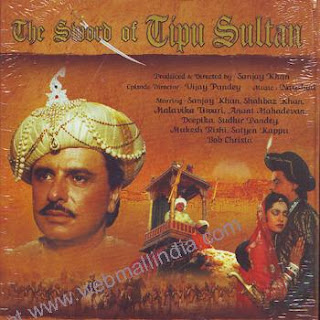
There was also Jhansi Ki Rani Laxmibai (featuring Varsha Usgaonkar/ Uttara of B.R. Chopra's magnum opus), Dastan-e-Hatim Tai, Sanjay Khan's The Sword of Tipu Sultan and The Great Maratha; Bible Ki Kahaniyan, Chekhov Ki Duniya, Mulla Naseeruddin (Nasreddin Hodja, essayed by the versatile Raghuvir Yadav), Panchatantra Ki Kathayein, Ramanand Sagar's Alif Laila (tales from the Arabian Nights); Sindbad the Sailor, Mirza Ghalib (featuring Naseeruddin Shah), Chanakya, Chandrakanta, Bharat Ek Khoj (directed by Shyam Benegal, based on Nehru's "Discovery of India" and narrated by the Nehru look-alike Roshan Seth). There was the hugely popular Katha Saagar (that included Ramanand Sagar's Ramayan and B.R. Chopra's Mahabharat) ... and many more. [Here is a nice link to know more and/or to reminisce about the days gone by.]


Oshin - a popular Japanese drama series was telecast during 1983/84. I have no knowledge of it though.

The perpetually weeping Deepika Chikhalia (as Sita), the somewhat wooden-faced (read: sporting a permanently stunned look) Arun Govil (as Shri Ram) and Nitish Bharadwaj (as Shri Krishna, very aptly cast) became synonymous with the characters they portrayed. People touched their feet, sought their blessings, lit agarbattis in front of their photos or pictures ... and sat reverentially with folded palms when they appeared on-screen! [No wonder they made the transition from of the people, by the people and for the people - very swiftly.] 


On Sunday mornings, when the Ramayan and the Mahabharat was telecast (during different years though), streets wore a deserted look, with even the hard-nosed, lakshmi-conscious shopkeepers somehow forgetting to keep their cash-boxes jingling. None played backyard cricket, street cricket, gully cricket (galli = "alley" in Hindi), corridor cricket, or garden cricket. Morning shows in cinemas were cancelled, and I have a feeling that perhaps even the fastest-fingered pickpockets along with petty thieves and burglars too decided to give their dhanda a break - voluntarily. And THIS no doubt must have had a significant BP-lowering effect - on the law-enforcing force. The latter then (after letting out a well-deserved collective sigh of relief, that is) gratefully turned their attention to the plates of piping hot and unforgettably tasty kosha mangsho (Bengali-style mutton curry), crispy pheesh fry (battered or breaded fried fish, usually bhetki or pomfret), murgir-jhol (Bengali-style chicken curry), wheat or maida-based fluffy luchi or tinkona parota (triangle-shaped paratha), lip-smacking alu-r dom (new baby potato curry) and cholar daal, shaada jhurjhure bhaat (white non-sticky rice) and mishti doi (red sweetened yogurt, the most popular desert in the Bengali cuisine ... and in the whole wide world and beyond). 


[Note: For other parts of the country, appropriate dishes applicable. So, please fill in the blanks.]

Mind you, the perfectly puffed-up pristine-white or wheatish-golden luchi is not even a distant cousin of the puri, and a Bengali breakfast on Sundays is never complete without tinkona parota or luchi with alur dom and cholar daal. And though I mentioned shaada jhurjhure bhaat or white non-sticky rice, many Bengalis favour the short-grained, white, aromatic, sticky rice - Gobindobhog (literally: offering to the gods, more specifically to Shri Krishno). As for the tinkona parota (triangle-shaped paratha) - again a Bengali specialty, it may not be found outside Bengali homes and restaurants.

Btw, 'Golbarir Kosha Mangsho' at Oh! Calcutta is very well-known and finger-licking delicious. Golbari at Shyambazar (a place in Kolkata) is famous for the very dark-coloured, spicy-sweet kosha mangsho that is served at the New Punjabi Hotel. With a closely guarded cooking process, it is what legends are made of and is considered an essential stop if one is on a food-tour of Kolkata.

The hot and spicy Lamb or Mutton dish (kosha mangsho) is best served with tinkona parota or even luchi. One may try it with gorom gorom phulka (puffed Indian bread) too. Rice would do, but not the long-grained Basmati rice. Gobindobhog, it must be.


The (chicken) murgir jhol is very different from the mutton kosha mangsho. The latter is slow-cooked, is more garam masala heavy, thicker, browner and spicier than the yellowish (murgir) jhol or thin gravy. In kosha mangsho, the hot and spicy thick gravy just coats the meat (mutton) pieces. It is okay to leave the murgir jhol a little runny, but the kosha mangsho can never be runny. NEVER. If it did, that would be worse than culinary sacrilege. The mutton in kosha mangsho is served in a spice paste that is thicker and drier than the sauce in the murgir jhol.


Meat on Sundays, after a week of fish and eggs, was the done thing for most Bengali families in the 80s and 90s. Mutton actually. Saturdays meant chicken. But such is the Bengali gene that we simply could not let go of the chicken and fish either. And so, happily ended up by having the best of all the worlds. :-)

I soooooooooo miss those days and those weekly rituals :-(

But then Maa aaschen (Maa is on her way; read: Durga Pujo), and therefore, I can (rather, all of us can) taste all of the above and more - soon. Very, very soon. :-) :-)

Umm, well, from pet-pujo let's get back to the serials of yore. 


There is a possibility that Ramanand Sagar's efforts - have shaped our views and thoughts about the various characters in the Ramayana (including that of the protagonist) - in a regressive manner. Not that books, experts, scholars, pundits, et al have done otherwise. But the visual medium is very powerful; all that we see and hear make a sharp impact on our psyche. Hence, this magnum opus may have (unwittingly) nudged us towards a warped version of Ram, Sita, Lakshman, Raavan, and Hanuman, ... in fact of Ramayan itself; ditto B.R. Chopra's Mahabharat. [Note: Since I plan to share my thoughts on them later, in a different series, I'm refraining from delving too deeply into these two so-called "epics" here.]

Nevertheless, all of the above-mentioned serials were entertaining and informative. We dropped everything in order to garner vantage spots in front of the telly or planned out our day factoring in our favourite shows and serials. Families watched television together, and discussed the goings-on: favourite characters, scenes, twists and turns - threadbare, in the minutest of detail - at the end of the episodes; though the exchanging of a quick comment here or a shared meaningful glance there (while watching the serial or show) was the norm. People identified with the emotions of the protagonist and empathized with the various characters and situations, since the serials of yore did not quite demand a total suspension of disbelief on the viewers' part (as they do today). The serials and shows of the 80s and the early 90s were very much a slice-of-life.

Horror scenes or tense moments were dealt with by spontaneously grabbing the arm of whoever sat beside us ... and then holding on to it tightly!! Remember those days and those moments? Watching a suspense or a thriller, especially during the chilly winter nights, meant something else altogether. Goosebumps obviously, but we were extra careful of our own shadows too ... and even checked under the bed to satisfy ourselves that there were no unwelcome visitors!!

Television meant family time. The only thing one had to do back then was to open the wooden shutters of one's Crown TV or Bush TV set (or fiddle with the numerous knobs and buttons on one's Philips TV set), run up to the terrace and adjust the antenna (if required) and then ... tadaaa...!! 


Pictures of some interesting Black and White television sets (courtesy, the South West England Vintage Television Museum Black-and-White Television Gallery) can be viewed HERE.


(Stay tuned…)

Pictures: 1. Pic1 - Tom and Jerry. 2. Pic2 - Another pair of stars named Tom and Jerry. 3. Pic3 - Remington Steele. 4. Pic4 - Mukesh Khanna as Shaktimaan. 5. Pics 5, 6 and 7 - The Sword of Tipu Sultan, Chanakya and Bharat Ek Khoj respectively6. Pic8 - B. R. Chopra's Mahabharat. 7. Pics 9, 10, 11, 12 and 13 - Luchi-alur dom, cholar daal, fish fry, tinkona parota and mishti doi - in order of pics. 8. Pics 14 and 15 - Kosha mangsho and murgir jhol. 9. Pic16 - Ramanand Sagar's Ramayan and 10. Pic17: Bush TV.

Friday, December 17, 2010

Fatwa tatwa and Mullah Nasruddin!


I came across this 'gem' while trawling the net... and feel like to share it here. It is a must read... I tell you!

Frankly... with no centralized Islamic religious authority like the Pope or the Dalai Lama, pretty much any Muslim "scholar" can issue a fatwa, a religious edict for modern life supposedly guided by the holy Koran or the (less authoritative) hadiths - stories from Prophet Muhammad's life. In recent years, supply has far outstripped demand, and it's getting plain hilarious. Some fatwas are harmless and a little mundane, but lately, some Islamic jurists/scholars have gone bonkers! But then... its good entertainment for us... what?? Now read on...

Headline: Saudi Clerics Advocate Adult Breast-Feeding.

Women in Saudi Arabia should give their breast milk to male colleagues and acquaintances in order to avoid breaking strict Islamic law forbidding mixing between the sexes, two powerful Saudi clerics have said. They are at odds, however, over precisely how the milk should be conveyed.

A fatwa issued recently about adult breast-feeding to establish "maternal relations" and preclude the possibility of sexual contact has resulted in a week's worth of newspaper headlines in Saudi Arabia. Some have found the debate so bizarre that they're calling for stricter regulations about how and when fatwas should be issued.

Sheikh Al Obeikan, an adviser to the royal court and consultant to the Ministry of Justice, set off a firestorm of controversy recently when he said on TV that women who come into regular contact with men who aren't related to them ought to give them their breast milk so they will be considered relatives.

"The man should take the milk, but not directly from the breast of the woman," Al Obeikan said, according to Gulf News. "He should drink it and then becomes a relative of the family, a fact that allows him to come in contact with the women without breaking Islam's rules about mixing."

Obeikan said the fatwa applied to men who live in the same house or come into contact with women on a regular basis, except for drivers.

Al Obeikan, who made the statement after being asked on TV about a 2007 fatwa issued by an Egyptian scholar about adult breast-feeding, said that the breast milk ought to be pumped out and given to men in a glass.

But his remarks were followed by an announcement by another high-profile sheik, Abi Ishaq Al Huwaini, who said that men should suckle the breast milk directly from a woman's breast.

Shortly after the two sheiks weighed in on the matter, a bus driver in the country's Eastern Region reportedly told one of the female teachers whom he drives regularly that he wanted to suckle milk from her breast. The teacher has threaten to file a lawsuit against him.

The fatwa stems from the tenets of the strict Wahhabi version of Islam that governs modern Saudi Arabia and forbids women from mixing with men who are not relatives. They are also not allowed to vote, drive or even leave the country without the consent of a male "guardian."

Under Islamic law, women are encouraged to breast-feed their children until the age of 2. It is not uncommon for sisters, for example, to breast-feed their nephews so they and their daughters will not have to cover their faces in front of them later in life. The custom is called being a "breast milk sibling."

But under Islamic law, breast milk siblings have to be breastfed before the age of 2 in five "fulfilling" sessions. Islam prohibits sexual relations between a man and any woman who breastfed him in infancy. They are then allowed to be alone together when the man is an adult because he is not considered a potential mate.

"The whole issue just shows how clueless men are," blogger Eman Al Nafjan wrote on her website. "All this back and forth between sheiks and not one bothers to ask a woman if it's logical, let alone possible to breastfeed a grown man five fulfilling breast milk meals."

Moreover, the thought of a huge hairy face at a woman's breast does not evoke motherly or even brotherly feelings. It could go from the grotesque to the erotic but definitely not maternal."

Al Nafjan said many in the country were appalled by the fatwa.

"We have many important issues that need discussing," Al Nafjan told AOL News Friday. "It's ridiculous to spend time talking about adult breast-feeding."

Unlawful mixing between the sexes is taken very seriously in Saudi Arabia. In March 2009, a 75-year-old Syrian widow, Khamisa Mohammed Sawadi, living in the city of Al-Chamil, was given 40 lashes and sentenced to six months in prison after the religious police learned that two men who were not related to her were in her house, delivering bread to her.

One of the two men found in her house, Fahd, told the police that Sawadi breast-fed him as a baby so he was considered a son and had a right to be there. But in a later court ruling, a judge said it could not be proved that Fahd was her "breast milk son." Fahd was sentenced to four months in prison and 40 lashes, and the man who accompanied him got six months and 60 lashes.

The original adult breast-feeding fatwa was issued three years ago by an Egyptian scholar at Egypt's al-Azhar University, considered Sunni Islam's top university. Ezzat Attiya was expelled from the university after advocating breast-feeding of men as a way to circumnavigate segregation of the sexes in Egypt.

A year ago, Attiya was reinstated to his post.

These modern "scholars" believe in equal opportunity for both living and non-living things. There was a fatwa against the vuvuzela too... in the UAE! An Abu Dhabi businessman, Dhia al-Din, had planned to import 10,000 of them into the United Arab Emirates. But the trusty General Authority of Islamic Affairs and Endowments in that country intervened on public health grounds, issuing fatwa number 11625... which decreed the vuvuzela haram above 100 decibels. The fatwa or considered legal opinion, holds that scientific studies show that sounds over 100 decibels are bad for the ears, and that the typical vuvuzela emits 126 decibels. So unless someone invented a 'soft-spoken vuvuzela', the instrument was illicit in the Emirates. Now if only the muftis' attention could be drawn to the kazoo.

Wonder what about traffic noise and the loud music at wedding parties?? I also wonder if loudspeakers used for call to prayer might be condemned by fatwas, as they may produce sound greater than 100 decibles...

A fatwa was raised against Bollywood shirtless thunder Salman Khan (born: Abdul Rashid Salim Salman Khan) by a Muslim cleric in India, mufti Salim Ahmad Qasmi, for allowing Madame Tussauds in London to make a wax model of himself. The mufti said the statue is illegal and the Sharia forbids depictions of all living creatures. This created speculation in the press, as no fatwa was released against fellow Muslim, Shahrukh Khan who also has a wax model in the museum. Salman responded by saying, "These fatwas are becoming a joke".

Here is a list of Top 10 bizzare or ridiculous fatwas. Must say all these "scholars" and the numerous fatwas issued by them... bolster the caricature of this religion in the West and the demagoguery of the "jihadis" within their own ranks.

Wonder what the wise Mullah Naseeruddin... known for his wit and sense of humour... would have said though. Many of the tales (associated with him) reveal popular 'truths' that contradict the stern rule and law of organized religious authorities. They make one think, pause for a moment and reflect on the life and the situation we find ourselves in, on the status of our existence and being, the social structure we live within. The hero of the commoner, the bain of the king, cleric and the stiff-necked erudite scholar, who are seemingly always put in their place. The city of Bukhara in Uzbekistan also has a statue of him riding his donkey backwards and grasping its tail (as he is traditionally depicted). The vision of a clergyman/fool riding backwards on his donkey alone causes people to laugh hysterically, whether at Nasruddin, the ulema, the ruler of the land, or at themselves. Listen to any Nasruddin story and you'll inevitably find that they poke fun at religious figures and political authority. The very title of "mullah" or "hodja" that accompanies his name reflects that very human reluctance on the part of many to take many such men seriously.

Muslim saints and mystics use the symbolism of the donkey representing the ego to explain to the unenlightened how the awrad, or practices can be used to train the beast of burden to carry the murid to their spiritual stations. The immortal folk character Mullah Nasruddin/Nasruddin Hodja (now aged 802 years) used humour throughout his life... in order to teach. ("Mullah" means teacher, learned man). There are only a few established facts about him. He was born in a small village near Sivrihisar and later settled in Aksehir in Turkey, where he lies buried. The interesting date 386 was found on a gravestone. Considering the humour of riding his donkey backwards, the date was read backwards, i.e. 683. This date in the hijra calendar corresponds to the year 1284. But some sources claim Nasruddin's birth year as 1208, which would make 2008 his 800th birthday.

Other documents also supports him dying in Aksehir in this year. The village of Hortu near the town of Sivrihisar is the birthplace of the Hodja, where a gravestone dated 1327, belongs to his daughter Fatima, and indicates that she lived for 43 years after his death. His grave has huge ornate wrought iron gates with a massive padlock on them. But if you intend to pay him a visit, you needn't be discouraged by the locked gates. His mausoleum has no walls!

Nasrudin's name is augmented by the title of "mullah" or "hodja", depending upon where the story comes from. People in the Islamic world claim his origin to be Uzbek, Persian, Turkish, Albanian or Pashtun, but he is beyond any ethnic connection, because his stories are basic and relate to every living and thinking human being.

The social symbolism of a silly man/simpleton with a religious title sitting backwards on a donkey reeks of a derisive and pessimistic attitude towards authority, both religious and secular, among those who adore the tales. Ever clever and seemingly able to outwit any foe with ease, Mullah Nasruddin ("MULL-ah nas-rrh-DEEN") brings scholars, imams, clerics, princes and kings down to the common level, kicks them in the butt and slaps them in the face as if with pie. He disrobes them, reveals their true, inner selves, which is more often than not a greedy, selfish and hypocritical self that is rotten at the core.

Abuse and oppression end whenever Nasruddin is challenged to an intellectual duel. He wins, and so does the common man and woman, who, by telling and sharing these tales, lets the oppressive authority in power know that they are being watched, that common people cannot be fooled and lied to, that righteousness will triumph and the powerful will fall into disgrace and shame. It is their just reward for lies, deceit, and manipulation.

Here is one such story.

The King called for Nasruddin to undertake a study. He asked Nasruddin to travel to the ends of the Earth and record the traditions, beliefs and practices of all the worlds religions, and see what it is that they all have in common. No expense would be spared. Whatever Nasruddin needed, he would just simply need to ask and it was granted, for the King wanted this undertaking to be remembered as one of the great studies in human history, the compilation of the all the worlds religious beliefs. Nasruddin set out on his journey across the world, his travel expenses financed by the King himself.

After 20 years, Nasruddin returned to the court of the King, and handed in his report, which contained but one word; carrots.

Needless to say, the King was furious. "I send you around the world, give you everything you need; money, travel expenses, ships, camels, horses, men at arms to protect you, scribes and secretaries, and you return to me with a single, stupid word?"

The King motioned for his executioner to take Nasruddin away. "Before I have you cut into a hundred pieces, I will let you explain your arrogant insolence".

"Well, your majesty" said Nasruddin, " the worlds' religions' are like carrots. You see, they are recognized by their green tops, which are inedible. But the real fruit, the truth, lies buried, under the ground. That is what I found common to all faiths."

The King was speechless, because he knew that Nasruddin was right. He dismissed him and took up gardening. His favorite crop: carrots.

The above story, a popular folk tale, illustrates the understanding among the common people about the dubiousness of the veracity and originality of faith. It is clear that there were many people in past centuries that had their doubts about the origins of religions. And since these particular tales come from the Islamic world, commonly recited enough among common Muslims, must mean that Islam's origins were always in question as well by a great mass of Muslims.

Perhaps these 'Nasruddin' tales and others like them came about after the rise of literalists like Ibn Taymiyya, so as to keep alive the memory of the former years when Muslim scholars held vastly differing views about the origins of the Islamic faith, views that manifested themselves in over 135 schools of thought and in the varied practices found among the many Sufi groups.

Islam's own doubting Thomas, Al Razi, wrote a treatise on atheism, and was tolerated for his unorthodox views. He wouldn't remain alive a single day in Ibn Taymiyya's or ol' man Wahabs' idea of an Islamic utopia. Neither would the questionable Omar Khayyám.

But Nasruddin would keep alive the intellect and the questioning, inquisitive mind among the masses. Through a thousand stories and tales, the mullah/hodja pokes fun at supposed authority and kept the tradition of free thought and intellectualism alive in some very hostile environments. And he's still at it, to this very day.

All those who call for the reform of Islam owe Nasruddin a great debt, and we can honor him by repeating the tales and learning from them. The man sitting on a donkey facing backwards has the ability to topple the mightiest regimes.

Nasruddin lives and acts as long as we tell his tales. Then, he will liberate us for good. Nasruddin is us, and we, him.

One day, Nasruddin came into a town where he noticed a noisy crowd gathered by the river which ran through the middle of the town. He asked what the ruckus was all about, and an old man told him that the local imam fell into the river and cannot swim.

"Give me your hand, oh reverend, so I can pull you out of the river" said a young lad. "Here, here, reach out and just give me your hand" said another. But, the attempts to rescue the imam were all in vain, as he simply kept splashing about, dangerously close to drowning. Fearing that the reputable religious authority of the town would meet his end in the river, the people pleaded with Nasruddin to see if he could do something.

"This imam is a miser" said Nasruddin."You ask for his hand, but he would rather die than give you anything".

Nasruddin called out to the drowning imam... "Oh reverend! Here, take my hand". And with that the imam grabbed onto Nasruddin's hand and was pulled to safety.

"You see" said Nasruddin, "one must know the nature of beast before trying to tame it".


Note: Some info courtesy wikipedia, link1 and link2.

Photographs:

Suits the subject of this post... what??

Tuesday, April 27, 2010

Songs, Blood and Sword... Untruths, Half-truths and Fiction (Part-II)


Author's Note: The 1st part of this series can be read: HERE.

Fatima, who detests Facebook (she would rather have "lunch with David Miliband every day of the week than be on FB"), surprised everyone by showing up on Twitter October last. "Songs of Blood and Sword" isn't Fatima's first book (she has written two before) but with this one she has certainly been getting plenty of attention. If her magic surname, which she has never ever 'misused', was at work when she was sealing the book deal (for a substantial sum of course) or when she was giving interviews to A-list interviewers or when she was chalking out plans for embarking on global book tours - it was obviously absolutely unintentional and totally coincidental! Period.

The sailing has been smooth for Fatima all along, yet she has showed little grace when faced by critics, including an uncle, who claim that the book is full of glaring half-truths or that she has needlessly demonized her late aunt to make a hero out of her dead father. "Pakistani media is spitting blood over it - which is to be expected..." she says and wonders what people who "hate" her have in common! She even got petty with her followers on Twitter wondering how they had access to her account when she had blocked out "undesirables". The real shocker, however, was when she ticked off an Indian follower in Mumbai who said he didn't like her book with: "It seems you care. Why don't you get off my page?" Wonder what is eating Fatima and why. Any thoughts?

During the 2002 elections in the 'land of the pure'... held under Musharraf's watch... Benazir's party was 'disqualified'. 'Coz the leader/chairperson of this party (PPP) was a 'non-graduate' (read the 1st part to get the drift). She being an adept player of the game of chess on the political chess board... responded a day before the disqualification... with a subsidiary party christened as the PPP(P) - Pakistan Peoples Party (Parliamentarians), headed by Makhdoom Amin Fahim (the Pir/Makhdoom of Hala) and registering it. The PPP(P) went on to win the largest number of seats... inspite of the elections being heavily rigged. Musharraf and his cronies with the help of their omnipotent intelligence agencies aka 'angels'... managed to lure away (via liberal doses of threats, unlimited vitamin M and the carrot of ministerships) some members of the PPP(P) into their fold. This bunch was called the PPP (Patriots).

Musharraf the 'surgeon' also assisted in the birth of a new party - the 'Pakistan Muslim League - Quaid' aka 'PML - Q' aka 'Q League' - via a complicated C-section performed on the Pakistan Muslim League (then headed by Mian Nawaz Sharif - the PM he had deposed in a coup d'état in 1999). Nawaz's flock jumped ship almost en masse... those who remained became part of the PML (Nawaz) or the N/Nawaz League. Incidentally the Q in the Q League stood for 'Quaid'... which refers to their Quaid-e-Azam/Father of the nation - Mohammed Ali Jinnah. Some wags said that there were rumbling noises from Mr Jinnah's last resting place, but when examined, the grave was still intact.

Thereafter, Musharraf proceeded to coronate himself as the Generalissimo+Commando+Chief of Army Staff+CEO... and declared his admiration for the Turkish army officer, revolutionary statesman, writer, and founder of the Republic of Turkey as well as its first President - Mustafa Kemal Atatürk. What had the great Atatürk done to deserve this... I don't have a clue. He also went on to pledge "good governance" and "enlightened moderation", though subsequently this proved to be a deadly cocktail... sorry, traditional sherbet/Rooh Afza. He also declared (by waving his closed fist - his trademark punch) that he would "kick out" Benazir Bhutto and Nawaz Sharif (both two-time former PMs)... if they were ever to make the "mistake" of returning to Pakistan. As a 'double insurance' he incorporated the infamous 17th amendment in their Constitution (?) which barred any individual from becoming PM for the 3rd time. No word was spoken regarding the tenure duration of an army chief who also wore 'several hats'... maybe it is implied that the latter species could keep 'heating' the chair for donkey's years. Musharraf conceded that the amendment was "Benazir specific"... even though Nawaz too got affected. He proclaimed that the 'uniform' was his "second skin"... although he was also found to be wearing a 'Bush shirt' underneath. No wonder the Lahoris christened him "Busharraf"... once the exotic flora residing in the most expensive piece of real estate in the US of A at that time... called him his "tight buddy".

Now, the former great leader and visionary, ex-president General Pervez Musharraf spends his 'valuable' time delivering lectures in the land of the 'cow-boys' plus the land of their second cousin - Europe... for which he is paid a considerable fee. Why think tanks, universities, etc., would shell out top dollar to listen to the lectures delivered by a man whose own education stopped at the age of 15, who was no great shakes as a student... my guess is as good as yours. Musharraf is someone who claims to be a Commando, yet has never seen/fought a war. Never even seen the back of the head or even the hair on the back of the head of an enemy soldier... having been an arm-chair soldier all his life. He praises his own muscles and gloats over how women look at him. He does not even have a sense of history... and claims his biggest misadventure to be his 'victory'. I ask you! btw... he even promoted his memoirs on foreign shores, spending hundreds of millions of dollars of tax payers money.

Wait a minute! A 'superpower' claims to have over a 100 banks declaring bankruptcy. Several insurance companies going under. Maybe HE is one of the reason or more precisely his golden voicebox is one of the reasons contributing towards this 'meltdown'. And to think that several people were/are looking for a certain 'Lehmann Brothers'... ??

Musharraf loves to hear the sound of his own voice. Sample this (his comments on rape in Pakistan): ''You must understand the environment in Pakistan. This has become a money-making concern. A lot of people say if you want to go abroad and get a visa for Canada or citizenship and be a millionaire, get yourself raped."

Did I say he is loitering all over the world delivering lectures?? Well not quite. He has never set foot on Antarctica. Maybe the flora and fauna there... especially the polar bears, penguins, seals, etc are not interested in hearing such 'pearls of wisdom'.

Off late Kim Kardashian has more hits on her website than the former dictator - sorry democrat. In other words, the world has still not recognised this wonderful man who triumphantly led a certain hotchpotch country through a golden era of reforms, visionary policies and enormous prosperity. It was during his time that his butter-wouldn't-melt-in-my-mouth prime minister, Mr Shaukat Aziz claimed that Pakistan's march to the glorious future ordained for it, was seen in the proliferation of cell phones. Wiser words have not been spoken before or since! He even declared mobile phone imports an industry. During his time, Mr. Bush Shirt aka the so-called closest ally of the exotic flora, General Pervez Musharraf (along with Shaukat 'Shortcut' Aziz of course), continued doing what he thought was in his best interest. Despite significant economic assistance from the international community in the form of aid and the rescheduling of mammoth debts, the economy of the 'land of the pure' did not get any firm traction. The proliferation of consumer goods through printing money brought more misery and inflation to the country. Furthermore, the state of governance got worse during the 'wise and visionary' Musharraf era... as only jihadis and the rich classes (tied to Musharraf and his cronies) prospered.

Here is an interesting anecdote regarding Shaukat Aziz's 'selection' as the prime minister (in 2004). Musharraf and his cronies were convinced that Benazir's popularity in the West were due to two factors: 1. Her excellent communication skills in the English language and 2. She was very good looking. Hence they went looking for someone who had similar 'credentials'. After interviewing some potential candidates... they decided to freeze on shining Shaukat. He also brought along other handy additional 'qualifications'... his skills at fudging figures were/are legendary. Plus his ability to make their wretched Toshakhana in Islamabad pay for everything... even his (and his boss and their cronies') toilet papers. This also earned him the sobriquet... 'shortcut' Aziz.

He also fancied himself as a ladies' man... and bragged - to Western diplomats, no less - that he could conquer any woman in two minutes. Mr. Aziz adopted an overtly romantic demeanor during his interaction with US Secretary of State Dr. Condy Rice (when she visited South Asia in March 2005). And Ms. Rice, instead of being duly enamored by the Prime Minister's suavity, announced later on that Mr. Aziz had indulged her in unnecessary talk. Marcus Mabry's biography of Dr Rice, "Twice as Good: Condoleezza Rice and Her Path to Power" describes in excruciating detail how the Pakistani Prime Minister's charm failed to work its magic on the steely US Secretary of State.

Mr Aziz "tried this Savile Row-suited gigolo kind of charm: 'Pakistan is a country of rich traditions,' staring in [Dr Rice's] eyes," biographer Marcus Mabry writes. "When Rice sat down with Prime Minister Shaukat Aziz, who fancied himself as a ladies' man, Aziz puffed himself up and held forth in what he obviously thought was his seductive baritone." Mr Aziz, who is married with three children, was out of luck. "There was this test of wills where he was trying to use all his charms on her as a woman, and she just basically stared him down," the Dawn newspaper quotes Mabry, a senior correspondent with Newsweek, as writing. "By the end of the meeting he was babbling. The Pakistanis were shifting uncomfortably. And his voice visibly changed."

He is currently enjoying his well-earned break at his 18-bedroom luxury villa in London... after having grabbed almost all official gifts and artifacts on his way out. The gifts and artifacts (including diamond necklaces, gold ornaments, pearls, Persian carpets and jewelled wrist watches) should have been deposited with the Toshakhana as required by rules... but then he is not called 'shortcut' for nothing! On second thoughts... he was merely following his boss. Latest reports suggest... he has been appointed as financial advisor to a certain Indian-born steel magnate... to whom the former PM had sold Pakistan Steel Mills, which was later stopped by the Supreme Court of Pakistan. Mr. Aziz has denied the news of course.

Coming to the "mother of all elections" - 2008. Despite irrefutable evidence of the heavy and thorough rigging committed in the 2002 elections (held under Musharraf's watch)... the Americans certified them to be reasonably free and fair. Infact, results were blatantly changed even after the candidates themselves had conceded defeat. A particularly egregious example of this was in Lahore, where the 'winner' went on to become a pillar of the Musharraf regime. Benazir was out of the country... but had indicated that she'll return before the elections. The 'establishment forces' asked the senior and influential leaders and stalwarts of the PPP to operate... minus her (as their advise to the PPP has always been). Wonder why was that... ?? She was finally not allowed to contest in 2002... the reason given out: she was not a 'graduate'. The General and the 'establishment forces' did not succeed in their plans then. The PPP(P) has received pretty much the same number of seats in the 2008 elections... as they did in 2002. This time too... the Americans (along with the British) were extremely prompt in certifying them as the "most free and fair elections" in Pakistan and suitably feting Musharraf. They were the ones to credit the PPP(P)'s win onto the "sympathy wave"... supposedly generated due to Benazir's brutal assassination. The PPP leadership under Zardari (Benazir's widower) alleged that the Musharraf administration along with their 'angels' (in connivance with their powerful backers) had indulged in "intelligent rigging". Note: The non-elected forces that have exercised power over Pakistan's destiny are today known as the 'establishment' in their political parlance.

About this "sympathy wave"... let me narrate a Nasreddin Hodja story. One day, Nasreddin brought home one kilo of lamb meat. He asked his wife to prepare it for the evening and set off to the teahouse to spend the rest of the day. Unable to wait... his wife cooked the meat and shared it with her friends. Returning home, Nasreddin was told that the cat had eaten the meat. Puzzled, Nasreddin grabbed the family's mangy cat and put it on the weighing scales. To his surprise, it weighed exactly one kilo. He barked at his wife, "If this is the meat, then where is the cat?"

Now, the question is... if this is the "sympathy wave", where are the votes. And if these are the "votes", then where is the "sympathy wave"... ???

The despotic Zia-ul-Haq's greatest collaborators were superior judges, as were Pervez Musharraf's when he seized power many years later. It is a sobering thought that all the 17 'pillars of wisdom' now gracing the Supreme Court of Pakistan took oath under Musharraf's Provisional Constitutional Order (PCO) in 2000. The Constitution may have had a conscience even then but it wasn't strong enough to deter baptism in the waters of the PCO. Nor was this all. Just as earlier coups had been validated by the superior judiciary, Musharraf's coup was validated too in 2000 in the famous Zafar Ali Shah case. Among the luminaries on that bench headed by Chief Justice Irshad Hasan Khan was an up and coming judge by the name of Iftikhar Mohammad Chaudhry. (Refer to the pic above).

The year was 2000 and the self-employed Chief Executive of Pakistan Pervez Musharraf was basking in the 'unabashed constitutional legitimacy' of his rule since the 12 member Supreme Court bench had validated his October 12, 1999 coup d'état. Few months following the 'coup d'état' Musharraf introduced a Provisional Constitutional Order (PCO) and appointed his new Chief Justice, Irshad Hasan Khan who took oath under this PCO... along with six other judges.

Forty-One out of 43 judges of Lahore High Court, 5 judges of LHC Rawalpindi bench, 8 of Multan bench, Chief Justice of Sindh High Court along with 18 other judges, 11 judges of Peshawar High Court and the then Chief Justice of Baluchistan High Court, Iftikhar Mohammad Chaudhry with his 5 judges were administered oath. However, six judges including former CJ Saeeduzaman Siddique (who contested the Presidential elections '08 from the PML - N platform) refused to take oath under the PCO and nobody named Iftikhar Mohammad Chaudhry toed the line of these senior judges sticking to their principles.

Beside taking oath under the PCO of General Musharraf, Justice Iftikhar Chaudhry was included in the five-member judges bench which dismissed the petition against General Musharraf's dual role of Army Chief and the President of Pakistan. Ironically, Justice Abdul Hameed Dogar (whose tenure is now derided as the "Dogar Court" by the legal acolytes and supporters of the "hero" of the "lawyers movement" - Iftikhar Chaudhry) was seated along with Justice Iftikhar Chaudhry in this bench and both validated the 17th Constitutional Amendment. Thus... considering his valuable commitment and 'services' Gen. Musharraf appointed Justice Iftikhar Chaudhry as the new Chief Justice of the Supreme Court of Pakistan on 7th May 2005.

The rest is history mingled into the hoopla. So much for 'conscience' and 'conscience-keepers'.


(More later...)

Photographs:

1. Fatima Bhutto at the launch of her book 'Songs of Blood and Sword' in 2010.

2. Self explanatory.

Tuesday, April 7, 2009

The Outrageous Wisdom of Mullah Nasruddin!!


Want to read more stories involving this legendary sardonic Sage from the Middle Ages?? Its easy! Just visit my earlier blogs: 1. "The inimitable Mullah Naseeruddin." 2. "The Tales of Mullah Naseeruddin continues.....this time a score!" 3. "As you sow, so you reap." 4. "Return to Mullah Naseeruddin....." and 5. "Mullah Naseeruddin...once more!!" and relive the good old days of your childhood... when "Tinkle" was an inseparable part of our lives.....

1) The Mullah and the Scholar: Once, Mullah Nasruddin was ferrying a Scholar across a river and said something ungrammatical to him. "Have you ever studied grammar?" asked the Scholar. "No," replied the Mullah. "Then half your life has been wasted," said the Scholar looking pityingly at him. Sometime later the Mullah turned to his passenger, "Have you ever learnt to swim?" he asked. "No," replied the Scholar. "Then your whole life has been wasted," said Nasruddin. "We're sinking."

2) Putting off the evil day: Mullah Nasruddin once told a friend, "Well, I have been putting off the evil day for months now, but I have got to go this time."
- ''Dentist or Doctor?" inquired the friend.
- "Neither," said Nasruddin, "I am getting married."

3) The Important thing: One day, Nasruddin was repairing the tiles on the roof of his house. While Nasruddin was working on the roof, a stranger knocked on the door.
- "What do you want?" Nasruddin shouted.
- "Come down," replied the stranger, "So I can tell it. Its an important thing."
At this, Nasruddin slowly and reluctantly climbed down the ladder.
- "Well!" replied Nasruddin, "what was the important thing?"
- "Could you give a little money to this poor old man?" begged the stranger.
The tired Nasruddin started to climb up the ladder and said, "Follow me up to the roof."
When both Nasruddin and the beggar were up on the roof, Nasruddin said, "The answer is no!"

4) The Guest of Honour: One day Nasruddin went to a banquet. As he was dressed rather shabbily, no one let him in. So he ran home, put on his best robe and fur coat and returned. Immediately, the host came over, greeted him and ushered him to the head of an elaborate banquet table.
When the food was served, Nasruddin took some soup with a spoon and pushed it into the pocket of his fur coat and said, "Eat my fur coat, eat! It's obvious that you're the real guest of honour today, not me!"

5) The Lord's own servant: Mullah Nasruddin was unemployed and poor but somehow he got a little money to eat beans and pilaf at a cheap restaurant. He ate and examined the people walking past the restaurant with the corner of his eye. He noticed a tall, handsome, swashbuckler standing behind a crowd. The Man was well dressed from head to foot, wearing a velvet turban (a kind of headdress), silver embroidered vest, silk shirt, satin baggy-trousers and carrying a golden scimitar (a short sword with a curved blade).
Mullah Nasruddin pointed towards the man and asked the restaurant keeper, "Who is that man over there!"
- "He is Fehmi Pasha's servant," answered the restaurant keeper.
Mullah Nasruddin sighed deeply, looked up at the sky and said, "Oh, my Good Lord! Look at that Fehmi Pasha's servant and look at your own servant, here."

6) Playing the 'Zurna': Once, Mullah Nasruddin wished to learn to play the 'zurna' (a double-reed outdoor wind instrument, usually accompanied by a davul {bass drum} in Anatolian folk music. The name 'zurna' is thought to have come from the word 'surnay', translated as 'sur' {a large banquet} and 'nay' {cane or reed}) ..... and therefore visited a 'zurna' player.
- "How much does it cost to learn to play the 'zurna'?" asked Mullah Nasruddin.
- "Three hundred akche (coin) for the first lesson and one hundred akche for the next lessons," said zurna player.
- "It sounds good," replied Mullah Nasruddin. "We may start with the second lesson. I was a shepherd when I was a young boy, so I already had some experience at whistling. It must be good enough for the first lesson, isn't it?"

7) Moons and Stars: "Mullah! What do they do with the old full moons?" asked someone.
- "They cut them up into small pieces and make the stars," answered Nasruddin.

8) The art of carrying a coffin: "Mullah Nasruddin, which side must I walk when carrying a coffin, at the front, back, left or right?"
- "Take which ever position you like best, so long as you're not inside, its fine!" replied Nasruddin.

9) Centre of the World: One day, some people asked Mullah Nasruddin, "Could you tell us the exact location of the center of the world?"
- "Yes, I can," replied Mullah Nasruddin. "It is just under the left hind leg of my donkey."
- "Well, maybe! But do you have any proof?"
- "If you doubt my word, just measure and see for yourselves," responded Nasruddin.

10) The meaning of 'Fate': Someone asked Mullah Nasruddin, "What is the meaning of fate, Mullah Nasruddin?"
- "Assumptions," Mullah Nasruddin replied.
- "In what way?" the man asked again.
Mullah Nasruddin looked at him and said, "You assume that things are going to go well, and they don't - that's called 'bad luck'. You assume things are going to go badly and they don't - that's called 'good luck'. You assume that certain things are going to happen or not happen - and since you lack intuition you don't know what is going to happen. You assume that the future is unknown. Therefore, when you are caught out - you call that 'Fate'.

11) Nasruddin's judgement: 'Qazi' (Judge) Nasruddin was working in his room one day when a neighbour ran in and said, "If one man's cow kills another's, is the owner of the first cow responsible?"
- "It depends," answered Nasruddin.
- "Well," said the man, "your cow has killed mine."
- "Oh," answered Nasruddin. "Everyone knows that a cow cannot think like a human, so a cow is not responsible, and that means that its owner is not responsible either."
- "I'm sorry, Judge," said the man. "I made a mistake. I meant that my cow killed your cow."
Now, Nasruddin, the Judge thought for a few seconds and then replied, "When I think about it more carefully, this case is not as easy as I thought at first." And then he turned to his clerk and said, "Please bring me that big black book from the shelf behind you..."

12) Nasruddin riding backwards on his donkey: One day, Nasruddin arrived in the town, riding his donkey. The people stopped him to ask, "Why are you sitting backwards on your donkey?"
He replied, "I know where I am going, I want to see where I have been."

13) Scoring a century: Mullah Nasruddin became very aged; he attained a hundred years. A reporter came to see him, because he was the oldest citizen around those parts. The reporter said, "Nasruddin, there are a few questions I would like to ask. One is, do you think you will be able to live a hundred years more?" Nasruddin replied, "Of course, because a hundred years ago I was not as strong as I am now."
A hundred years ago, he was a child, a newborn, so he said, "A hundred years ago I was not as strong as I am now, and if a small child, helpless and weak, could survive for a hundred years, why shouldn't I?"

14) The Mullah's diet: Mullah Nasruddin was getting fatter and fatter, stouter and stouter. The doctor advised a diet. After two months, the Mullah went to see the doctor. The doctor said, "My God! It is a miracle! You are even fatter than before - I cannot believe my eyes! Are you strictly following the diet I gave you? Are you eating only that which I prescribed and nothing else?"
Nasruddin said, "Nothing whatever! Of course I'm following your diet."
The doctor couldn't believe it. He asked, "Tell me, Nasruddin, nothing whatever?"
Nasruddin said, "Of course! Except my regular meals." Regular meals PLUS the diet the doctor has prescribed...!

15) Nasruddin - the Magistrate: Mullah Nasruddin was once chosen as the Honorary Magistrate. The first case appeared in his Court. He heard one side of the argument and declared to the Court, "Within five minutes I will be back with the judgment." The Court Clerk could not believe it - he had not heard the argument of the other side! The Clerk whispered in his ear, "What are you doing? Don't you see a simple thing? You have heard only one party, one side. The other side is waiting, and without hearing them you cannot give any judgment. "
Mullah Nasruddin replied, "Don't try to confuse me. Right now I am absolutely clear. If I hear the other side too, then there is bound to be a confusion."

16) The Doctor and the Lawyer: One day a friend met Mullah Nasruddin on the road. He was walking with his two children. The friend asked, "How are your two children?"
Nasruddin responded, "Both are good."
The friend then asked, "How old are they?"
The Mullah replied, "The doctor is five and the lawyer is seven!"

17) Angel: One day, a friend of Mullah Nasruddin was talking to him. He said, "My wife is an angel."
At this, the Mullah said, "But mine is still alive."

18) Pretty girl: As a pretty girl passed by, Mullah Nasruddin turned to look at her. His wife grumbled, "Every time you see a pretty girl you forget you are married."

- "That's where you are wrong," said the Mullah. "Nothing makes me more aware of the fact!"

19) Nasruddin at the 'Turkish bath': Nasruddin went to a 'Turkish bath'. As he was poorly dressed the attendants treated him in a casual manner, gave him only a scrap of soap and an old towel. When he left, Nasruddin gave the two men a gold coin each. He had not complained, and they could not understand it. Could it be, they wondered that if he had been better treated he would have given an even larger tip? The following week Nasruddin appeared again. This time, of course, he was treated like a King. After being massaged, perfumed and treated with the utmost deference, he left the bath, handing each attendant the smallest possible copper coin.
- "This," said Nasruddin, "is for my previous visit. The gold coins were for this week."

20) Hair on his coat: Mullah Nasruddin was caught again and again (by his wife) with some woman's hair on his coat. He asked a friend for help.
The friend said, "It is simple. Before entering the house, you just clean your coat. Carry a brush always."
Nasruddin said, "That's a good idea! It never occurred to me, so simple!"
He found a brush. Before entering his house, he thoroughly cleaned his coat, suit and shirt. His wife looked at his coat, at his shirt, and then..... simply started beating her head and crying and screaming! Nasruddin asked, "What has happened? There is no hair at all!"
She said, "That's why I am crying. It seems you have started loving some bald woman!"

21) Nasruddin at the race course: One day, Mullah Nasruddin was gambling in a horse race. First race: he lost; second, he lost; third - same fate..... he went on losing. Whereas, the two ladies sitting by his side (in a box) were continuously winning every race. Then at the seventh race he could no longer contain his curiosity. What system were they following? Every race, and it was now the seventh, they had been the winners while he had lost all of them, and he had been working so hard for a win! So, he gathered some courage, leaned over, and asked the ladies, "You are doing very well?"
They replied, happily, "Yes." They were beaming with joy.
So he whispered, "Can you tell me about your system? Just a hint."
One lady said laughingly, "We have a lot of systems! But today we have decided to go for long tails."

22) Nasruddin visits a Psychiatrist: Once, Mullah Nasruddin was being analyzed by a Psychiatrist. After many months of analysis, many meetings, the Psychiatrist said, while the Mullah lay on the couch, "This is what I feel, this is what I conclude, you need to fall in love, you need a beautiful feminine object. Love is your need."
The Mullah said, "Between you and me, don't you think love is silly?"
The Psychiatrist said, "Between you and me? It would be absurd!"

23) The 'Kaftan': Old Mullah Nasruddin had become a very rich man. When he felt death approaching he decided to make some arrangements for his funeral. He ordered for a beautiful coffin made of ebony wood with satin pillows inside. He also had a beautiful silk Kaftan made for his dead body to be dressed in. The day the tailor delivered the Kaftan, Nasruddin tried it on to see how it would look, and suddenly exclaimed, "What is this! Where are the pockets?"

24) The Mullah is bored: One day, Mullah Nasruddin was tired, weary and bored. He called for his limousine, got in and said to the Chauffeur, "James! Drive at full speed.....over the cliff. I have decided to commit suicide."

25) Quiet during Khutbah: Once, Mullah Nasruddin, the 'Imam' of a Masjid (Mosque), and also the father of two young children, was about to enter the Masjid to give the Khutbah (Friday sermon). Before he entered the Mosque, he reminded them (his children) to be quiet - especially when he is delivering his 'Khutbah'.
He then asked his children, "And why is it necessary to be quiet during Jummah?"
Little Ahmed jumped up and yelled, "Because people are all sleeping!"

26) Saints' Brain: Once, Mullah Nasruddin visited a store. He found rare tropical fruits from the jungles of South America and many strange delicacies from Africa and the Middle East. In one corner he found a counter with several trays of human brains. There were politicians' brains at $1 per pound, engineers' brains at $2 per pound, and there was one tray with Saints' brains at $50 per ounce.
Since all the brains looked very much alike, he asked the man behind the counter, "Why do you charge so much more for the Saints' brain?"
The man peered out from behind his glasses and answered, "Do you have any idea how many Saints we have to go through to get a pound of brain?"

27) The broken glasses: One day, a worried Nasruddin visited a friend and said, "Ah, poor Mr. Jones. Did you hear, what happened to him? He tripped at the top of the staircase, fell down the whole flight, banged his head and died."
Shocked, his friend replied, "Died?"
- "Died," Nasruddin repeated with emphasis, "and broke his glasses too!"

28) Nasruddin and the Falling Woman: Once, a woman was standing on her balcony, on the 12th floor, when she accidentally fell off. As she is falling down, Father O'Reilly caught her from his balcony on the 9th floor.

Grateful for saving her, she said, "Oh, Thank you, you saved my life, I'll do anything for you!"
Father O'Reilly replied, "Okay then, sleep with me!"
- "In your dream, you pig!" the woman retorted.
- "Fine," said Father O'Reilly, shrugging his shoulder and then let go of her.

As the woman is falling again, Rabbi Goldberg caught her from his balcony on the 6th floor.
Again, being grateful, she said, "Oh, Thank you, you saved me, I'll do anything that you ask!"
Rabbi Goldberg said, "Okay then, sleep with me!"
- "You must be joking, you ape!" the woman replied.
- "Well, good bye then," responded Rabbi Goldberg and he lets go of her.

Now, as she is falling, yet again, she thought to herself that it would have been better if she had slept with either the Rabbi or the Priest.

But as luck would have it, this time she lands in the arms of Mullah Nasruddin who is standing on his balcony on the 3rd floor.
She cuts to the point, "Thank you handsome, you saved my life, I'll sleep with you!"
- "Astaqfirullah!" gasps Mullah Nasruddin and he lets go of her.....!

29) The 'Truth': "I do not know what the 'Truth' is," began a 'Dervish' after listening to one of Nasruddin's infrequent lectures..... but that was not it! Nasrudin began to tear his clothes and shouted, "Such expertise! Knowing what one does not know. If only I could know what I do not know."

30) Sweetest of all: "And are mine the only lips, Nasruddin, that you have ever kissed?" asked she.

- "Yes," said Nasruddin, "and they are the sweetest of all!"


Photograph: A cartoon depicting Mullah Nasruddin and his wife.