Showing posts with label Nostalgia Lane: Doordarshan (DD). Show all posts

Saturday, October 6, 2012

Doordarshan, etc: Wisps of Nostalgia (Part-IV)


Author's Note: The 1st part, 2nd part and 3rd part of this series can be read by clicking on the respective links.

Television came about when some really nice people spent hours and years pouring over pieces of wood, glass, wires and what-not, shirking food (rather, proper nourishment) and even sunlight may be, so that folks like us could view the world and it's many wonders - from the comfort of our homes. God bless them.

Here's a bit about early television: link.

And here is a picture of an old B&W television set with rabbit-ears antenna. This type of antenna was also much fiddled with - in another time and era. Many people may have acquired their knowledge of angles and geometry from them:


That laziness-perpetuating gadget called the "remote" was unknown (or at least not as widely known as we do today) and so a frequent dash to the roof - in order to fix the antenna was de rigueur. However, before that, the television-set itself was given a well-deserved thumping slap or a series of such slaps - so as to discipline it (read: jolt it to 'life'). And on most occasions this worked perfectly well, the proverbial "sanjeevni booti" again. During football or cricket matches (telecast on TV), the thumping slap became more and more urgent and vigorous ... and frequently came along with several frustrated kicks (to the television stand or the table legs or the showcase sides - atop which the TV set was perched). As per the principle of ek ke sath ek free, you know. :-)

Extra vigil was kept so as to not let birds sit on the antenna to catch their breath or to contemplate about their next meal ... and since (in those days) information could not be dissipated instantly, a certain Maneka Gandhi never even got a whiff of this unpardonable cruelty towards birds.

Here is a crow surveying all that there is to survey, at dusk - perched on an antenna:


A migratory bird taking in the scenery while sitting atop a television antenna:


And here's a pair of pigeons: having finished their coochie-coo sessions, is perhaps contemplating whether to 'white-wash' or not:


Back then, we also kept a sharp watch-out for kites during the kite-flying season, since kites got tangled in the T.V. antenna and distorted the picture. When we flew those kites, well, it was another matter altogether ... everyone else's antennas was at grave risk then. People (neighbours) were forced to climb up onto the roof to restore it, and get the signal back - several times. Which meant: less serial/show/match-viewing time and more antenna-fixing time!

Now here's a scenario: Kite gets caught on the T.V. antenna and ruins the reception. Someone (usually an older boy or an adult male) climbs up on the roof and sends the kids (or the younger sibling) inside to watch and tell him when the T.V. is fixed. The usual question: "How is it now?" The usual answer: "Still not okay, baba (or dada)." The latter continues to struggle with the antenna stoically, while the kids or the younger sibling continues to watch snatches of weird T.V. programs. Finally, when the T.V. shows a clear picture, it's mission accomplished; there's joy and victory writ large on the faces - big and small.


Now, how many times has that happened with you? :-)

Flying a kite is an unforgettable experience, really. The clear blue sky, wisps of cottony cloud floating by, the mellow sun and a soothing wind. As the kite soars higher and higher, the pull of the wind becomes greater and greater. It's a sort of tug-of-war; the other "warrior" being totally invisible, never seen ... yet fully fathomed. To keep the kite (still) flying high, despite the windy odds or to skillfully guide it back within one's grasp, safe and sound, hale and hearty ... well, it's an art, and science too - of the highest order. 

To compete with others, other kites that is, to try and cut off as many as one could (in the spirit of friendship that too!!), before one's own went down ... accompanied by loud whoops of "bhoo katta" - ah, those were the days.

A glorious soaring kite suddenly taking a sharp fall and then getting tangled amidst green leafy trees: how many times has that happened with you?? 


Innumerable times, right?! :-) 

Coming back to the televisions of yore, one of the first post-wooden shuttered TVs that instantly captured our attention and imagination was the Onida T.V. - thanks to its innovative campaign, spear-headed by the 'Onida devil' and the now-iconic tagline "Neighbour's envy, owner's pride." In the eighties, living rooms across India would prime themselves daily - in anticipation of a visit by a horned goblin, green and slimy, who had a permanent arch to his bushy brow and a fiendish glint in his eyes; something that never failed to enliven the evenings. Played with characteristic elán by a model co-ordinator and stylist of the 1980s, David Whitbread, it made its mark. Later, actors such as Rajesh Khera, Ashish Chaudhary and Amir Bashir have played the part. Here's the original 'Onida Devil' - David Whitbread - doing what he was (and always will be) best known for:


The original Onida Devil. Watch HERE1 and HERE2.


Let's retrace our steps now, here is a quick history of the television antenna: link.

Actually, the humble television antenna made sure we remained fit, active and slim-and trim; no gym, exercise-cycles or exercise bikes were required. No fancy-sounding protein-shakes, health-drinks were needed either. Chocolate Horlicks, Bournvita or Boost (mixed with milk, so as to avoid crinkling or wrinkling one's nose) was more than enough. Maltova and Viva too vied for attention and were succumbed to once in a while. Complan, despite its pretensions to be a complete planned food - came a distant sixth, Ovaltine was passé. We indulged our taste-buds occasionally with Rasna, aam pora shorbot or aam-panna (a delicious, cooling raw mango drink to help beat the heat through summer). 


A tall glass of chilled sweet lassi, aam ka (mango) lassi, flavoured or mango milk-shake, cold or iced coffee, matka kulfi, cups of flavoured yogurt, bhars of mishti doi (earthen tumblers of red sweetened yogurt) et al were happily consumed, with nary a worry about calories and weight gain. Reason: the ever-present television antenna!

Just as on the lush-green agricultural fields one found the ever-present scarecrow (kak-taduaa) - to scare the living daylights out of sundry crows and other varieties of pesky winged creatures; similarly, atop all kinds and make of buildings (read: homes) one found the tall television antennas. They stood patiently, come rain, shine or hail, just so as to shoo away the weight worries of the denizens inhabiting those homes. Where would you find such a selfless friend?!

Now, green crop fields or even green grassy fields for that matter, are becoming a rarity. Thanks to "development". Joysticks and Xbox it is.

This scarecrow has such a nice and impressive presence in a field of sunflowers. In a few years, who knows, even they too might be a distant memory:


Here is a history of scarecrows: link.

Those were simple, carefree and magical days. In the 80's and until the early 90's, some of the best T.V shows were aired on DD1 (DD National) and DD Metro. Maybe we can just about stretch the compliment to the mid-90s as well, since quite a few good serials and shows managed to hold their ground (despite the cable deluge). Here is DD's signature montage of yore: 


And here is the much-viewed and now cherished DD Vande Mataram: link.

DD brought families together - people watched television together, ate together and experienced a myriad of emotions together. These days, folks seem to be having a relationship with technology, and prefer to spend most of their waking hours, sending and responding to SMS, updating status messages and indulging in "bird-speak". And in-between those SMS and the "bird-speak", they are busy chasing "Angry Birds". Nothing to do with Alfred Hitchcock, mind you. Hungry birds (the ones that were shooed away by the scarecrows) have now given way to "Angry Birds" - so as to exercise one's thumbs, while real birds are fast becoming a rare sight, even the ubiquitous crow!!

Sadly, with the arrival of that great cable deluge, the exercise-friendly antennas were unceremoniously washed away, and were promptly replaced by dish antennas of all shapes and sizes instead. Of course, since these dish-shaped ones help some of our matinee idols make some more moolah to run their chulha, they cannot be all bad. 


But, given that the 'entertainment' dished out these days furiously oscillates between 'tear-jerking', 'heart-rending', 'ear-drum splitting' and 'mind-blowing'; it won't be entirely off the mark to conclude that their combined 'effort' culminates in frequent pilgrimages to the stethoscope-and-scalpel-wielding species. From antenna-frugality to cableonomics !! 

Here's is a pigeon resting atop a new-age dish antenna ... and 'white-washing' it too:


(Stay tuned…)

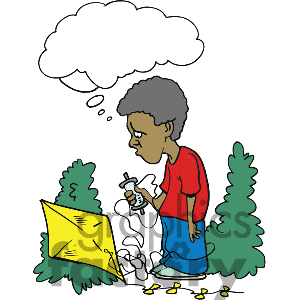
Pictures: 1. Pic 01an old B&W television set with rabbit-ears antenna. 2. Pics 02, 03 and 04 - a crow, a migratory bird and a pair of pigeons sitting atop a T.V. antenna respectively. 3. Pic 05 - fixing the antenna, courtesy Simpson. 4. Pic 06 - a young boy upset about his tangled kite. 5. Pic 07 - a kite caught amidst green leafy foliage6. Pic 08 - the original 'Onida Devil'. 7. Pic 09 - Horlicks and a glass of milk. 8. Pic 10 - a T.V. antenna. 9. Pic 11 - a scarecrow standing in a field of sunflowers. 10. Pic 12 - DD's signature montage 11. Pic 13: a television set of yore pierced by an arrow. 12. Pic 14 - a dish antenna and 13. Pic 15 - cut to modern times: a pigeon resting atop a dish antenna.

Thursday, October 4, 2012

Doordarshan, etc: Wisps of Nostalgia (Part-III)


Author's Note: You may read the 1st part of this series: HERE.

The 2nd part can be read: HERE.

During the heyday of DD (Doordarshan), we watched a somewhat phenomenal amount of television, really. Something that would surely come as a shock-surprise to the generation that missed out on those glorious and carefree days (of DD) and grew up on a heavy diet of Cable television instead (thanks to a veritable deluge of channels, courtesy liberalization). Though I must admit that quite a few offerings (from the latter's stable) like: Cartoon Network, History Channel, National Geographic and Animal Planet grabbed our attention instantly. And still do.

Thank god for the adorable pair of Tom and Jerry ... they are a real stress-buster and an unlimited source of fun and joy!


Apparently, almost a decade before MGM's famed cat-and-mouse team; Amadee J. Van Beuren's New York studio had another pair of stars named Tom and Jerry. 


Get yourself acquainted with them: HERE.

There was a cult hit as well: Remington Steele - the 1980s television detective drama, starring Pierce Brosnan and Stephanie Zimbalist. The series actually blended the genres of romantic comedy, drama, and detective procedural. Before the cable revolution arrived, we would somehow catch the right airwaves (by never giving up on the self-deprecating yet miraculous powers of the TV antenna; aside: by twisting and turning it continuously) ... and then watch whatever we could (of Remington Steele) with immense satisfaction and glee.


The Irish Pierce Brosnan effortlessly went from Remington Steele and made his mark as the suave 007 (James Bond). In terms of suaveness, he can be ranked next to Scottish legend-turned-knight, Sir Sean Connery. I think.

Popular sci-fi, fantasy and historical tales on DD were: Star Trek and Captain Vyom (featuring Milind Soman - pre or post the 'famous' Tuff shoe ad, I don't quite know *wink*). Frankly, I could never figure out the huge popularity of Shaktimaan featuring Mukesh Khanna in the title role - in his post-Bheeshma avatar. But it clearly gave him a new lease of life and offered what must have been a welcome break (to him at least) from the numerous Bheeshma-Pitamah-like elderly man roles that sort of swamped him during those days. We too got to view him minus the lush extra-white beard that drowned most of his (then still-young) face. Shaktimaan was a desi Superman-like character that made elders and parents keep a constant watch on their wards, since the latter were more than keen to practice (in real life) what Shaktimaan performed on-screen.


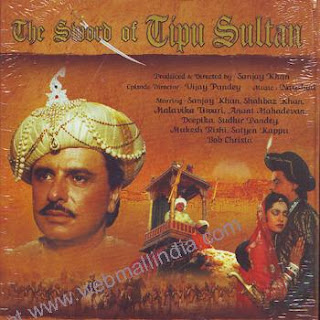
There was also Jhansi Ki Rani Laxmibai (featuring Varsha Usgaonkar/ Uttara of B.R. Chopra's magnum opus), Dastan-e-Hatim Tai, Sanjay Khan's The Sword of Tipu Sultan and The Great Maratha; Bible Ki Kahaniyan, Chekhov Ki Duniya, Mulla Naseeruddin (Nasreddin Hodja, essayed by the versatile Raghuvir Yadav), Panchatantra Ki Kathayein, Ramanand Sagar's Alif Laila (tales from the Arabian Nights); Sindbad the Sailor, Mirza Ghalib (featuring Naseeruddin Shah), Chanakya, Chandrakanta, Bharat Ek Khoj (directed by Shyam Benegal, based on Nehru's "Discovery of India" and narrated by the Nehru look-alike Roshan Seth). There was the hugely popular Katha Saagar (that included Ramanand Sagar's Ramayan and B.R. Chopra's Mahabharat) ... and many more. [Here is a nice link to know more and/or to reminisce about the days gone by.]


Oshin - a popular Japanese drama series was telecast during 1983/84. I have no knowledge of it though.

The perpetually weeping Deepika Chikhalia (as Sita), the somewhat wooden-faced (read: sporting a permanently stunned look) Arun Govil (as Shri Ram) and Nitish Bharadwaj (as Shri Krishna, very aptly cast) became synonymous with the characters they portrayed. People touched their feet, sought their blessings, lit agarbattis in front of their photos or pictures ... and sat reverentially with folded palms when they appeared on-screen! [No wonder they made the transition from of the people, by the people and for the people - very swiftly.] 


On Sunday mornings, when the Ramayan and the Mahabharat was telecast (during different years though), streets wore a deserted look, with even the hard-nosed, lakshmi-conscious shopkeepers somehow forgetting to keep their cash-boxes jingling. None played backyard cricket, street cricket, gully cricket (galli = "alley" in Hindi), corridor cricket, or garden cricket. Morning shows in cinemas were cancelled, and I have a feeling that perhaps even the fastest-fingered pickpockets along with petty thieves and burglars too decided to give their dhanda a break - voluntarily. And THIS no doubt must have had a significant BP-lowering effect - on the law-enforcing force. The latter then (after letting out a well-deserved collective sigh of relief, that is) gratefully turned their attention to the plates of piping hot and unforgettably tasty kosha mangsho (Bengali-style mutton curry), crispy pheesh fry (battered or breaded fried fish, usually bhetki or pomfret), murgir-jhol (Bengali-style chicken curry), wheat or maida-based fluffy luchi or tinkona parota (triangle-shaped paratha), lip-smacking alu-r dom (new baby potato curry) and cholar daal, shaada jhurjhure bhaat (white non-sticky rice) and mishti doi (red sweetened yogurt, the most popular desert in the Bengali cuisine ... and in the whole wide world and beyond). 


[Note: For other parts of the country, appropriate dishes applicable. So, please fill in the blanks.]

Mind you, the perfectly puffed-up pristine-white or wheatish-golden luchi is not even a distant cousin of the puri, and a Bengali breakfast on Sundays is never complete without tinkona parota or luchi with alur dom and cholar daal. And though I mentioned shaada jhurjhure bhaat or white non-sticky rice, many Bengalis favour the short-grained, white, aromatic, sticky rice - Gobindobhog (literally: offering to the gods, more specifically to Shri Krishno). As for the tinkona parota (triangle-shaped paratha) - again a Bengali specialty, it may not be found outside Bengali homes and restaurants.

Btw, 'Golbarir Kosha Mangsho' at Oh! Calcutta is very well-known and finger-licking delicious. Golbari at Shyambazar (a place in Kolkata) is famous for the very dark-coloured, spicy-sweet kosha mangsho that is served at the New Punjabi Hotel. With a closely guarded cooking process, it is what legends are made of and is considered an essential stop if one is on a food-tour of Kolkata.

The hot and spicy Lamb or Mutton dish (kosha mangsho) is best served with tinkona parota or even luchi. One may try it with gorom gorom phulka (puffed Indian bread) too. Rice would do, but not the long-grained Basmati rice. Gobindobhog, it must be.


The (chicken) murgir jhol is very different from the mutton kosha mangsho. The latter is slow-cooked, is more garam masala heavy, thicker, browner and spicier than the yellowish (murgir) jhol or thin gravy. In kosha mangsho, the hot and spicy thick gravy just coats the meat (mutton) pieces. It is okay to leave the murgir jhol a little runny, but the kosha mangsho can never be runny. NEVER. If it did, that would be worse than culinary sacrilege. The mutton in kosha mangsho is served in a spice paste that is thicker and drier than the sauce in the murgir jhol.


Meat on Sundays, after a week of fish and eggs, was the done thing for most Bengali families in the 80s and 90s. Mutton actually. Saturdays meant chicken. But such is the Bengali gene that we simply could not let go of the chicken and fish either. And so, happily ended up by having the best of all the worlds. :-)

I soooooooooo miss those days and those weekly rituals :-(

But then Maa aaschen (Maa is on her way; read: Durga Pujo), and therefore, I can (rather, all of us can) taste all of the above and more - soon. Very, very soon. :-) :-)

Umm, well, from pet-pujo let's get back to the serials of yore. 


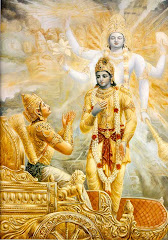
There is a possibility that Ramanand Sagar's efforts - have shaped our views and thoughts about the various characters in the Ramayana (including that of the protagonist) - in a regressive manner. Not that books, experts, scholars, pundits, et al have done otherwise. But the visual medium is very powerful; all that we see and hear make a sharp impact on our psyche. Hence, this magnum opus may have (unwittingly) nudged us towards a warped version of Ram, Sita, Lakshman, Raavan, and Hanuman, ... in fact of Ramayan itself; ditto B.R. Chopra's Mahabharat. [Note: Since I plan to share my thoughts on them later, in a different series, I'm refraining from delving too deeply into these two so-called "epics" here.]

Nevertheless, all of the above-mentioned serials were entertaining and informative. We dropped everything in order to garner vantage spots in front of the telly or planned out our day factoring in our favourite shows and serials. Families watched television together, and discussed the goings-on: favourite characters, scenes, twists and turns - threadbare, in the minutest of detail - at the end of the episodes; though the exchanging of a quick comment here or a shared meaningful glance there (while watching the serial or show) was the norm. People identified with the emotions of the protagonist and empathized with the various characters and situations, since the serials of yore did not quite demand a total suspension of disbelief on the viewers' part (as they do today). The serials and shows of the 80s and the early 90s were very much a slice-of-life.

Horror scenes or tense moments were dealt with by spontaneously grabbing the arm of whoever sat beside us ... and then holding on to it tightly!! Remember those days and those moments? Watching a suspense or a thriller, especially during the chilly winter nights, meant something else altogether. Goosebumps obviously, but we were extra careful of our own shadows too ... and even checked under the bed to satisfy ourselves that there were no unwelcome visitors!!

Television meant family time. The only thing one had to do back then was to open the wooden shutters of one's Crown TV or Bush TV set (or fiddle with the numerous knobs and buttons on one's Philips TV set), run up to the terrace and adjust the antenna (if required) and then ... tadaaa...!! 


Pictures of some interesting Black and White television sets (courtesy, the South West England Vintage Television Museum Black-and-White Television Gallery) can be viewed HERE.


(Stay tuned…)

Pictures: 1. Pic1 - Tom and Jerry. 2. Pic2 - Another pair of stars named Tom and Jerry. 3. Pic3 - Remington Steele. 4. Pic4 - Mukesh Khanna as Shaktimaan. 5. Pics 5, 6 and 7 - The Sword of Tipu Sultan, Chanakya and Bharat Ek Khoj respectively6. Pic8 - B. R. Chopra's Mahabharat. 7. Pics 9, 10, 11, 12 and 13 - Luchi-alur dom, cholar daal, fish fry, tinkona parota and mishti doi - in order of pics. 8. Pics 14 and 15 - Kosha mangsho and murgir jhol. 9. Pic16 - Ramanand Sagar's Ramayan and 10. Pic17: Bush TV.

Saturday, September 8, 2012

Doordarshan, etc: Wisps of Nostalgia (Part-II)


Author's Note: You may read the 1st part of this series: HERE.

Here's a little trivia regarding "Kitty" of Jasoos Karamchand: the popular misconception that Sushmita Mukherjee is actor Keshto Mukherjee's daughter. In the 70's and early 80's, Keshto Mukherjee specialized in comic drunkard roles in Hindi films. He was a discovery of the legendary Ritwik Ghatak, but it was Asit Sen who ought to be credited for unearthing Keshto Mukherjee's potentials for the patent drunkard act (although he was a teetotaler in real life). Here is Keshto Mukherjee doing his classic act (that of a drunkard) and annoying Utpal Dutt immensely (in the Hrishikesh Mukherjee-directed 1979 classic 'Golmaal'):


Now, think of the latest auteurism that has come out of Ro'hit' Shetty's stable? A (supposedly) 'modern take' on Hrishi-da's classic! Enough said. Think of the other 'masterpieces' being churned out at regular intervals? There seems to be no dearth of Vitamin M - when it comes to sponsoring or financing below-the-nadir stuff. And to think we are bang in the middle of a bottom-less recession! Strange indeed!!

It is true that various channels are exploring new avenues for generating mirth. Shekhar Suman's now-defunct Movers and Shakers tried mime and parody so successfully that one of his prime targets, the then prime minister, Mr. Atal Bihari Vajpayee, personally complimented him. Later Suman anchored Poll Khol wherein he targeted various politicians. Often, the monkey in the show overshadowed the host.

As for Shekhar Suman (SS), he is now a pale shadow of his once-upon-a-time-glory-days of 'Reporter', which kept us glued to the television screens. Samir Hegde of 'Reporter' was a total contrast to Samir Diwan of the laugh-riot 'Dekh Bhai Dekh'. However, both were a far cry from the blabber-box that SS has somehow managed to metamorphose himself into. The much-admired Samir Hegde (from 'Reporter') was a very unassuming, well-meaning, down to earth, investigative journalist. His manner and attitude were more intense, more ponderous and in terms of dialogue ... understandably quite unlike those mouthed by the somewhat frivolous Samir Diwan (from 'Dekh Bhai Dekh'). But we loved them both - one made us think, the other made us laugh. And Shekhar's expressions weren't frozen then. Unfortunately the same cannot be said about his various avatars that plague us now (or have been plaguing us for a while now) - on the idiot-box. Botox has claimed yet another high-profile victim. Muscles and nerves have been 'downsized' as per the signs of the times and have been given the 'golden handshake' aka 'voluntary retirement' too; therefore, no voluntary or involuntary responses or reflexes to be found on the faces of folks facing the arc-lights. Muscles and nerves: RIP.

Sadly, now-a-days, people turn into walking mummies but no pyramids are built anywhere. That's progress, I guess.

Whether 'Movers and Shakers' - the very popular tongue-in-cheek current affairs show hosted by Shekhar Suman in his earlier mobile-faced avatar, complete with an in-house musical band, innovatively christened the 'Rubber-band' - was telecast by DD (Doordarshan) or not, I don't quite remember.

Ditto 'Pradhan Mantri' featuring the versatile Kay Kay Menon and Malvika Tiwari. But 'Ji Mantriji', which took a barbed look at Babudom and featured Farooque Shaikh, was telecast by Star Plus.

We discussed crime-based and detective serials in the 1st part of this series. Frankly, when it comes to iconic detective characters, I prefer the original ... or at least one or the other of their earlier versions. In short: yours truly isn't really taken up with any of the upgraded or modified variations, no matter how many clothes they shed. I mean: the compulsory 'moulting' that actors have to undergo these days, whatever the weather. 

So, Benedict Cumberbatch or no Benedict Cumberbatch, my loyalties firmly lie and will remain with Jeremy Brett - always. He IS Sherlock Holmes. Period. Gazing down from the suitably cavernous windows of 221B, was Jeremy Brett. Watching him stride on the small-screen today - as the peerless detective (thanks to box-set DVDs), I am transported back to my childhood days. Jeremy Brett and Sherlock Holmes continue to thrill and fascinate.


[Jeremy Brett: website.]

During his distinguished 40-year career, however, Brett's repertoire included such diverse roles as the foppish Freddie Eynsford-Hill in the 1964-film version of My Fair Lady, Bassanio, Robert Browning, Che Guevara, Dracula, and even Dr. Watson in a 1980 Los Angeles production of the play The Crucifer of Blood, with the screen-legend Charlton Heston as Holmes. However, Brett's brilliant portrayal of Sherlock Holmes in a series of episodes for British television (filmed between 1984 and 1994) - remains ever-popular. With his intense and ascerbic Holmes, Brett added something to the character (of Holmes) that no one else whom I have seen has done: He brought a sense of humor to the part. And he and David Burke and Edward Hardwicke let us know that this Holmes was very good friends with Dr. John Watson.

Jeremy was very ill by the time the last series of S.H went into production. His ill-health visibly showed but he bravely carried on. Here was a well-known and accomplished actor willing to go to the lengths of losing weight, dying his hair and taking up pipe smoking to properly inhabit the world's most famous detective. It all seems very irresistible; but it also proved fatal for him, leading to a nervous breakdown, repeated illness and a premature death.   

Robert Downey, Jr.? Nah.

Although Sir Arthur Conan Doyle's writings (as well as those of the celebrated Agatha Christie's) were not free from racial leanings and colour, we - the Indians - have always possessed the necessary magnanimity and sophistication required to separate the milk (cream) from the water. The fair and lovely world has failed to acknowledge this. But so what?

However, while the British have preserved the famous (yet fictitious) address - 221B Baker Street; we - the Indians - have destroyed and demolished every inch of the brilliant Shankar Nag's beloved "Malgudi". There are some lessons that we can and should learn from our erstwhile colonial masters; unfortunately, we have been insisting on learning the wrong ones.

I am glad that the "Feluda" series still remain firmly in the hands of the Ray family and Satyajit Ray's son, Sandip Ray, remains perched atop the director's saddle. Otherwise, by now cringe-inducing item numbers, crude jokes, lewd gestures, double-entendre dialogues and adult content would have first wormed their way into the narrative - flaunting the ever-ready laws of necessity, market dynamics, changing tastes of Gen X, reel-life mimicking real-life, aesthetics and whatnot. And though I said, "first wormed their way into the narrative", in reality, all the above would have quickly enveloped and submerged the narrative itself - thanks to sundry moneybags, etc that are so keenly and genuinely 'concerned' about projecting real life onto reel life ... while upholding 'our ancient culture and traditions' - simultaneously. Quite a balancing act, must say.


I so wish Satyajit had made 'Badshahi Angti' (The Emperor's Ring) - even before making 'Shonar Kella' (The Golden Fort). This way, Soumitro would have played Feluda and that would have been a perfect cinematic treat - one, we would have cherished forever. The quartet of Feluda, Sherlock Holmes, Byomkesh Bakshi and Tintin actually made us want to be detectives, no? Here is Soumitro as Feluda (in Shonar Kella) exercising his 'mogojastro' - his agile mind and brilliance:


None can quite match up to Soumitro. He is an enchanting combination of good looks, great personality and classy demeanor; a rich, cultured voice combined with layered and nuanced acting abilities. Many think him to be Satyajit Ray's alter ego. Anyone going gaga over thespian Dilip Kumar's or even the emperor-of-ham, Shahrukh Khan's portrayal of 'Devdas' - should watch the Bangla version featuring Soumitro - in the same role. Superlative. [Those who do not know the language can use the subtitles option.]

Now, weren't all these movies so much better than the heavy-duty-dialogue-spewing-angry-young-man types, heaving bosoms, jhatkas-matkas, cheap jokes, rehashed clichés and all? Weren't they better than what now passes for "new-age cinema" or masquerades as "mass entertainment"? 

Do films really portray real-life? Is reel-life actually inspired by or borrowed from real-life? Or is reel-life a powerful vehicle, instrument and medium - for creating multiple mindsets, one that has been utilized to the hilt? 

As usual ... you decide.

The charm of the classics: be it movies, books or music have not diminished, even after many decades ... and they will most certainly retain their allure after the passage of several more decades. Then why is there a dearth of such movies, books or music (conveniently ascribed to 'changing tastes of Gen X', 'market dynamics' and the like) ?? Why is there a sudden 'paucity of funds'?

What do you think? [Always keep your thinking cap handy - to bring out the mini-Sherlock Holmes in you :)]

Well ... I guess we have discussed enough about movies; lets get back to the television fare of yore.

Some of DD's shows targeted at children (but enjoyed by viewers of all ages) were: Fairy Tale Theatre (that featured all-time favourites like: Beauty and the Beast, Jack and the Beanstalk, Snow White and the Seven Dwarfs, Pinocchio, etc); Dada Dadi Ki Kahaaniyan, Vikram Betaal, Singhasan Battisi, Indradhanush, Space City Sigma, Stone Boy, Malgudi Days, Tenali Rama, Potli Baba Ki, Superhuman Samurai Cyber Squad, Knight Rider, Street Hawk and a suspense-horror serial - Qile ka Rahasya (1989). 

Rex Smith (astride the all-black mesmerizing mean machine) - was played by Jesse Mach. We diligently watched every episode, and that does say it all, doesn't it? :) Do have a look:


Seema Kapoor, actor and TV personality Annu Kapoor's sister and acclaimed actor Om Puri's first wife, helmed the very popular 'Qile Ka Rahasya'. How the jealous, egoistic and insecure Om Puri destroyed her and her very promising career - are stuffs that legends are made of. But I wish this legend were not made; and those of you that have watched this serial would agree, won't you?

I'm still shaking my head though.

[Annu Kapoor is the guy who played Sridevi's editor in Mr. India.]

R.K. Narayan's "Malgudi Days" continue to charm and perhaps DD still telecasts all of the 39 episodes off and on. But there are CDs and DVDs for the ones (like moi) that cannot wait until DD decides to re-telecast them. Here's My Reflections on 'Malgudi Days' and Malgudi: How a village was transformed into R.K. Narayan's fabled town - from the blog archives.


Malgudi Days was and is not the usual comic production. The idyllic setting, innocent characters having small problems, and only imaginary demons to contend with, leave one wishing for such a charmed and laid-back life. When, at the end of an episode, a problem is resolved, one feels contented. A sense of happy satisfaction is the ultimate test of a quality comedy. But can we say: Give us more?! 

Well, you and I both know the answer to that one.

'Malgudi Days' remains one of the most loved, nostalgic television series of all times. I have shared my thoughts in my two earlier posts on Malgudi (links provided above) and therefore ain't deliberating on it again. But this is what my friend Rajdeep had to say: "Malgudi Days has been one of my favorite books over the years. We identify ourselves with those stories. The present generation X does not seem to. They will miss the treasure not us. Unfortunately most of the good books do not have translations in foreign languages. I actually gifted a copy of "Malgudi" to my university library here, though I doubt anyone would ever read it!" [Rajdeep was referring to the library of a well-known University in Japan.]

This, while certain "ist" and "ism"-based writers seem to have no shortage of translators and publishers; no matter how cringe-worthy their works are. *Sigh*

The spicier the contents, the longer the line of translators and publishers - outside their homes and offices; the more coloured, fantasy and figment of imagination-inspired their works on history, the more the takers - and all of them then jointly flood our bookstores and airwaves. Result??

Post the unbottling of the much-vaunted liberalization genie, television has not been indulging in profound issues or even simple entertainment; it keeps doling out stupefying doses of frivolities. The inane soaps churned out sap the intellect and wearies the soul. And, since the entertainment industry caters to the lowest common denominator, it cannot afford to be cerebral. Or so we have been told; and the ones that tell, expect us (viewers) to accept this logic and be 'understanding' too.

Sadly, ever since the almost-namesake of 'Kyunki Chaach Bhi Kabhi Dahi Thi' hit our cable airwaves, all we have been receiving are perfectly coiffed and made-up dolls - glittering sarees, elbow-length churiyan, big bindis, high-heel stilettos, wedge or beaded sandals and all ... preparing tea at the crack of dawn (read: in the blue predawn hours). Perhaps to wake up the roosters for their morning cock-a-doodle-doo, or maybe that too has been outsourced - to this churiyan-brigade. Who knows?


(Stay tuned…)

Pictures: 1. Pic1 - Keshto Mukherjee and Utpal Dutt in Golmaal (1979). 2. Pic2 - Jeremy Brett (as Sherlock Holmes from "The Problem of Thor Bridge". 3. Pic3 - Feluda and Topshe - sketch by Satyajit Ray. 4. Pic4 - Soumitra Chattopadhyay as Feluda (in Satyajit Ray's Shonar Kella). 5. Pic5 - Rex Smith (astride the mesmerizing mean machine) - played by Jesse Mach. 6. Pic6 - R.k. Laxman's sketch for 'Malgudi Days'; don't remember the link :(