Author's
Note: You may read Shubho Mahalaya - Maa aaschhen: HERE.
The
ever-mesmerizing Bhavani Dayani can be read: HERE.
Shubho Maha Saptami: Who or rather what are Maa Adi
Shakti and Maa Kaalraatri? can be read: HERE.

Now, let us make a humble
attempt to understand why the formless forces or energies of the cosmos or
the formless elements of nature have been given a form or shape -
by our ancients. If you were to ask me, I would say there are about four major reasons.
But before we delve into them, here is the
Mahalakshmi Stotram:
If you remember, in the
Chapter 11 of the Srimad Bhagavad Geeta, before describing to Arjun (and through him to all of us) what is now widely known as - His
"Vishwaroop", Shri Krishna tells Arjun: that only those that were truly "awakened" can
"see" it. Those that are yet to "awaken" - cannot "see" it. Here "awakened" =
one who has truly opened one's mind's eye (i.e. one's manas-chokhshu or divya drishti). Such
a person is a "muni" and this is irrespective of gender, occupation, background or age. A "muni" is one
who is a true "jnani" or the possessor of illumined knowledge. Note:
One does not come to possess illumined knowledge (jnana) automatically, i.e. by
simply reading various books or texts; one also needs to be free from ego
(ahamkara) and other base (or aasuric) traits, such as: selfishness,
anger, greed, resentment, and so on.
"Vishwaroop" refers to the the formless Paramaatma i.e. the Supreme Soul or the Parameswar, i.e. the Supreme Being - appearing in forms that incorporate the complete creation or Universe in it. The word "Vishwaroop" is formed by joining two Sanskrit words: "vishwa" meaning the universe and "roop" meaning form. After "sighting" this form (Vishwaroop) in his mind's eye (manas-chokhshu or divya drishti), Arjun understands the true meaning of the cosmic process and of destiny.
sri bhagavaan uvaacha:
pashya me paartha roopaani shatasho'tha sahasrashah
naanaavidhaani divyaani naanaavarnaakriteeni cha // 11.5 //
Translated: Sri Bhagavan Krishna says, "Behold, O Partha, by hundreds and thousands, My different forms: celestial, varied in colours and shapes." [Partha, as you know is another name for Arjuna.]
While describing the
"Vishwaroop", Shri Krishna speaks in the first person, aham (I, Me); but
He is not referring to Himself. He is simply describing that Supreme Force of the Universe or the Cosmic
Energy: that our ancients called the Supreme Soul (the Paramaatma) or
the Supreme Being (the Parameswar) ... and which encompasses the whole of
Creation and the Universe itself. In short: Shri Krishna is describing Creation per se. However, Shri Krishna wasn't stating anything that was not already known. He was merely distilling the timeless knowledge of the 'Veds' (whether of all the four - the Rg
Ved, the Sama Ved, the Yajur Ved and the Atharva Ved - I know not; but of the Rig Ved certainly) and those of the 'Panchatantra', some of the 'Upanishads', the
'Ramayan,' etc., as well. The Srimad Bhagavad Geeta is a treasure-trove that holds immense wisdom and illumined knowledge
within its pages and is the jewel of ancient India's spiritual wisdom, one that
is not constrained by time and space.
[Note: Shri Krishna did not "transform" Himself into "His" own cosmic form, as is mistakenly and somewhat popularly believed. He only simplified things (complex science, rather vigjnana and philosophy) to such an extent that it enabled Arjun to clearly "perceive" the Divine form of the otherwise formless Cosmic Energy also known as the Supreme Soul (the Paramaatma) or the Supreme Being (the Parameswar) - in his mind's eye. Hence, Shri Krishna says, "Behold, O Partha..."
By "... My different forms", Shri Krishna is referring to that eternal, uncreated, formless and without gender Cosmic Energy - of which He too is (and we all are) a part of. Please note: I am using "is" - since the soul or the aatma is Energy; and it too is eternal, imperishable and uncreated. The soul (aatman) is a part of that greater Cosmic Energy (also known as the Supreme Soul (the Paramaatma) or the Supreme Being (the Parameswar).
The "vision", that of "Vishwaroop", is not a myth or legend ... it is a spiritual experience.]
[Note: Shri Krishna did not "transform" Himself into "His" own cosmic form, as is mistakenly and somewhat popularly believed. He only simplified things (complex science, rather vigjnana and philosophy) to such an extent that it enabled Arjun to clearly "perceive" the Divine form of the otherwise formless Cosmic Energy also known as the Supreme Soul (the Paramaatma) or the Supreme Being (the Parameswar) - in his mind's eye. Hence, Shri Krishna says, "Behold, O Partha..."
By "... My different forms", Shri Krishna is referring to that eternal, uncreated, formless and without gender Cosmic Energy - of which He too is (and we all are) a part of. Please note: I am using "is" - since the soul or the aatma is Energy; and it too is eternal, imperishable and uncreated. The soul (aatman) is a part of that greater Cosmic Energy (also known as the Supreme Soul (the Paramaatma) or the Supreme Being (the Parameswar).
The "vision", that of "Vishwaroop", is not a myth or legend ... it is a spiritual experience.]
Let us now discuss the much-disdained "idol worship" or the much-maligned "idolatry" bit:
1. According to the timeless "way of life" also known as "Sanaatan Dharma", every thing (whether animate or
inanimate) that can be found anywhere in Creation - is also a part of that Cosmic Energy, known as the
Supreme Soul (the Paramaatma) or the Supreme Being (the Parameswar);
since the formless and without gender Paramaatma or the Parameswar "manifests" Itself as
Creation (Srsstti). It includes us too. That is: our mortal bodies (sharira) as well as
our immortal souls (aatman) are a part of the Supreme Soul (the Paramaatma)
or the Supreme Being (the Parameswar).
This Supreme Soul (the Paramaatma)
or the Supreme Being (the Parameswar) therefore, possesses many
forms or shapes, since anything, no matter what it is, whether animate or inanimate - so long it can be found in
creation or in nature - automatically "represents" the shape of the
Supreme Soul (the Paramaatma) or the Supreme Being (the Parameswar).
... And yet, despite the above, the Supreme
Soul (the Paramaatma) or the Supreme Being (the Parameswar) remains
formless (nirākārā).
This is because: Creation
itself is transient; it is an illusion - known as the cosmic illusion
or Maaya.

Here's why: The sky does
not remain blue forever nor do the grass remain green. The mist-covered
mountains, the cloud-kissed forests, the clear skies and the waters of the oceans, all
appear to be blue in colour, but it is not so in reality; the clouds appear
to be white, but is colourless. The snow-covered mountains appear to be golden-hued - when the first rays of the sun falls on them, but is no so in reality. A rainbow appears to be real. A newborn does not remain a newborn;
it grows up to become a toddler, then a youth, and gradually attains old age;
all the while the body undergoes change. New species evolve while some become
extinct. Old stars die and new ones are born, a comet burn's out, a meteorite
or an asteroid crashes into something, the universe is constantly expanding ... and
so on and so forth; there is change happening all the time, though we may
not realize it or "see" it. This is the cosmic illusion or Maaya -
that our ancients have written about.
As mentioned earlier: the Cosmic Energy or the forces of the Universe (also known as: the
Supreme Soul [the Paramaatma] or the Supreme Being [the Parameswar]
has no gender and is formless (nirākārā, nirguna). It manifests
Itself as Creation (Srsstti), i.e. through anything that is a part of or
can be found in Creation. It therefore, possesses many forms or shapes,
since anything, no matter what it is, whether animate or inanimate - so long it can be found in creation or in
nature - automatically represents the shape of the Supreme Soul
(the Paramaatma) or the Supreme Being (the Parameswar).
Just like our aatman
(the soul, which is immortal or indestructible).
The aatman
(which too is a part of the Parmaatma - the Supreme Soul or the Supreme
Being - the Parameswar) has no shape or form of its own, it is: nirākārā and has no gender. Yet, when it
takes on or inhabits a mortal body (i.e. assumes a temporary outer
covering), from time to time, it receives a shape and identity of its own. In
short: it then takes on a form (ākārā, saguna). But
then, since this form or shape is not a permanent one, and is only a temporary or transient
outer-covering, the aatman (soul) per se still remains formless (nirākārā). This too is part of that cosmic
illusion or Maaya.
Here's why: the temporary
or the mortal form (i.e., the outer-covering or the body, sharira) is created, it undergoes transformation, changes
shape and is mortal; the aatman (or the soul) is not. The aatman was never created
(immortal) and cannot be destroyed (imperishable). It has always existed. It is eternal.
Our soul (or the aatman)
is a part of (and behaves in a manner very much similar to the one displayed by) the
Supreme Soul (the Paramaatma) or the Supreme Being (the Parameswar). The latter has no form of its own (i.e. It is nirākārā, nirguna), and
yet It also manifests Itself through everything that is a part of Creation
(Srsstti). Similarly, when, from time to time, our formless soul or the aatman takes
on or inhabits a mortal body (i.e. a temporary outer-covering, sharira), it too
receives a form (ākārā, saguna) and identity of its
own. That is: It then takes on a temporary independent shape of its own (i.e. It becomes: ākārā, saguna); while also continuing to remain a part of the
formless (nirākārā, nirguna) Supreme Soul (the Paramaatma) or the Supreme Being (the Parameswar) - eternally.
This is Dvaita: the interplay between the nirākārā (the formless, the all-pervading, the omnipresent) + the nirguna (the unmanifested) and the ākārā (the with form) + the saguna (the manifested).
Shri Krishna has said, that only those that were truly enlightened or possessed illumined knowledge (jnana), i.e. the ones that have truly opened their "mind's eye" (i.e. those who are: muni) - will be able to "see" it, understand it and comprehend it. Anyone else, no matter who they were, will not. One needs to let go of ego (ahamkara), prejudice, etc to be able to "see" or "perceive" it (i.e. to be able to "see" the formless yet with form "roop" of the Cosmic Energy or the Paramaatma or the Parameswar) - in one's mind's eye.
This formless yet with form "roop" of the Cosmic Energy or the Paramaatma or the Parameswar - is everywhere in Nature, in Creation, in the Universe, and within ourselves as well - as the formless, unmanifested energy or soul + the transient perishable form or the manifested cosmic illusion or Maaya.
This is Dvaita: the interplay between the nirākārā (the formless, the all-pervading, the omnipresent) + the nirguna (the unmanifested) and the ākārā (the with form) + the saguna (the manifested).
Shri Krishna has said, that only those that were truly enlightened or possessed illumined knowledge (jnana), i.e. the ones that have truly opened their "mind's eye" (i.e. those who are: muni) - will be able to "see" it, understand it and comprehend it. Anyone else, no matter who they were, will not. One needs to let go of ego (ahamkara), prejudice, etc to be able to "see" or "perceive" it (i.e. to be able to "see" the formless yet with form "roop" of the Cosmic Energy or the Paramaatma or the Parameswar) - in one's mind's eye.
This formless yet with form "roop" of the Cosmic Energy or the Paramaatma or the Parameswar - is everywhere in Nature, in Creation, in the Universe, and within ourselves as well - as the formless, unmanifested energy or soul + the transient perishable form or the manifested cosmic illusion or Maaya.
2. The human mind is unable to visualize, fathom or comprehend vacuum or for that
matter, anything that is without form or shape (nirākārā).
It needs something, anything, as a reference point.
The nirākārā (the formless, the all-pervading, the omnipresent) + Nirguna (the unmanifested) form of the Cosmic Energy (also known as Supreme Soul [the Paramaatma] or the Supreme Being [the Parameswar] is not easily comprehended. But the medium through which we can reach that formless, unmanifested Cosmic Energy (also known as the Supreme Soul [the Paramaatma] or the Supreme Being [the Parameswar] IS the ākārā, i.e. the with form + manifested version: the Saguna.
... And hence the temporary, transient idol. The temporary, transient "idol" is a "manifested" version or form of that timeless, eternal, formless, unmanifested Cosmic Energy (or the Paramaatma or the Parameswar) that can be seen with mortal eyes. "Idols" can include anything that is to be found in nature; and is not limited to just the mud or terracotta idols that are "worshiped" these days.
The nirākārā (the formless, the all-pervading, the omnipresent) + Nirguna (the unmanifested) form of the Cosmic Energy (also known as Supreme Soul [the Paramaatma] or the Supreme Being [the Parameswar] is not easily comprehended. But the medium through which we can reach that formless, unmanifested Cosmic Energy (also known as the Supreme Soul [the Paramaatma] or the Supreme Being [the Parameswar] IS the ākārā, i.e. the with form + manifested version: the Saguna.
... And hence the temporary, transient idol. The temporary, transient "idol" is a "manifested" version or form of that timeless, eternal, formless, unmanifested Cosmic Energy (or the Paramaatma or the Parameswar) that can be seen with mortal eyes. "Idols" can include anything that is to be found in nature; and is not limited to just the mud or terracotta idols that are "worshiped" these days.
... Since the formless Cosmic Energy (also known as the Supreme Soul [the Paramaatma] or the Supreme Being [the Parameswar] also manifests Itself through
everything that is a part of Creation (Srsstti), our ancients have
revered Creation (Srsstti) and Nature (Prakriti) and all that is a part of It. Hence,
they have worshiped the trees and the forests, the water-bodies, the hills and the
mountains, the rocks and the stones, the Mother earth and even the animals and
the birds. Simply because: all of these were a part of Creation and the formless Cosmic Energy (also known as the Supreme Soul [the Paramaatma] or the Supreme Being [the Parameswar] - manifested Itself through them. Our ancients have also worshiped the "Panchabhoota" or the five
elements of nature (i.e. air, water, soil, fire and space). All of these have
predated humankind and are a part of Creation; their presence has made it conducive for humans to
appear on this planet, and without them (i.e., without the five elements
of nature, along with trees, animals, mountains, et al) - humankind would not have survived until now, and will not survive in future - in the absence of these five elements. Therefore, the five elements
of nature (the Panchabhoota), along with the trees, the animals, the mountains, et al were daaivic or noble or divine-like; i.e. they possessed noble qualities ('coz they have helped Creation, and life - including those of humans - to sustain themselves on this planet).

Our ancients, through the
ages, have also revered mortals (the ones that possessed noble or daaivic
traits) and elevated them to the status of the divine (one who possesses
noble traits or qualities; i.e. as "manifestations" of the Cosmic Energy or the forces behind the cosmos). Thus, mortal
humans - men and women - that have stood up to assorted negative or aasuric
forces or influences, and saved this world and its inhabitants from aasuric
stranglehold or from annihilation, through the ages - have been given the status of
the divine (one who possesses
noble traits or qualities; i.e. as "manifestations" of the Cosmic Energy or the forces behind the cosmos) - and revered as a Bhagavan or a Bhagavati - by
our ancients. [This was our ancients' way of honouring these great souls or Mahaatma-s
that have helped preserve the "way of life" or "Sanaatan Dharm" - as it ought to
be, and restored peace and balance in society; and whose efforts have helped
civilization to flourish well.
Divine probably comes from dev, which in turn comes from daaivic
- meaning: noble traits or qualities. Therefore, divine = one who possesses
noble traits or qualities. It can be animate or inanimate. Dev (an
honorific for a great male) or Devi (an honorific for a great female)
comes from daaivic - meaning: one who possesses noble traits or
qualities. Devi - is essentially a reverential honorific for a female -
entity, person, power, force or energy that is worthy of respect and worship. Dev
is the male version.]
Also: Bhagavan (again: an honorific for a great male)
or Bhagavati (an honorific for a great female) - does not
mean the Cosmic Energy (also known as the Supreme Soul [the Paramaatma] or the Supreme Being [the Parameswar] or God.
The Cosmic Energy (also known as the Supreme Soul [the Paramaatma] or the Supreme Being [the Parameswar] is not a person, It is formless
and has no gender. It is omnipresent, omnipotent and omniscient (this is because: Mother Nature and Creation that are also part of the formless Cosmic Energy - was the source of all the knowledge and wisdom accumulated by our ancients). The Cosmic Energy (the Paramaatma or the Parameshwar i.e. the
Supreme Soul or the Supreme Being), manifests Itself
everywhere; the whole of creation IS the Paramaatma, or the Parameshwar.
Everything, whether animate or inanimate, if it is a part of this world, this universe or this creation, IS the Paramaatma,
or the Parameshwar.
The forces of the cosmos are everywhere, and whatever is there in creation (whether seen, unseen, animate or inanimate) is a part of that "divine" or "noble" force or energy (the Cosmic Energy, also known as the Supreme Soul [the Paramaatma] or the Supreme Being [the Parameswar.]) And It includes us: our mortal body (sharira) and our immortal soul (aatman) as well.
Therefore, there is nothing that is "evil" in this world (Bhuvan), in the universe (Brhmaand) or in creation (Srristi) - as per the wisdom of our ancients, and as per the "Sanaatan Dharm" or "the timeless way of life". [Sanaatan = timeless, Dharm = path or the way of life.]
The forces of the cosmos are everywhere, and whatever is there in creation (whether seen, unseen, animate or inanimate) is a part of that "divine" or "noble" force or energy (the Cosmic Energy, also known as the Supreme Soul [the Paramaatma] or the Supreme Being [the Parameswar.]) And It includes us: our mortal body (sharira) and our immortal soul (aatman) as well.
Therefore, there is nothing that is "evil" in this world (Bhuvan), in the universe (Brhmaand) or in creation (Srristi) - as per the wisdom of our ancients, and as per the "Sanaatan Dharm" or "the timeless way of life". [Sanaatan = timeless, Dharm = path or the way of life.]
So, even when the miscreants (negative or aasuric
forces or entities) are dealt with (by some or the other great human), it is not
a punishment, but an opportunity for redemption - provided to
those aasuric entities by these great humans.
Both 'Sur' or 'Sura' (i.e. positive forces or entities)
and 'Asur'/'Ashur'/'Asura' (i.e. negative forces or entities) are required for
creation, and they are present everywhere: in creation, in the universe and in
this world; they are present within us (as traits), within society and within
civilization as well - so as to sustain it, or rather, so as to maintain the
balance in Creation.
You see, imbalance is also part of nature. ['Vikriti' is also part
of 'Prakriti'.]
Bhagavan or Bhagavati comes from 'Bhagavat', which means:
'Fortunate' or 'Blessed'. 'Bhagavat' in turn is derived from 'Bhagah', which
means 'good fortune'. Therefore, any mortal human who is able to rise above his
or her own needs, wants, fears, emotions or attachments, and performs great
deeds (keerti) for the greater good of mankind or for the good of society, is "the
Fortunate One" or "the Blessed One" (or in other words: a Bhagavan or a Bhagavati). "Fortunate"
or "Blessed" - since he or she will "live forever", through the greatness of his
or her actions and deeds. These exceptional and great humans manage to even triumph death
(which is inevitable for us all) - by becoming "mrityunjay" (mrityu =
death, jay = triumph). These great souls become "amar" (i.e. they "live"
eternally or they "live" forever - through their keerti or legacy). [Note: Even now we say, "Bhagya" to indicate "fate" or "fortune", and "Bhagyavan" to indicate 'someone with good fortune or on whom fate is smiling'.]
Our ancients believed that the formless forces of the
universe or the energies behind the cosmos "manifested" themselves through
these great humans - the ones that leave behind great deeds (keerti) and play their role
for the greater good of mankind and for society; and due to whose actions,
civilization is able to (and has continued to) flourish well.
Therefore, for our ancients, these great humans were
"avatar-s" or "manifestations" - of the formless forces of the universe or the
energies behind the cosmos (also known as the Supreme Soul [the Paramaatma] or the Supreme Being [the Parameswar).

Avatar/ this is how I see it: When the finite meets the
infinite, when the created meets the uncreated, when the mortal meets the
immortal, it is then that that formless force or energy,
also known as God, Parmaatma (the Supreme Soul), Parameshwar (the
Supreme Being) or the divine, is "manifested" - as an Avatar or even
as a Yug Purush or a Yug Manavi.
These various titles were honorifics given out of reverence, and in acknowledgement of someone's great deeds and their impact on society and on people's lives. Our ancients acknowledged the ones that made the highest contribution towards the good of society and towards civilization to flourish well (thereby touching and impacting the lives of a vast number of people) - as "avatar".
These various titles were honorifics given out of reverence, and in acknowledgement of someone's great deeds and their impact on society and on people's lives. Our ancients acknowledged the ones that made the highest contribution towards the good of society and towards civilization to flourish well (thereby touching and impacting the lives of a vast number of people) - as "avatar".
The Chapter IV - 8 of the
Srimad Bhagavad Geeta [Srimad = an honorific, Geeta = songs; Srimad Bhagavad
Geeta = the 'Songs of the Blessed One or the Fortunate One'] -
says:
paritranaya sadhunam
vinasaya ca duskrtam
dharma-samsthapanarthaya
sambhavami
yuge yuge
Meaning:
Paritranaya: for the deliverance; sadhunam: of the devotees; vinasaya:
for the annihilation; ca: also; duskrtam: of the miscreants; dharma:
the principles and ideals of 'the right path' or the 'way of life' as it should
be - for the good of humankind and for civilization to flourish well; samsthapana-arthaya:
to reestablish; sambhavami: I do appear; yuge: millennium; yuge:
after millennium.
Translation:
In order to
rescue/deliver the good and the pious (the noble-hearted) and to annihilate the
miscreants, as well as to reestablish the principles and ideals of 'the right
path' or the way of life as it should be - for the greater good of humankind and
for civilization to flourish well, I advent Myself millennium after millennium.
[Do read my post: Shri
Krshn: Notes on why he is called 'Bhagavan' - where I have made an attempt to
explain the above in greater detail.]
However, as you may have
noticed, Shri Krishna uses the word or term "duskrtam"
- for aasuric i.e. negative forces or entities. It means "miscreants". [Note: Even now we use a variation of this Sanskrit word "duskrtam". We say: "duskritakaari", and that too means: miscreants.]
Words or concepts like "evil", "devil", etc is not a part of our culture or the philosophy of life rooted in Vedic wisdom (i.e., "Sanaatan Dharm"). [Veda comes from the root vid, which means: wisdom, knowledge.]
Words or concepts like "evil", "devil", etc is not a part of our culture or the philosophy of life rooted in Vedic wisdom (i.e., "Sanaatan Dharm"). [Veda comes from the root vid, which means: wisdom, knowledge.]
The third and fourth reasons as to
why our ancients worshiped "idols" - I will try to explain in my next post. So,
do stay tuned.
Jagdambe Jagdambe, a Bhajan by Pandit Jasraj: [This stuti
pad (hymns of praise) is dedicated to and in praise of Maa Jagadamba (the
divine Mother, the Mother of this Jagat - also known as Maa Shakti or
Maa Durga). Jagadamb Jagadamb sura nara muni sumiranta: O Maa
Jagadamba, great humans, ordinary mortals and the "awakened" ones - all pray to
You. Sanmukha stuti karanta, shasasrta shir sarawanta: They sing Your
praise in front of You; You are ever-present in their thoughts and minds. Siraganga
harakhanta, nAchata shri herambh: Bhagavan Shiv (sira ganga - the
one who holds Maa Ganga in his jaata or dread-locks) smiles, as Shri
Ganesh (Herambh) dances with joy]: "Herambh" means "one who is erudite, wise,
respected and calm in disposition", hence the metaphor of an elephant-head.
Here is a lovely Bhajan (Sarasvathi Vandhana)/ Raag Bhairavi:
Ustad Rashid Khan and Pandit Bharat Bhushan Goswami: [Vocal: Ustad
Rashid Khan, Sarangi: Pandit Bharat Bhushan Goswami]:
Shubho Moha Nobomi.
(Do stay tuned…)
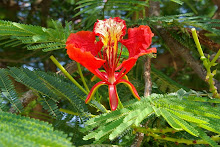
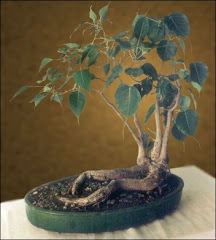
Pictures: 1. Pic 01 - The sacred symbol
AUM - AUM is the sound of primal energy, the sound of the universe itself. 2.
Pic
02 - Maa Durga along with Shri Ganesh, Sri Sri Lakshmi and Sri Sri Saraswati. 3. Pic 03 - Mother Nature in all her glory. 4. Pic
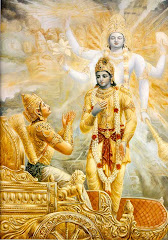
04 - Mother Nature in all her glory - yet again. 5. Pic 05 - Shri Krishna explaining the "Viswaroop" to Arjuna.



 Posts
Posts