Showing posts with label Food/Cuisine. Show all posts

Thursday, October 4, 2012

Doordarshan, etc: Wisps of Nostalgia (Part-III)


Author's Note: You may read the 1st part of this series: HERE.

The 2nd part can be read: HERE.

During the heyday of DD (Doordarshan), we watched a somewhat phenomenal amount of television, really. Something that would surely come as a shock-surprise to the generation that missed out on those glorious and carefree days (of DD) and grew up on a heavy diet of Cable television instead (thanks to a veritable deluge of channels, courtesy liberalization). Though I must admit that quite a few offerings (from the latter's stable) like: Cartoon Network, History Channel, National Geographic and Animal Planet grabbed our attention instantly. And still do.

Thank god for the adorable pair of Tom and Jerry ... they are a real stress-buster and an unlimited source of fun and joy!


Apparently, almost a decade before MGM's famed cat-and-mouse team; Amadee J. Van Beuren's New York studio had another pair of stars named Tom and Jerry. 


Get yourself acquainted with them: HERE.

There was a cult hit as well: Remington Steele - the 1980s television detective drama, starring Pierce Brosnan and Stephanie Zimbalist. The series actually blended the genres of romantic comedy, drama, and detective procedural. Before the cable revolution arrived, we would somehow catch the right airwaves (by never giving up on the self-deprecating yet miraculous powers of the TV antenna; aside: by twisting and turning it continuously) ... and then watch whatever we could (of Remington Steele) with immense satisfaction and glee.


The Irish Pierce Brosnan effortlessly went from Remington Steele and made his mark as the suave 007 (James Bond). In terms of suaveness, he can be ranked next to Scottish legend-turned-knight, Sir Sean Connery. I think.

Popular sci-fi, fantasy and historical tales on DD were: Star Trek and Captain Vyom (featuring Milind Soman - pre or post the 'famous' Tuff shoe ad, I don't quite know *wink*). Frankly, I could never figure out the huge popularity of Shaktimaan featuring Mukesh Khanna in the title role - in his post-Bheeshma avatar. But it clearly gave him a new lease of life and offered what must have been a welcome break (to him at least) from the numerous Bheeshma-Pitamah-like elderly man roles that sort of swamped him during those days. We too got to view him minus the lush extra-white beard that drowned most of his (then still-young) face. Shaktimaan was a desi Superman-like character that made elders and parents keep a constant watch on their wards, since the latter were more than keen to practice (in real life) what Shaktimaan performed on-screen.


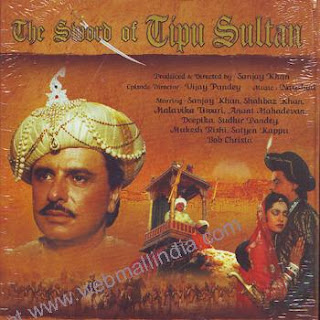
There was also Jhansi Ki Rani Laxmibai (featuring Varsha Usgaonkar/ Uttara of B.R. Chopra's magnum opus), Dastan-e-Hatim Tai, Sanjay Khan's The Sword of Tipu Sultan and The Great Maratha; Bible Ki Kahaniyan, Chekhov Ki Duniya, Mulla Naseeruddin (Nasreddin Hodja, essayed by the versatile Raghuvir Yadav), Panchatantra Ki Kathayein, Ramanand Sagar's Alif Laila (tales from the Arabian Nights); Sindbad the Sailor, Mirza Ghalib (featuring Naseeruddin Shah), Chanakya, Chandrakanta, Bharat Ek Khoj (directed by Shyam Benegal, based on Nehru's "Discovery of India" and narrated by the Nehru look-alike Roshan Seth). There was the hugely popular Katha Saagar (that included Ramanand Sagar's Ramayan and B.R. Chopra's Mahabharat) ... and many more. [Here is a nice link to know more and/or to reminisce about the days gone by.]


Oshin - a popular Japanese drama series was telecast during 1983/84. I have no knowledge of it though.

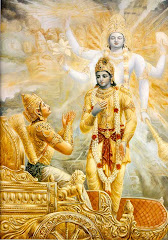
The perpetually weeping Deepika Chikhalia (as Sita), the somewhat wooden-faced (read: sporting a permanently stunned look) Arun Govil (as Shri Ram) and Nitish Bharadwaj (as Shri Krishna, very aptly cast) became synonymous with the characters they portrayed. People touched their feet, sought their blessings, lit agarbattis in front of their photos or pictures ... and sat reverentially with folded palms when they appeared on-screen! [No wonder they made the transition from of the people, by the people and for the people - very swiftly.] 


On Sunday mornings, when the Ramayan and the Mahabharat was telecast (during different years though), streets wore a deserted look, with even the hard-nosed, lakshmi-conscious shopkeepers somehow forgetting to keep their cash-boxes jingling. None played backyard cricket, street cricket, gully cricket (galli = "alley" in Hindi), corridor cricket, or garden cricket. Morning shows in cinemas were cancelled, and I have a feeling that perhaps even the fastest-fingered pickpockets along with petty thieves and burglars too decided to give their dhanda a break - voluntarily. And THIS no doubt must have had a significant BP-lowering effect - on the law-enforcing force. The latter then (after letting out a well-deserved collective sigh of relief, that is) gratefully turned their attention to the plates of piping hot and unforgettably tasty kosha mangsho (Bengali-style mutton curry), crispy pheesh fry (battered or breaded fried fish, usually bhetki or pomfret), murgir-jhol (Bengali-style chicken curry), wheat or maida-based fluffy luchi or tinkona parota (triangle-shaped paratha), lip-smacking alu-r dom (new baby potato curry) and cholar daal, shaada jhurjhure bhaat (white non-sticky rice) and mishti doi (red sweetened yogurt, the most popular desert in the Bengali cuisine ... and in the whole wide world and beyond). 


[Note: For other parts of the country, appropriate dishes applicable. So, please fill in the blanks.]

Mind you, the perfectly puffed-up pristine-white or wheatish-golden luchi is not even a distant cousin of the puri, and a Bengali breakfast on Sundays is never complete without tinkona parota or luchi with alur dom and cholar daal. And though I mentioned shaada jhurjhure bhaat or white non-sticky rice, many Bengalis favour the short-grained, white, aromatic, sticky rice - Gobindobhog (literally: offering to the gods, more specifically to Shri Krishno). As for the tinkona parota (triangle-shaped paratha) - again a Bengali specialty, it may not be found outside Bengali homes and restaurants.

Btw, 'Golbarir Kosha Mangsho' at Oh! Calcutta is very well-known and finger-licking delicious. Golbari at Shyambazar (a place in Kolkata) is famous for the very dark-coloured, spicy-sweet kosha mangsho that is served at the New Punjabi Hotel. With a closely guarded cooking process, it is what legends are made of and is considered an essential stop if one is on a food-tour of Kolkata.

The hot and spicy Lamb or Mutton dish (kosha mangsho) is best served with tinkona parota or even luchi. One may try it with gorom gorom phulka (puffed Indian bread) too. Rice would do, but not the long-grained Basmati rice. Gobindobhog, it must be.


The (chicken) murgir jhol is very different from the mutton kosha mangsho. The latter is slow-cooked, is more garam masala heavy, thicker, browner and spicier than the yellowish (murgir) jhol or thin gravy. In kosha mangsho, the hot and spicy thick gravy just coats the meat (mutton) pieces. It is okay to leave the murgir jhol a little runny, but the kosha mangsho can never be runny. NEVER. If it did, that would be worse than culinary sacrilege. The mutton in kosha mangsho is served in a spice paste that is thicker and drier than the sauce in the murgir jhol.


Meat on Sundays, after a week of fish and eggs, was the done thing for most Bengali families in the 80s and 90s. Mutton actually. Saturdays meant chicken. But such is the Bengali gene that we simply could not let go of the chicken and fish either. And so, happily ended up by having the best of all the worlds. :-)

I soooooooooo miss those days and those weekly rituals :-(

But then Maa aaschen (Maa is on her way; read: Durga Pujo), and therefore, I can (rather, all of us can) taste all of the above and more - soon. Very, very soon. :-) :-)

Umm, well, from pet-pujo let's get back to the serials of yore. 


There is a possibility that Ramanand Sagar's efforts - have shaped our views and thoughts about the various characters in the Ramayana (including that of the protagonist) - in a regressive manner. Not that books, experts, scholars, pundits, et al have done otherwise. But the visual medium is very powerful; all that we see and hear make a sharp impact on our psyche. Hence, this magnum opus may have (unwittingly) nudged us towards a warped version of Ram, Sita, Lakshman, Raavan, and Hanuman, ... in fact of Ramayan itself; ditto B.R. Chopra's Mahabharat. [Note: Since I plan to share my thoughts on them later, in a different series, I'm refraining from delving too deeply into these two so-called "epics" here.]

Nevertheless, all of the above-mentioned serials were entertaining and informative. We dropped everything in order to garner vantage spots in front of the telly or planned out our day factoring in our favourite shows and serials. Families watched television together, and discussed the goings-on: favourite characters, scenes, twists and turns - threadbare, in the minutest of detail - at the end of the episodes; though the exchanging of a quick comment here or a shared meaningful glance there (while watching the serial or show) was the norm. People identified with the emotions of the protagonist and empathized with the various characters and situations, since the serials of yore did not quite demand a total suspension of disbelief on the viewers' part (as they do today). The serials and shows of the 80s and the early 90s were very much a slice-of-life.

Horror scenes or tense moments were dealt with by spontaneously grabbing the arm of whoever sat beside us ... and then holding on to it tightly!! Remember those days and those moments? Watching a suspense or a thriller, especially during the chilly winter nights, meant something else altogether. Goosebumps obviously, but we were extra careful of our own shadows too ... and even checked under the bed to satisfy ourselves that there were no unwelcome visitors!!

Television meant family time. The only thing one had to do back then was to open the wooden shutters of one's Crown TV or Bush TV set (or fiddle with the numerous knobs and buttons on one's Philips TV set), run up to the terrace and adjust the antenna (if required) and then ... tadaaa...!! 


Pictures of some interesting Black and White television sets (courtesy, the South West England Vintage Television Museum Black-and-White Television Gallery) can be viewed HERE.


(Stay tuned…)

Pictures: 1. Pic1 - Tom and Jerry. 2. Pic2 - Another pair of stars named Tom and Jerry. 3. Pic3 - Remington Steele. 4. Pic4 - Mukesh Khanna as Shaktimaan. 5. Pics 5, 6 and 7 - The Sword of Tipu Sultan, Chanakya and Bharat Ek Khoj respectively6. Pic8 - B. R. Chopra's Mahabharat. 7. Pics 9, 10, 11, 12 and 13 - Luchi-alur dom, cholar daal, fish fry, tinkona parota and mishti doi - in order of pics. 8. Pics 14 and 15 - Kosha mangsho and murgir jhol. 9. Pic16 - Ramanand Sagar's Ramayan and 10. Pic17: Bush TV.

Saturday, July 21, 2012

Pot Luck: Multicuisine/ Notes on Faith, Religion, Customs, Rituals, Mythology, etc.. (Part - I)


This is the month of Ramzan (also: Ramazan) and I being a bhojon roshik (epicurean) Bengali look forward to all the delicious biriyanis, kababs, phirnis and of course the haleem – that are sure to come my way. The latter (haleem) is a very tasty dish that materializes when the working class humble wheat is forced to mix with the bourgeois mutton. This is one red-blooded Communism that even Didi will never be able to dismantle. Though off late her actions seem to suggest that she is determined to ensure that the ebhil sickle rids itself of its sickle-cell anaemia - and becomes even more healthy, wealthy and otherwise than before.

Getting back to the haleem, for non-mutton-eaters this version of the haleem posed a severe gastronomic depression (as in despair or gloom) - which the lachrymal glands failed to resolve. Then Chlormint came to the rescue and so we now have this to-die-for dish finally upgraded to its yummy chicken version. Thank Shri Ram (or Shri Rama, whichever is applicable) - for small mercies!

And I am not even sure whether the bleating mutton - before it becomes delicious, and the clucking chicken - before it un-clucks itself in a giant copper or aluminium pot, are creatures of the desert.

Though (probably) millions of sheep every year board massive cargo ships bound for those distant desert lands or thereabouts, but then those are merely the green card holders - naturalized citizensheep.

Methinks: Aboriginal sheep was perhaps that anonymous sheep that quietly penned the Alif Laila (better known as: the Tales of the Arabian Nights) - since the kids (lambs) created a lot of ruckus and refused to be tucked in bed before mid-night.

... But don't even ask me about the wheat. I am almost certain that they cannot grow on tall date palm trees - that are trying their best to speak to the listening heaven.

However, coming back to the sheep ... it's best not to speculate, since folks from the land of that great scientist with several 'original' inventions to his name, Guglielmo Marconi, have informed us that it was not Cruci-fiction but Cruci-fact.

But then, if it were not for that cruci-whatever or more precisely for that red-suited great big man with a snow-white beard, whose sleigh was driven by Rudolf - the red-nosed reindeer, we wouldn't have been able to gorge on all those goodies, yummy rum cakes with red cherries on top included. We can take the whole bakery but let's leave the baker behind and not share any cake with Robinson Crusoe's Man Friday. As for the baker, he can go and find a new job - that of mixing cement and concrete, so as to create poetry-inducing 'masterpieces' out of brick and mortar, also known as the concrete jungle. These seem to sprout everywhere these days, especially on agricultural lands and pristine lakes.

However, continuing with the gastronomic delights, I also intend to explore various noodle dishes and Manchurian cuisine too. So, do stay tuned ... armed with a spoon, a fork or a pair of chopsticks.

You see, I have been to Buddhist temples and deeply appreciate the calm and serene environment that seems to prevail there. No elbow-wrestling happening, nor are people seen severely testing the strength of their shoulders and fists. The latter is usually seen open (as in palm instead of the closed fist) and joined together - in reverence, while the eyes - the mirror to the soul - are closed, perhaps in deep meditation.

The reciting of the mantras or the sacred hymns coupled with the fragrance of the incense fills the air ... and the surroundings resonate with a positive energy that mere mortal words fail to express.

Meditation and prayer or puja are some of the instruments - that aid us in our efforts to unite with the Supreme Being - the divine, or shall I say, the forces of the universe. At the end of it - the puja or the meditation, that is - we feel enriched, energized and a strange calmness envelops us within it's fold.

[Note: The gesture used when bowing in Namaste is the bringing of both hands together, palms touching, in front of the person - usually at the chest, or a higher level such as below the chin, below the nose, or above the head.

This gesture is a mudra; a well-recognized symbolic hand position in the ancient Vedic faith (Sanaatan Dharm), that has shrunk over a period of time. One hand represents the higher, spiritual nature, while the other represents the worldly self. By combining the two, the person making the gesture is attempting to rise above their differences with others, and connect themselves to the person they bow to. The bow is a symbolic bow of love and respect. [Sanaatan = timeless, Dharm = path or way of life.]

Particularly in what has now come to be known as Hinduism, when one worships or bows in reverence, the symbolism of the two palms touching is of great significance. It is the joining together of two extremities - the feet of the Divine, with the head of the devotee. The right palm denotes the feet of the Divine and the left palm denotes the head of the devotee. The Divine feet constitute the ultimate solace for all sorrows. This is a time-honoured thought that runs through the entire ethos - of this faith.]

However, mere instruments (like meditation, puja, incense, camphor, earthen lamps or diyas, etc) are not enough. The most important aspect (in one's communion with the divine) is one's mind or more precisely one's thoughts. If the mind is preoccupied with such 'important' matters that range from how much donation will ensure that one's name is engraved on the temple walls or get published in the newspapers; to figuring out such mind-boggling questions of deep philosophical significance, viz., how best to 'catch a glimpse of god', rather get a ringside view, and so on and so forth, then I'm not so sure about the response of the divine, or even the divine per se.

Yet, the following (6 out of many more) has been the manner in which a significant portion of the self-proclaimed 'most evolved of all species' goes about the business of god. And have been at it ... for many decades now, or perhaps centuries.

  1. Indulging in the proverbial rat race, so as to 'catch a glimpse of god' - who, as OUR ancients have told us, is omnipresent - is every where;
  1. Offering 'chai-paani' in the garb of donation - to the divine no less, so as to receive some or the other benefit - in return;
  1. Playing loud music with astonishing lyrics (e.g., professing to teach someone to make lowe in twelve different ways, one each for every month of the year, that is); and even breaking into a worshipful break-dance (that somehow also resembles a high voltage electric shock) - all the while offering prayers with unflinching devotion;
  1. Delivering frenzied sermons that would put the sound-barrier breaking concord jet to shame and make it question it's very existence and purpose. All - in the name of calling the faithful to prayer or delivering one or the other discourse. Now why the 'devout' faithful need to be 'called to prayer' in this manner every day - in this age of wrist watches, alarm clocks, mobile phones, SMS divorces, et al - is something that Newton or Einstein or perhaps Socrates should ponder over;
  1. Badmouthing gods of 'other' faiths, since one or the other specific faith is THE bestest or THE truest, while also repeatedly stating that THE book explicitly says that God is one and the same. This, despite OUR ancients, enriched as they were with Vedic wisdom, never having known or mentioned the word 'religion'. 
  1. Places of worship and 'prayers' that revolve around sustained efforts to 'convert' people of other faiths, even the ones that predate the supposedly 'real' and 'true' ones - as if faith (now known as 'religion') can be swallowed - willingly or forcibly - like a pill!

Does anything (religion included) come from vacuum? Is there nothing that influences or precedes it? Even a child - human, animal, bird, fish, worms, reptiles, plants, et al - are not born out of vacuum. And how does one change the mark of one's ancestors or forefathers? How does one change the DNA - the mark of one's forefathers - firmly embedded within one's marrows? How indeed??

A mere 'change' of name, attire, the manner of 'offering prayers' and a 'change' of the respective 'place of worship' is all that is required - to connect with the divine and with one's inner self - the soul (aatman). Shifting one's residence or changing one's job is far more cumbersome and time-consuming, I tell you. But then this is the age of instant coffee, instant noodles, instant everything. Filter kaapi is passé.

However, if a jam bottle were to be relabeled as a bottle of pickle, it's contents would still refuse to change. But what do jam bottles know? Or for that matter pickles know? Useless inanimate things masquerading as food!

And these rats I tell you, they have jumped the queue and cozied up to Shri Ganesh no less, and have been happily feasting on the tasty modaks - meant for Shri Ganesh, but which actually finds their way into various human stomachs ... without so much as a by your leave. This is clearly not Ivy League. Hmmmph! We must therefore make an all-out effort to send these uncultured rats to Harvard Law Ishcool - for appropriate ethical makeover.

Umm, but just in case you want to know what I mean by Vedic wisdom, do read Chief Si'ahl's Letter: [Link] - that warns us of the need to hold nature dear in our hearts.

"But how can you buy or sell the sky? The land? The idea is strange to us. If we do not own the freshness of the air and the sparkle of the water, how can you buy them?"

... Profound thoughts expressed through beautiful words, isn't it? We must remember to take nothing but memories, leave nothing but footprints.

The pattern of life based on Vedic wisdom transcended colour of hair, pupil, skin, height, other physical characteristics, food habits, language, etc., and encompassed vast lands - in the ancient world and even during the early medieval era. There was no 'race', but values - which declined over a period of time, since people gradually learnt to take much more than memories, and forgot to leave their footprints too. Sadly.

For OUR forefathers, the stress was not on 'religion' but on dharm, that elusive word, which lays down what is right, rather indicates one's righteous duty - no matter what the obstacles in it's path. Dharm - was a "way of life" (and had not yet come to mean coalition dharma.)

But then what can one do; this is the age of 'austere' lifestyle that brings about the resurrection of a Breguet timepiece. This is THE Gift of the Maggi no doubt. [Note: It is not a typo. I did not mean the Magi, I meant Maggi only - the 2-minute instant noodles.]  

It - meaning, the holy godly business - is lucratively spy-ritual too, quite IS-CON like, though all that does not glitter is worth more than gold. Also, hardly any investment is required; just a vest would suffice - since interests need to be properly vested, or else they catch a cold and that may even result in pneumonia, and that you see is against 'our ancient culture and traditions.' But one thing is certain, returns hii returns is confirmed, chappar phad ke. Compound interests, fixed deposits, etc - are all child's play (with primitive toys) and pales in front of this super-duper-bumper-lottery. It even ensures persistent astronomical TRPs - the Holy Grail, for the business of news, views and recycled refuse.

So, you see ... or you still no see?

Parting shot: I am very curious to know as to how and why Shri Ram (or Shri Rama for that matter) has been making a guest err ... ghust (as in ghus jao) appearance in Ramzan or Ramazan ... and for how long? Food for thought along with that delectable haleem, what say?! :)


(More later…)

Picture: Found while trawling the net. Don't remember the link :(

Sunday, June 19, 2011

The All Bengali Crime Detectives by Suparna Chatterjee


Two Thumbs Up!

I have been reading about this book in the blogosphere and even discovered that the author had a book reading @ Crossword - which I missed due to prior commitments. So, when I finally managed to go to Crossword (quite by chance) - I started looking for a copy... and found it too. I read the back cover and then began flipping through the pages. On page 11 itself I came across "Roko, hum idhar girega." This is classic Hingali - meaning that the said person wants to get off/get down at that particular spot/place. (Note: I opted for 'Hingali' instead of 'Bendi' for obvious reasons *wink*)

Needless to say I was hooked!

ABCD is not just a detective novel or crime fiction. It gives you a glimpse of the celebrated 'City of Joy' - Calcutta or rather a word picture of the sights and scenes of Kolkata, and Bengali culture - that is guaranteed to make a smile appear on your lips. And I mean no disrespect. Even if you haven't visited Kolkata, this book will transport you there.

You get to read about the 'paaras' (much more than what is usually meant to be a middle class neighbourhood or locality), the euphoria and intense rivalry brought about by 'Durga Pujo' (which coincides with 'Dussehra' in the North and 'Dassara' in the South of the Vindhyas.) Infact, the unabashed one-upmanship and brinkmanship displayed during the pujo would even make the fifty-year "Cold War" appear very thanda! Added to this are the subplots that involve finding a perfect match for a "wheatish-complexioned girl" and a one-sided love story. And of course the sacred ritual of going to the 'bajar' (bazaar or market, Bengalis usually refer to this as: "marketing korte jachchi") to buy vegetables and fish - Ilish maach (Hilsa), chingri maach (prawns), etc - with the 'bajarer tholi' (the nylon shopping bag) in hand. This bag is exclusively used for this very purpose and it is the unavoidable 'duty' of the man of the house to go to the bajar whenever required. And somehow Sundays are considered to be the best and most appropriate days to be spent in the bajar, tholi in hand, haggling over maach (fish), begetables (vegetables) and kochi panthar mangsho (mutton culled from a young goat). The whole experience is nothing like you would have seen/read/come across anywhere else, I tell you!

Now, here is the crime bit: In a middle-class Calcutta neighbourhood, the lives of four recently retired men take an unexpected turn when they stumble upon a crime and become detectives.

The crime in question is the sudden disappearance (rather robbery) of a rare diamond - the size of a full-grown grape - and supposedly belonging to the Maharani (Queen) of Garhwal... from right under the noses of retired Joj Saheb Akhil Banerjee, Bibhuti Bose, Chandan Mukherjee and Debdas Guha Roy aka 'Chaar Padabi' or 'the four surnames'. In short: ABCD.

Why 'Chaar Padabi'? Well 'padabi' (or podobi) in Bangla means 'surname'. And Deb, Das, Guha and Roy are all independent or distinct Bengali surnames!

The crime does get solved eventually. But the build up to the solution is great fun... and includes the delightful anecdote about the Bhim Nag created 'ledikeni' - an ubiquitous round dark sweet - deep-fried balls of semolina, milk, khoya and sugar syrup stuffed with saffron and elaichi (cardamom) and fried in ghee to attain a rich brown colour. It is partially like a pantua and partially like a langcha (a specialty from Shaktigarh in the Bardhaman/Burdwan District of West Bengal) but very different in taste from them. This is quite apt 'coz no account of 'Bangaliana' (Bengali food culture) is complete without 'Bangalir Roshobodh' (the legendary sweet tooth of the Bengalis.)

Therefore, it's no wonder that the Bengalis have also come up with the delicately named "
lobongo lotika" and the "mishti shingara" - small samosas filled with sweetened reduced milk that go straight from the wok into a syrup wash. The limitless possibilities that the samosa offers - the opportunities to play with tastes and textures; size and seasonings, fragrances and fillings - has inspired cooks down the ages. And the results are fascinating, often surprising, but always tasty. But none could think of the "mishti shingara" - the sweet singara - before the bhojon roshik Bangali, who is willing to undertake an epicurean voyage anytime. Bite into the Bengali shingara and the light puff pastry melts away to release the flavours of subtly seasoned potatoes or cauliflower teamed with green peas or groundnuts. Ah bliss!

But I digress.

ABCD is the debut novel of author Suparna Chatterjee, a Bengali, currently staying in Bengaluru and she is undoubtedly thrilled with the reader response. "I'm indebted to Enid Blyton, Agatha Christie and Satyajit Ray. They planted in me a burning desire to become a sleuth, but I followed their path and did the next best thing!" she says.

There is no doubt about that. Yours truly for one could detect the unmistakable flavour of the Feluda novels by the versatile genius Satyajit Ray in this book. The demeanour and methods adapted by Akhil Banerjee is reminiscent of the supersleuth Feluda (perhaps unknown to the author herself). You can even detect a whiff of Lalmohan Babu aka Jatayu in one of the characters. I will not tell you which one, you tell me.

One is also reminded of Potla, Habul and gang - the popular bunch of good-for-nothings from Bengali literature - who are known for their many escapades - especially while organising Saraswati Pujo - when in reality they have bid goodbye forever to the Goddess of Learning - from their hearts and minds. Yet their enthusiasm is undiminished and so is their diligence and they manage to pull off the pujo (on a grand scale of course) despite empty coffers and very little time at hand. All due to Potla's patent ingenuity.

Even something as innocuous as Saraswati Pujo can lead to intense competition. Just watch the superb Soumitra Chatterjee-Aparna Sen starrer "Basanto Bilap" - to get the drift. This movie had great casting and superlative performances even by the members of the supporting cast with such stalwarts as Robi Ghosh, Chinmoy Roy, Anup Kumar and Shyam Laha making their presence felt. So much so that it is difficult to imagine that they were not the main actors/stars. Ah... the good old days! It is a small wonder then that old is gold. I wish to see the satraps of Bollywood remake some of the gems of Bengali cinema - without diluting the essence of the story - so that they get a larger viewership and movie buffs can enjoy some quality cinema and entertainment instead of the tacky fare dished out inspite of several crores wasted on them. E.g., The delightful "Chupke Chupke" starring Dharmendra, Amitabh Bachchan and Sharmila Tagore was a remake of the Uttam Kumar-Madhabi Mukherjee starrer "Chhadobeshi", and the equally enjoyable Sanjeev Kumar-Moushumi Chatterjee starrer "Angoor" was a remake of yet another Bengali classic - the Uttam Kumar-Sabitri Chattopadhyay-Bhanu Bandopadhyay starrer "Bhranti Bilash". I hear SRK is re-remaking "Angoor". Lets see.

Even the Hrishikesh Mukherjee directed Rajesh Khanna-Jaya Bhaduri starrer "Bawarchi" (1972) was inspired by the Tapan Sinha helmed "Golpo Holeo Shotti" (1966) with Robi Ghosh, Bhanu Bandopadhyay, Chaya Debi and other powerhouse actors in the cast. Needless to say, the original was cinematically far superior. This Tapan Sinha classic is a mind-blowing classic - a non-convoluted drama with a special message. It is sparkling, real, a slice of life and is in black and white, a tint that makes old films even more enjoyable.

But I digress again.

In ABCD we have the usual bunch of para bratulas - Partho, Somen, Poltu, Bhombol, Bappa and Jishu - headed by the able Biplabda. Biplabda reminds us of the great Bengali author Narayan Gangopadhyay's creation Tenida of "Charmurti", Potoldanga and "de la grandi mephistopheles, yak yak!" fame. But I have a feeling that the intense rivalry over Durga Pujo is not settled yet, and the one-sided love story is inconclusive too. Therefore, I am waiting for the sequel to "The All Bengali Crime Detectives". Eagerly. [Note on Charmurti: Tenida and gang, the others being: Kyabla, Pyalaram and Habul.]

BTW Bengalis have a patented word for 'para bratulas' - the unmatched "Rockbaj". It is not to be confused with the macho 'Rocky'. Bujhechen? And the unfriendly neighbourhood bully is the "parar mastan".

If I were to elucidate about Durga Pujo and what it means to Bengalis - "Probashi Bangali(s)" [Bengalis who stay a few grass fields away from Bengal; may be in Delhi, Karnataka, Jharkhand, Orissa, Assam or thousands of miles away in New York, Tokyo, London and Berlin], "Bangal(s)" [Bengali folks whose ancestors trace back to East Bengal, present Bangladesh], "Ghoti(s)" [Bengali folks who are originally from West Bengal] and "Bagh(s)" [offspring from mixed marriages between "Bangals" and "Ghotis" - conveniently derived from the "Ba" of "Bangal" and "Gh" of "Ghoti"] - this post will become a mile long, if not longer.

In every middle class locality (paara) a "Pujo Committee" would swing into action every year, sometimes the choice of office bearers would become so politicized that one almost felt that soon the RAF or the elite Black Cat Commandos may have to be called in - to restore peace among the community members. The fierce parental rivalry regarding the children selected for solo performances or lead roles were an unfailing annual event too. Ma Durga and her four offspring could bring out the worst in some and unmask many too, or so it seemed. I remember how the neighbourhood aunties (paarar Kakima[s], Mashima[s], Pishima[s] and Jyethima[s]) waddled about and strutted around like proud ducks and penguins and flashed menacing looks at competitors who till then were probably their offspring's best friends. Tension reigned supreme and everyone's BP climbed Mt. Everest. In retrospect, these incidents of intense rivalry and competition seemed amusing and juvenile. And rightly so!

However, in ABCD you do get a quick yet informative glimpse about how Durga Pujo came about. And till date I have not come across a more clearer definition of the Bengali term "Adda" - which is a way of life in Bengal and for the Bangalis - of all hues, shades and tints of colour, wherever they are. Bengalis have a fondness for debates and can indulge in conversations for hours. "Adda" is usually summarily translated/dismissed as "gossip" and not given its due courtesy/importance. This is sacrilege. Bengalis have an entirely different term for "gossip" which is "PNPC" - meaning "Poro Ninda Poro Chorcha". And "Adda" and "PNPC" cannot intermingle - there are clear lines and sessions for both.

Read ABCD to get a feel of the multi layered three-letter Bangla word - iye. It is short but not simple... filled with meanings, inner meanings, subtleties, possibilities, flavour and spice... and not always all things nice.

I wouldn't deliberate much on Rabindrasangeet - the songs of the great poet laureate Gurudev Rabindranath Tagore. The magical mystique of beautiful words powerfully strung together and resonating with mellifluous music is known as Rabindrasangeet. The bard's rich, diverse and vast literary oeuvre is virtually unmatched in the world. He was also a painter and a composer par excellence.

I have already elucidated a little about Bengali names and its socio-cultural significance. Do read up: Bhaalo Naam vs Daak Naam: What's in a name? (
Part-I) and Bhaalo Naam vs Daak Naam: What's in a name? (Part-II).

My rating: The fresh and limpid writing style interspersed with humour and interesting tidbits of information is a readers delight. It pulls you into the narrative and keeps you engrossed throughout. Simple effective storytelling at its best!

The production quality of the book is pretty good while the book jacket cover is nicely done. It's colourful and instantly catches the eye.

I am going with a 4/5 for Suparna Chatterjee's debut novel... and awaiting her next book with high expectations - hopefully a sequel to ABCD.

Details of the book: The All Bengali Crime Detectives/ Author: Suparna Chatterjee/ Publisher: Rupa & Co./ Publishing date: January 1, 2011/ Language: English/ ISBN-10: 8129117827/ ISBN-13: 9788129117823, 978-8129117823/ Bookbinding: Paperback/ Price: Rs. 150 (Rs.90 on Flipkart)/ No. of pages: 192.

Photograph: The book jacket cover of "The All Bengali Crime Detectives". Picture courtesy: link.

Saturday, June 11, 2011

Bhaalo Naam vs Daak Naam: What's in a name? (Part-I)


A Bengali has two names: bhaalo naam (good name or formal name) and daak naam (pet name or nick name). Those who have read or watched Jhumpa Lahiri's "The Namesake" should be familiar with this concept. Whenever a Bengali baby is born, s/he is not immediately bestowed with a bhaalo naam. The search for a bhaalo naam is a ritual in itself. It is deliberated upon by all and sundry with generous contributions from the innumerable uncle-aunties (Kaku-Kakimas, Jyethu-Jyethimas, Meshomoshai-Mashimas, Pishomoshai-Pishimas), grand parents (Dadu-Didimas, Thakurda-Thakumas), neighbours (pada-protibeshis), office colleagues (sohokormis) and friends (bondhu-bandhab). Even the maid (kajer-lok, the male of the species is ingeniously called 'combined hand'), friend's neighbours, colleague's friends, neighbour's colleagues and finally the family Gurudeb - the great and revered 'Baba' or 'Swamiji'. Till such time a suitable bhaalo naam is collated, analyzed and agreed upon... the Bengali baby is addressed by his/her numerous daak naam, which are quite phenomenal, so to speak.

Generally, Bengali boys are 'Babu' or 'Khoka' (small boy) and Bengali girls 'Khuki' (small girl) or 'Budi' (old woman) to their parents... with even Babloo, Babai, Tutun, Toton, Piku, Gogol, Bumba, Papai, Tatai, Chotku, Joy, Jeet, Tata (with a soft 't'), Gogol, Pintu, Montu, Raja (for boys) and Mumpi, Shona, Moni, Mona, Mimi, Titir, Tuktuk, Tultul, Bulbul, Tustushi, Jhumpa, Tumpa, Reena, Rinku (for girls) making it to the popularity list. Even Tinku... not to be confused with Tinku Jiya!

Now, daak naam(s) are more character oriented and heavily dipped in love, affection, and creativity. Therefore they generally do not have any bearing with the bhaalo naam whatsoever. It is also important to understand that the number of pet names a Bengali baby has, is directly proportional to the number of relatives and neighbours his/her family is blessed with or are in good terms with. So a Bengali boy can be 'Babu' or 'Babushona' to his mom (Ma), 'Babai' to his dad (Baba or Bapi), 'Dadubhai' to his grand dad (maternal: Dadu and paternal: Thakurda) and grand mom (maternal: Dida, Didima, Didu or Dimma and paternal: Thakuma or Thamma) but can be called 'Papa' or 'Papu' by his friends, 'Gola', 'Gablu' or 'Motu' by his cousins and 'Tendulkar' by his cricket crazy neighbour. Errr... on second thoughts may be 'Zico' or 'Pele' or even 'Garincha' and 'Kaka'.

Read the friendly discussion on football in ABCD (debutant author Suparna Chatterjee's novel "The All Bengali Crime Detectives") - you'll know how much clued into football an average Bengali is (was?) - even though there were/are hardly any grounds or place to play the beautiful game in Kolkata! There was a time when a game of football between Mohun Bagan (supported by the "Ghotis") and East Bengal (supported by the "Bangals") would bring the whole city to a standstill. Roads would be deserted while offices would register thin attendance... people having somehow succumbed to all sorts of diseases on that very day. Just watch the grand old man of Bangla comedy Bhanu Bandopadhyay's - "Personal Assistant" - where his friend (played by the superb yet ever neglected actor Tarun Kumar) comes up with 'half-cholera' as an excuse for Bhanu's absence from work! But hospitals and nursing homes would strangely not be flooded with patients; rather they too would wear a deserted look... with the doctors and other medical staff having summarily done the Houdini act.

[Note: Ghotis: Bengali folks who are originally from West Bengal. Bangals: Bengali folks whose ancestors trace back to East Bengal, present Bangladesh.]

The prices of Chingri maach (prawns, especially 'golda chingri' or tiger prawns and not 'kucho chingri' or shrimps) and Ilish maach (hilsa) would fluctuate according to the fortunes of the two clubs in question. The "Ghotis" patronized the chingri maach and were reassured of their true blue, unadulterated "Ghotiness" only by it, while the "Bangals" attained nirvana courtesy the Ilish maach. And till date only the "Bangals" know how to negotiate their way through this tasty minefield of fish thorns... and they continue to guard this fish version of the Holy Grail like secret quite zealously. Either way, the fishermen and the fishmongers made merry whatever the outcome on the field. And the price of these fishes pole-vaulted to unimaginable heights, courtesy the humble football. 'Capitalism' in all its glory. No?

I would recommend connoisseurs of good cinema to watch the Uttam Kumar-Sabitri Chattopadhyay-Jaya Bhaduri-Jahar Roy starrer "
Dhonni Meye". It is a laugh riot. Those who do not understand Bangla can watch this classic with English subtitles. Some of the punch and flavour may be lost or diluted... but that's inevitable. Just like the delectable rosogollar payesh and the rasmalai - but both are yummy in their own right. Right?

Not to forget the Uttam Kumar-Suchitra Sen-Bhanu Bandopadhyay-Chobi Biswas classic "Ora Thake Odhare". Even "Mohun Baganer Meye" (tr: Daughter of Mohun Bagan) is not to be missed. "East Bengal-er Chele" (tr: Son of East Bengal) tanked... which goes on to prove that content is King. However, it did not affect the price of the much sought after Ilish maach one teeny-weeny bit though and the "Bangals" continued to savour Ilish maach-bhath/ Bhapa Ilish ar Jhar Jhare Sada bhaat/ Doi Shorshe Ilish/ Ilish mach-er Matha/ Ilish mach-er Dim Bhaja, et al without a care in the world. Wonder why the keuketa (who's who) of Bangla cinema decided to stop making such great films and opted to become the cheap cousin of Bollywood instead. What a pity.

However, I read that off late some amends are being made and the recent "Bangal Ghoti Phataphati" with a stellar cast comprising of current heartthrobs Jishu Sengupta and Koel Mullick, the Bengali theater and cinema legend Manoj Mitra, veteran actor and funny man Chinmoy Roy, Kanchan Mullick, the versatile Sabyasachi Chakraborty, Sabitri Chattopadhyay, Madhabi Mukherjee, Subhasish Mukhopadhyay, Biplab Chattopadhyay, Rita Koyral, among others is pretty decent.

But I digress.

More often than not these pet names or nicknames can and have outshined the Bhalo Naam... forever.

Without them, Gauranga Chakraborty and Alokesh Lahiri would never have become Mithun(da) and Bappi(da) respectively. And Mahakshay Chakraborty too wouldn't have been 'famous' as Mimoh Chakraborty. What? Does Abhas Kumar Ganguly, Prabodh Chandra Dey or Nilanjana Lahiri ring any bell unless I tell you that those are the bhalo naam(s) of Kishore Kumar, Manna Dey and Jhumpa Lahiri respectively?

Many a time the dak naam has been more popular with famous Bengalis, e.g., renowned footballers Goshtho Pal and Chuni Goswamy are actually Goshtho Bihari Pal and Subimal Goswami respectively. Well known business magnate Swapan Sadhan Bose is Tutu Bose, Pancham(da) is music maestro Rahul Deb Burman, Reena(di) is Aparna Sen, and Manik(da) is the versatile genius Satyajit Ray - whose son, acclaimed film director Sandip Ray is almost always referred to as "Babu(da)".

Even in fiction "Jatayu" (after the mythological bird) is more popular than 'Lalmohan Ganguli' (the best-selling writer of cheap crime thrillers in Satyajit Ray's Feluda novels) while Feluda's 'satellite' Tapesh Ranjan Mitter is better known as "Topshe" (a kind of fish popular in Bengal - Topshe maach.)

Have you ever wondered what would have happened to the following iconic characters without their nicknames/pet names: 'Feluda' (Pradosh Chandro Mitter), 'Ghanada' (Ghanashyam Das), 'Tenida' (Bhojohori Mukherjee), 'Kyabla' (Kushal Mitra), 'Pyalaram' (Kamalesh Banerji) and 'Habul' (Swarnendu Sen)? Even 'Bantulda' and 'Keltuda'? What would have happened to the delightful pairs of 'Handa-Bhonda' and 'Nonte-Phonte' - if they were to be 'blessed' with a bhaalo naam?

The answer would be a collective "Shobbonash" (actual: Shorbonash, meaning 'utter disaster'). So, Thank god for small mercies!

Even 'Dada' has outshone Sourav Ganguly and 'Didi' is more endearing than the quite a mouthful Mamata Banerjee. No?

The intelligent and intellectual (aantel) Bengali is quite aware of current affairs, sports, new discoveries, technological advances and general knowledge… and all of that manifests itself in the names - bhaalo naam and daak naam included. Especially for their beloved offspring and an assortment of equally beloved nephews-nieces (Bhaipo-Bhaijhi[s], Bonpo-Bonjhi[s] and Bhagne-Bhagni[s]). Plus the numerous offspring of para-protibeshis and shohokormis, and friends of neighbours and colleagues. That way an average Bengali is more than charitable, you see. The result: babies and tiny tots answering to names like - Rocket, Biman (aeroplane), Faraday (the famous physicist) and Gama (the famous wrestler - The Great Gama - aka Pehelwan Gama/ Palowan Gama in Bengali). And of course Zico and Pele - after the two Brazilian magicians of the beautiful game.

Here are some of the most common daak naams from an earlier era: Potla, Poltu, Bhombol, Bhomla, Pocha, Panchu, Kanchu, Habul, Ghoton, etc - for boys and Tempi, Puchki, Tuni, Buni, Bunchki, Bunchi - for girls. Times have changed... and now-a-days they mostly sound like they have been imported. Sample this: Sonia, Sania, Rhea, Sana, Zinea - for girls and Mark, Neil, Ian, Ryan, Aryan, Pinto, Rocky, Remo, Vivan, Jason, etc - for boys. I am not sure about the export bit though.

(More later...)

Photograph: The one and only Tenida. Pic. courtesy: facebook.

Sunday, May 1, 2011

The sauce always justifies the means!


King Ferdinand I (1751 - 1825) is said to have disguised himself as a commoner and, in clandestine fashion, visited a poor neighbourhood in Naples. One story has it that he wanted to sink his teeth into a food that the queen had banned from the royal court - pizza! Poor Freddy. So much legwork for a mere pizza! We live life King-size and have home delivery instead.

If you think that the Pizza (yet another Italian import) only arouses hunger pangs in your tummy... think again. Pizza has taken the erudite route and become enlightened... without meditating under the Bodhi tree. Tatkal service... what?

Branded pizza such as Domino's and Pizza Hut 'discovered' India in early to mid 1990s, and underwent a process of self-discovery almost immediately thereafter. Result: several Indian-style toppings like Tandoori Chicken and Paneer. Italy met India with exotic pizza toppings... which once again proved beyond a shred of doubt that the whole world is one single family - 'Vasudhaiva Kutumbakam' (from "vasudha", the earth; "eva" = emphasizer and "kutumbakam", "family" - a Sanskrit phrase.) We even have "The Slumdog" - a specialty pizza available at Bombay Pizza Co. on Main Street near Walker Street. Socialism aka Communism met Capitalism aka Free Market over a bottle of Johny Walker... I guess!

And a "Gateway to India" pizza too... filled with Tandoori chicken, crabmeat, artichoke hearts (not to choke the arteries of your heart, really!), cilantro chutney, mozzarella and provolone, and topped with fresh cilantro, all on naan bread. (But ingredients originating from the Arab world, Mongolia, Afghanistan, Persia, Portugal, France, Holland and England are conspicuous by their absence. Wonder why though *wink*.) While the Slumdog is laden with pepperoni, Spanish chorizo, Canadian bacon, beef, chicken, onions and Bombay pizza sauce. Is your mouth watering yet? I am hungry already!!

In December 2007, Domino's introduced a new slogan, "You Got 30 Minutes", alluding to the earlier pledge but stopping short of promising delivery in a half hour. Clever! No? Not unlike our UPA-nishad.

In a 2009 survey of consumer taste preferences among national chains by Brand Keys, Domino's was last - tied with Chuck E. Cheese's. In December that year, Domino's announced plans to entirely reinvent its pizza. It began a self-flogging ad campaign in which consumers were filmed criticizing the pizza's quality and chefs were shown developing the new product. The new pizza was introduced that same month, and the following year, Domino's 50th anniversary, the company acquired J. Patrick Doyle as its new CEO and experienced a historic 14.3% quarterly gain. While admitted not to endure, the success was described by Doyle as one of the largest quarterly same-store sales jumps ever recorded by a major fast-food chain.

Now, apart from answering the SOS calls of hapless dabbawallahs whose dabbas (lunch boxes) decide to take a swim without their knowledge and/or permission, Domino's fairly recent delivery - their mea culpa ad campaign was tough to beat for its sheer corporate candor. In its new TV commercial and Web video, the pizza chain admits something startling - namely, that its pizza is pretty terrible. Domino's very public admission of its own awfulness might represent the most elaborate mea culpa ad in history. But it's hardly the first. Companies sometimes admit their flaws and faults in a bid for public empathy. The strategy usually has two parts. Part one: Fess up. Part two: Vow to do better. While Domino's never quite expresses remorse, the crusty comments in its commercial do set up the company's promise to improve, with better ingredients and a new pizza recipe.

Airlines such as United and JetBlue have prostrated themselves in public to mollify travelers enraged by scheduling snafus. (In demo-crazy India of course the airlines will have none of it. They go on strike instead.) Fast-food outfits have done it, too. American car manufacturers have practically made an art of acknowledging their shortcomings; General Motors went on an apology tour starting in late 2008 when it began lobbying for billions of dollars in federal bailout funds. Last summer, as it went through Chapter 11 bankruptcy proceedings, it flooded the airwaves with a commercial that acknowledged, "General Motors needs to start over in order to get stronger."

As Domino's was rolling out its self-lacerating confession, the Chicago Bears took out newspaper ads to apologize to the team's fans for its sub par performance. "In a season where we did not perform at our best, we are further humbled by the fact that our fans stepped up and did their part," the ads said. (For the record, the Bears finished with a 7-9 record, considerably better than the 4-12 Redskins, who have yet to publish any apologies.)

Acknowledging that you've messed up may win some goodwill among consumers, but marketing experts say it also carries some risks. Some people are going to hear only part of the message (e.g., Domino's stinks) and not hear the part about how they're going to get better. Thus, apology ads can reinforce negative perceptions and raise awareness of them among people who've never tried, or even heard of, the product. But you can safely leave out Bollywood, Hollywood, the various 'Woods' and the Netalog... for them any publicity is good publicity. No?

Once you've said, 'Our pizza tastes like cardboard,' you've got people's attention. Most people will ignore you if you just said, 'We're new and improved.' Every advertiser and his aunt say that. This gets people (including couch potatoes) to sit up and take notice.

Domino's also took the 'proverbial' route... and created 'Pizza Proverbs' - an online contest in the US. Of the over 7,000 customer proverbs submitted, Domino's proudly presented the 8 (of surpassing wisdom) chosen to be immortalized on their new pizza boxes.

For the folks slogging it out errr... ideating in the world of advertising, the joy of going beyond the brief and creating something that is fun, relevant and positively impacts a brand is an unmatched high. Sometimes, it involves thinking out of the box, literally. And... the sauce always justifies the means!

The winning pizza proverb:

Pizzas rush in where burgers fear to tread.

The others (which may include the Prince Charles among pizza proverbs):

1. Give a man a pizza and he'll eat for a day. Teach him to order online and he'll eat for a lifetime.
2. He who eats the last slice, pays the price... Of the next pizza.
3. An ye harm none, order what ye will.
4. He who pays for the pizza calls the toppings.
5. I hear pizza and I forget, I see pizza and I remember. I taste pizza and I understand.
6. Do not ask for whom the bell pepper tolls. It tolls for thee.

7. Pizzas are like money. Easier made than kept.
8. A watched door never brings the pizza boy sooner.
9. As soon as one gets out the box, another comes in the door.

10. Satisfying Fulfillment!
11. Good thing come to those who wait... for Domino's pizza.
12. A pizza saved is a pizza yearned.
13. Never judge a pizza by the box.
14. A garlic seasoned crust keeps the vampires away.
15. Moderation in all things... except pizza.
16. A Domino's pizza in the hand is better than two in the box.

17. Two pizzas are always better than one.
18. If you can't stand the pizza get out of the dining room.
19. A pizza's worth a thousand toppings.
20. Wow, This is Cheesy!!!

Perhaps they'll come up with a proverb to mark the much fawned over Royal wedding too! Here is mine: Domino's Katering Will successfully loosen the stiff upper lip. Watch out for the Domino's effect.

Photograph: Pics courtesy: Link.