Thursday, July 18, 2013

Truly, Madly, Deeply by Faraaz Kazi


"Truly Madly Deeply" is a song by Australian pop band Savage Garden, released as a single in March 1997. But here we are referring to debutant author, Faraaz Kazi's "Truly, Madly, Deeply ... Memoirs of a broken heart's First Love!" Whether it contains snippets from the author's life... my guess is as good as yours.

Kazi wears many hats. [Refer: link.]

Book Blurb: 

There are some who love and conquer...
There are some who love and forget...
... and then there is Rahul Kapoor!

A pompous Rahul is head over heels in love with Seema, his beautiful female equivalent from the same school. After a whirlwind of innocent encounters, their teenaged romance blossoms yet both of them never confess their love to each other. A series of misunderstandings and ego clashes cause them to drift apart. Rahul loses his sanity and ultimately his love. By the time he realizes the magnitude of his loss, it appears to be too late. Will Rahul get back his Seema? Or will Seema never realize the depth of Rahul's feelings?

This teenaged love story seeks answers to all these and more as it alternates between the past and the present and makes you wonder; do all love stories have a happy ending? Or do all love stories end, ever? TRULY, MADLY, DEEPLY promises to be an emotional saga that will captivate the readers' heart and fascinate his mind and leave him pondering - does love truly conquer all odds?

More about the book: here.

My Two Pence Worth: TMD is a story of teenage love, a big chunk of which is set in India, the rest in Philadelphia.

The Philadelphia side of the story is established through: Burgers, pizzas and fries, some Indian-Yankee English, 'bloke', green Fairmount Park, Schyulkill River, Philadelphia's Museum of Art, The Philadelphia Inquirer, Van Gogh, Tacony-Palmyra bridge, Delaware River, etc.

Providing the desi touch is an assortment of Indian sweets: halwa, jalebis, pedas, laddus, gulab jamuns and the syrup-infested 'rasgollas'. This is further bolstered by references to some desi fast-food/snack: vada pavs, dhoklas, samosas, pav-bhaji and chicken kebab.

There's mention of 5-star too. [On a separate note, our famous 5-star chocolate bars have earned their stars - one bite is all you'll need... to know why we wrap them in gold.]

Speaking of teenage, TMD is nowhere near Hip Hip Hurray - the popular television series based on the lives of 12th grade students at the DeNobili High School and their adventures, their fears and hopes, their relationships and interactions. It is not an Indian version of The Hardy Boys, Nancy Drew or even a Sidney Sheldon novel either. Kazi is called the 'Nicholas Sparks of India'. However, yours truly can't quite make the connection... being Nicholas Sparks illiterate. And despite the author's name (Faraaz) ... there's no raaz in the book.

Here's what TMD is all about: Rahul Kapoor, a school-going boy, is helplessly (and deeply) is love with Seema Tandon. There is a clutch of secondary characters: Sahil, Bollywood, Jay, Nazia, Grazil, Jess, Sapna, Farha, Asif, Dorothy ma'am, Godfrey sir, and a few others. Sahil has a meatier presence, followed by Bollywood. Lines from popular Bollywood songs, famous dialogues, including Rahul... naam to suna hi hoga are a recurring presence. There is also reference to well-known scenes like 'palat...palat...palat...' (DDLJ). To cut a long story short, Kazi's love for Bollywood shines through - very brightly (in a clichéd sort of way).

Rahul is introduced as a newcomer to Delaware Valley High School. He is shown as a heart-broken young man, lost in his own thoughts and indifferent to everything around him. Sahil tries his best to coax him out of his shell, but with little success. A sketch is discovered and a fight (with a bunch of uncouth American students) ensues. [The back and forth between them is ludicrous, to say the least.] Thereafter, we learn about Rahul and Seema's meeting, how their relationship turns into love... and how and why they drift apart.

There's mention of specially ordered Swiss chocolates: Ferrero Rocher (known for their refined packaging) and the legendary triangular Toblerone, giant Hershey's bars (not available in India around that time), Mars (which was available in select locations here). We are also told about Rahul going places to find a dealer who would import good quality chocolates sooner than others. And that he spent his entire month's pocket allowance to order expensive chocolates not just for Seema but also for her friends (italics in the original).

Other usual ingredients of a teen love story: petty fights, misunderstandings and jealousy (albeit, heavily contrived); Encyclopaedia Britannica and a quiz... to show the protagonist's intelligence quotient (obviously!), cricket... to display Rahul's supposed hero-like attitude, et al pepper the book.

Kazi has used poetry at certain points (before narrating a flashback scene). There are quite a few poems and sonnets in the book. [Note: They are all about love, culled from 'The Rubaiyat of Omar Khayyam', Shakespeare's 'Hamlet', 'Romeo and Juliet', Wordsworth's pieces, and the like.]

There's faded Wrangler jeans, Adidas sneakers and Rayban aviators. Not sure why, though. And oh, there's a Friendship card and a furry teddy bear (from Archies) too.

Did I (as a reader) connect with the story? Or with Rahul's supposed angst? Or even with the Rahul-Seema romance?

The answer is: No.

The reasons are: #1. Not fond of wooden dialogue and leaden plot. #2. No fan of clunky writing and clunky title. #3. It's tedious to plod through an ocean of clichés. [There's even the done to death rakhi bit.]

Frankly, had TMD been somewhat on the lines of Hip Hip Hurray that focused (in a light-hearted manner) on issues pertinent for the younger generation, I would still have enjoyed reading it.

That Kazi pulled out all stops for his debut book is very evident. He has tried hard; very hard indeed... as can be gathered from all the flowery language (read: high-sounding words) peppering the book. If the language had been simple and free flowing, the readers' journey could have been a little smoother.
 
Rahul comes across as chippy, an over-pompous immature boy prone to bouts of anger and outburst. Frothing with narcissism, his character seems to have fallen out with practically everyone he ever met - that's assuming he ever fell in with them in the first place. He does not come across as an all-rounder, let alone charismatic and intelligent. Rahul does not generate even an iota of sympathy. Instead: he needs a good shake-up, some perspective and a firm grip on his life.

One doesn't know what to make of the supposed Rahul-Seema 'romance' either. The novel often veered dangerously close to bathos. Also, anger or outburst need not be projected in caps.

Though pocket-friendly (INR 150) TMD is not a breezy read. [In fact, it took me a really, really, really long time to reach the last page. Phew!]

The book jacket cover (of the reprinted edition) is much better than the one that wrapped the first print run (2010). However, a lot of thought ought to have gone into the choice of titles - of each chapter. Stuff like: 'The Ego That Sparked The Fire,' 'Calumny, Confidence And Cricket Galore,' 'Apologies And Affections!' 'A Rendezvous To Bid Adieu,' and the like... rob off the readers' interest (if any) in the following pages. Given the author's penchant for songs, poems and sonnets, intelligent use of popular English song titles or even poetry would have been a good idea.

There is much scope for improvement (even innovation) there. Ditto the book blurb, language, grammar and editing.

Rating: I am going with a generous 2/5 for Kazi's debut novel.

Given that he has chosen the romance genre, the author should have opted for the more interesting dialogue or conversation format (instead of the impersonal 'telling' route). It's best not to 'tell' your readers what your characters feel. It gets monotonous after a while. Show them through dialogue instead. But that's very hard to do, and takes practice.

Besides, there needs to be cohesion, subject matter and good grammar. The main parts of a story are character(s), plot and setting. Grandiloquence alone is not enough. Also, setting a portion of the story in a foreign land is all very good, however, knowledge culled from surfing the net won't lend it authenticity.

Hopefully, with time, Kazi will do much better.


Details of Book: Truly, Madly, Deeply ... Memoirs of a broken heart's First Love!/ Author: Faraaz Kazi/ Pages: 310/ Genre: Fiction/ Edition language: English/ ISBN: 9789350880098/ Publishing Date: November 10, 2012/ Publisher: Mahaveer Publishers/ Binding: Paperback/ Price: INR 150.
Photograph: The book jacket cover of TMD. Picture courtesy: link.

Friday, July 12, 2013

Random 4.0

1. 


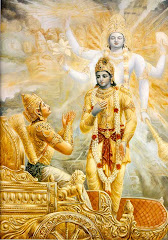
|| Jagannatha Swami
nayana pata gami
nayana pata gami
bhava tu may ||


Translated:

|| O Lord of the Universe
kindly be visible
kindly be visible
unto me ||

2. Night Light: Like a celestial pipe organ in a grand cathedral, the skies above Fairbanks, Alaska, come alive with a curtain of green auroras in this image snapped in March.


3. Celestial Fireworks: Looking like a skyrocket from a fireworks show, Comet ISON is seen here in this false-color image taken by the Hubble Space Telescope on May 8, as it heads toward an encounter with the sun later this year.


At the time this image was taken, the giant icy visitor from the outer solar system was still 408 million miles (656 million kilometers) from Earth, between the orbits of Mars and Jupiter.

The teardrop-shaped tail of this potential "comet/dhumketu of the century" is formed from gas and dust flung off its icy nucleus as it begins to melt from the heat of the sun.

Over the next few months as it approaches the sun, it's predicted to produce a bigger and brighter tail that may become easily visible from Earth at the end of November 2013.

4. Cosmic Rainbow: The Milky Way shimmers like a cosmic rainbow over Utah's Capitol Reef National Park in mid-June. [City dwellers worldwide rarely see such starry night skies due to light pollution. "Light pollution" is largely the result of bad lighting design, which allows artificial light to shine outward and upward into the sky, where it's not wanted, instead of focusing it downward, where it is. Ill-designed lighting washes out the darkness of night and radically alters the light levels - and light rhythms - to which many forms of life, including us, have adapted.]


5. Green Lantern: A giant bubble of charged particles explodes off the green-tinted surface of the sun, as seen in extreme ultraviolet light on June 18.


One of NASA's twin STEREO (Solar TErrestrial RElations Observatory) spacecrafts captured the moment of eruption of this storm - called a coronal mass ejection (CME) - on the side of the sun not visible from Earth.

6. Aurora Borealis: The northern lights create a brilliant display over Canada's Yukon Territory.


7. Early Morning Cosmic Parade: Pleiades (Seven Sisters), planets Jupiter and Venus, and Orion shine through the early morning fog. (Pic: Lake Tekapo, South Island, New Zealand).


8. Pouring Light: Like a river of stars, the diffuse band of light that is the Milky Way appears to spill onto a rocky peak near Springdale, Utah on June 25.


9. Last Look: Like a cosmic pinwheel, spiral galaxy Messier 94 shines bright in ultraviolet light in one of the last snapshots taken by NASA's Galaxy Evolution Explorer (GALEX) satellite before it was shut down on June 28.


Sitting 17 million light-years from Earth in the northern constellation Canes Venatici, the galaxy's core has a distinct ring structure wrapped by a set of spidery arms made of millions of stars.

10. Cosmic Starburst: A colorful starburst-shaped aurora blankets the entire sky above Morinville, Alberta (map), on the night of June 29.


It was very strong and seemed to be surrounded by an umbrella of light, almost reaching the horizon. Humbling.

11. The Largest Baby Star, Ever? An artist's impression of a massive forming star, possibly the largest baby star ever detected.


Astronomers announced this week that they may have discovered the largest baby star ever detected, nestled within a stellar nursery 10,000 light-years away.

The protostar sits at the center of a whirling dark cloud of gas and dust. The cloud - which is 500 times the mass of our sun - is the largest ever seen in our galaxy. It is the most massive protostar known in our galaxy and a beautiful network of filaments funneling even more matter onto it. Only about 1 in 10,000 stars is as massive as the one we are seeing forming. At some point in the distant future, the surrounding cloud is expected to completely collapse in on the star, making it more than a million times brighter than our sun.

However, because the star is still in the early stages of its life, astronomers can only make an educated guess about its final mass. Comparisons with recently discovered record-breaking mature stars indicate that it may end up at least 200 to 300 times the mass of the sun when it is fully formed. With so much obscuring dust there would be no way to measure the forming star's current weight nor predict its final mass, so the 500 solar masses observed is actually the mass of the cloud, not the mass of the star itself.

While it is likely that there will be one or more that end up significantly more massive than the sun, there is no good reason to believe that any of the stars formed in this cloud are, or will be, the most massive in the Milky Way. Regardless of who holds the heavyweight title, supermassive stars like the one growing in this distant cloud are known to play a key role in peppering the cosmos with the basic building blocks for solar systems like ours.

Here are some cosmic treasures beyond our solar system:

11. Ring Nebula in Lyra: imaged here by the Hubble Space Telescope, is one of the most famous deep-sky objects for backyard telescopes since it is conveniently located near the bright summer star Vega. It is the most famous of all planetary nebulae - a psychedelic bubble of gas left behind by a dying star. [Monday, July 8, with the moon in new phase... it was an ideal time to hunt down the Ring Nebula, or Messier 57, by looking high in the southeast for the star Vega and its constellation Lyra - the harp, which marks the brightest corner of the famous Summer Triangle pattern of stars.]


Resembling a small equilateral triangle hitched to a parallelogram, Lyra is one of the smaller but more easily recognized classical constellations, visible all summer long. The Ring Nebula is located halfway along the line between the two stars forming the side wall of the trapezoid farthest away from Vega.

The planetary nebula is visible only through high magnification telescopes, and looks like a small pale ring.  Long-exposure photographs reveal the nebula in all its glory, showing the expanding ring of hot gas in a beautiful rainbow of colors. While it is a demure object at the eyepiece, it is amazing to think that you are actually looking at a 1 light-year wide shell of gas thrown off by a dying sun-like star over 2300 light years away.

12. Moon joins Lion's heart (Regulus): By the evenings of Thursday, July 11, and Friday, July 12, the moon will rise higher in the western sky at dusk and will sidle up to the bright blue-white star Regulus - the heart of Leo, the lion. The waxing crescent moon will appear less than 6 degrees away from Regulus, which is 78 light years away. [Regulus marks the heart of the lion and lies 78 light years away. A hot blue-white star, it is about 3.5 times larger than our Sun and, at 300 million years old, is an adolescent when it comes to star lifetimes.]

.........................................................

As Robi Thakur said:  

|| Aamar mukti aaloy aaloy, ei aakashey,
Aamar mukti dhulaay dhulaay ghaashey ghaashey
Aamar mukti shorbojoner moner majhe
Dukkha-bipad tuchha kora kothin kaaje ||

[My deliverance is in the lighted firmament; in every dust particle and in every grass of the earth/ ... My salvation is in the universal mind and in my exertions defying all dangers and disappointments...]

Do listen to this jewel of a song, Aamar Mukti Aaloy Aaloy... [My Salvation] - rendered by Indrani Sen. (This song is part of Swarobitan/Geetobitan):


... And capture the heartbeat behind Robi Thakur's verse:

|| My deliverance is in the lighted firmament (aamar mukti aaloy aaloy, ei aakashey) |

My deliverance is in every dust particle (dhulaay dhulaay) and in every grass (ghaashey ghaashey) of the earth |

Far beyond the evanescent and the eternal (deho moner shuduur paare)
Whence I lose myself (hariye feli aponare) |

In the melody of songs (gaaner shurey) lies my salvation (aamar mukti)
Flowing high in the horizon above (urdhe bhashe) |

My salvation is in the universal mind (shorbojoner moner majhe), in the hearts of others |

Belittling sorrows and perils (dukkho bipod tucchho kora), in tasks difficult (kothin kaaje) |

My salvation lies at the altar of the world's master (Bishwodhatar jogyoshala/ Jagadishvar ke yagyashala mein basey) |

Lies in the heat of self-sacrifice (Aattwo-homer bonhi jvala/ Atmasamarpan ke badhti jvala mein basey) |

Whence I burn my life as an offering (Jibon jeno dii aahuti/ Jeevan ki jab di ahuti), Salvation comes to me (Mukti ashe) ||


[Note: Robi Thakur, a humanist, is referring to karm yog. To him: this world is the altar (yagna-shala) of the World's Master (Jagadishvar). And he aspires to offer his soul for the Jagadishvar's homa.

That is: He aspires to be a true karm yogi. (He wants to perform/achieve difficult tasks, belittling all sorrows and perils). Therein lay his salvation, mukti.] 

Like how Swami Vivekananda said:

|| Bohu-roope sammukhe tomar aami,
Kotha khunjichho Ishvar?
Jibe prem kore jei jon,
Shei jon shebichhe Ishvar ||


Meaning: Service to humanity is service to God. That is true worship. ['Coz the Almighty is everywhere, omnipresent: Vishwaroop, the Universal form.]